The betrayal of the badge: How a captured police force breeds anarchy in Kenya
 The Mt Kenya Times
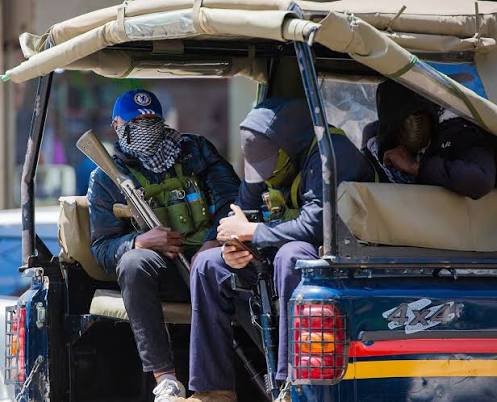
Hooded police brutalize Kenyans
By Jerameel Kevins Owuor Odhiambo
A darker reality is now festering in the alleys of our republic. Hooded men, emboldened and armed, descend like specters upon journalists seeking truth, opposition leaders rallying for accountability, and ordinary citizens daring to voice dissent. They wield not mere sticks and stones, but the instruments of state power tear gas canisters, firearms brandished without shame. This is not random thuggery. It is the symptom of a deeper malignancy: the complicity of the regime and, most damningly, its police force in nurturing a culture of impunity that threatens to unravel the very fabric of our nation.
To understand this rot is to confront the monopoly on legitimate violence that defines the modern state. Max Weber taught us that the state claims the exclusive right to the legitimate use of physical force. In Kenya, that monopoly has been perverted. When hooded assailants in Ol Kalou lob tear gas equipment strictly controlled and issued by state security organs and wave guns with the casual menace of those who fear no consequence, it is not a mystery to be “investigated.” It is evidence of collusion. The state does not outsource its arsenal to civilians without intent or oversight. These are not rogue elements operating in a vacuum; they are the regime’s outsourced enforcers, proxies who settle political scores while the uniformed guardians of order stand aside, or worse, facilitate.
The emotional weight of this betrayal is crushing. Imagine the journalist, notebook in hand, camera rolling, capturing the raw pulse of a rally only to be set upon by goons who know the police will arrive late, if at all. Picture the mother in the crowd, shielding her child as tear gas burns lungs and eyes, realizing that the very institution meant to protect her has chosen sides. This is not abstract policy failure. It is the desecration of trust, the theft of safety from those who dare exercise their constitutional rights. It breeds a simmering rage, a profound disillusionment that whispers: If the state attacks its own people through shadows, who then defends the republic?
The pattern is unmistakable and intellectually damning. Across rallies and events, attacks on opposition figures and independent voices have become ritualistic. Goons thrive not despite police presence, but because of it. They operate with the arrogance of those assured protection, impunity granted from above. This complicity is not mere negligence; it is strategic. A captured police force serves as both shield and sword for a regime insecure in its legitimacy. By allowing or enabling violence against dissenters, the state discourages mobilization, silences scrutiny, and normalizes intimidation as political currency. It transforms public spaces meant for debate and assembly into arenas of fear.
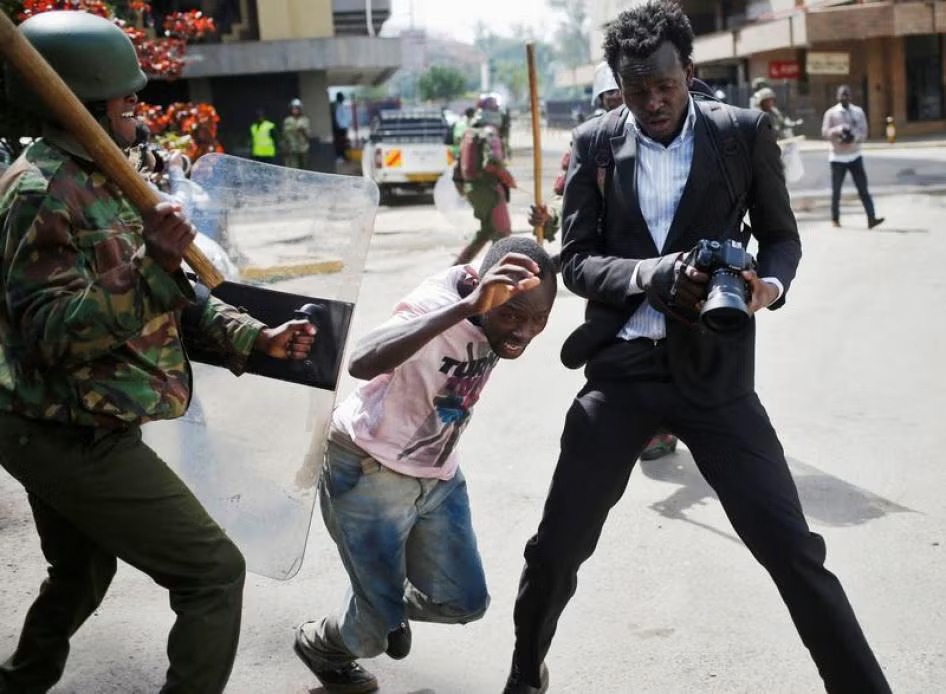
Consider the intellectual bankruptcy of the response. The Directorate of Criminal Investigations (DCI) issues statements about “ongoing investigations” into the Ol Kalou incident. Seriously? What is there to investigate when the tools of violence scream state involvement? Tear gas canisters do not materialize from thin air. Firearms are not souvenirs handed out at political rallies. This performative theater announcing probes while the perpetrators roam free is an insult to the intelligence of every Kenyan. It treats citizens as children, easily placated by bureaucratic platitudes, while the wounds fester. Such statements do not seek truth; they buy time, deflect outrage, and erode public faith further. Shame on an institution that has traded its oath for obedience to partisan masters.
Deeper insight reveals this as a crisis of institutional capture. Police independence is not a luxury; it is the bedrock of any functioning democracy. When the force becomes an extension of the regime roped in through patronage, promotions tied to loyalty, or fear of reprisal it ceases to serve the Constitution and begins to serve power. History offers stark warnings. Regimes that weaponize security apparatus against their people sow the seeds of their own instability. From Latin American death squads to African post-colonial strongmen, the pattern repeats: short-term control through violence begets long-term anarchy. Citizens, stripped of peaceful avenues for redress, eventually turn to extralegal means. We flirt with that precipice today.
The emotional toll compounds the intellectual indictment. Families torn apart by fear. Young people radicalized by witnessed hypocrisy. Journalists self-censoring, opposition retreating, civil society shrinking. This is the human cost, a nation psychologically scarred, where trust in the state evaporates like morning mist under the harsh sun of reality. Parents hesitate to let children attend public events. Elders recall the struggles of the independence era, only to weep at how the freedoms won with blood are now eroded by those sworn to uphold them. There is a profound moral injury here: the betrayal by those in uniform, who should embody courage and impartiality, instead embodying cowardice and capture.
 Why does this persist? Power, unchecked, corrupts absolutely. A regime that views opposition not as legitimate competitors but as existential threats will inevitably corrupt the instruments of enforcement. Police officers, many of whom joined with honorable intent, find themselves in an impossible bind pressured to look the other way, to prioritize regime stability over constitutional duty. The few who resist face professional suicide. This creates a culture of complicity that permeates ranks, from street constables to top brass. The result? Goons operate with near impunity, knowing the system will shield them. Investigations become kabuki theater: arrests of minor players, if any, while masterminds evade scrutiny.
This state of affairs is untenable. It invites anarchy not through the actions of the goons alone, but through the vacuum of legitimate authority. When the monopoly on violence is abused or selectively withdrawn, citizens lose faith. Vigilantism rises. Underground networks form. The social contract frays. We cannot afford to normalize hooded attackers as a feature of political life. Urgent action is imperative: genuine police reforms that insulate the force from executive interference, transparent investigations with timelines and accountability, prosecution of enablers regardless of political affiliation, and a national dialogue that reaffirms the primacy of the rule of law over partisan survival.
The police must reclaim their independence and behave big time as the moment demands. Execute duties devoid of regime directives that pervert justice. Investigate with vigor, not theater. Protect all citizens equally, not just the connected. Failure here is not an option; it is a fast track to chaos. Kenya’s youth, its professionals, its diaspora watch with mounting frustration. The middle class, the backbone of stability, grows weary of ducking violence at every turn of the political wheel.
In the final analysis, this complicity reveals a regime more invested in retaining power than in building a nation. It exposes a police service at risk of becoming an anachronism once a symbol of order, now an accessory to disorder. But hope resides in the Kenyan spirit: resilient, demanding better. Citizens must hold the line through courts, media, civil action, and the ballot. The words spoken here are not mere critique; they are a clarion call born of love for country. For if the guardians of peace become agents of fear, the republic itself stands imperiled.
We stand at a crossroads. Choose capture and complicity, and anarchy beckons. Choose independence and impartiality, and Kenya reclaims its promise. The hooded men in Ol Kalou were no accident. They were a symptom. The cure demands courage from those sworn to serve not the regime, but the people. Anything less is a betrayal too grave to bear.
The writer is a social commentator
Similar Posts by The Mt Kenya Times:
- Mt Kenya Times ePAPER October 21, 2026
- Kenya confirms ninth Ebola case as outbreak remains contained within single cluster
- Musk pledges SpaceX share for every American child in 2027
- Abiy calls for deeper Kenya-Ethiopia trade partnership at Eldoret ceremony
- Kenya’s oil moment: Promise, responsibility and the long road from Turkana to market
About the Author