Dan
Dan 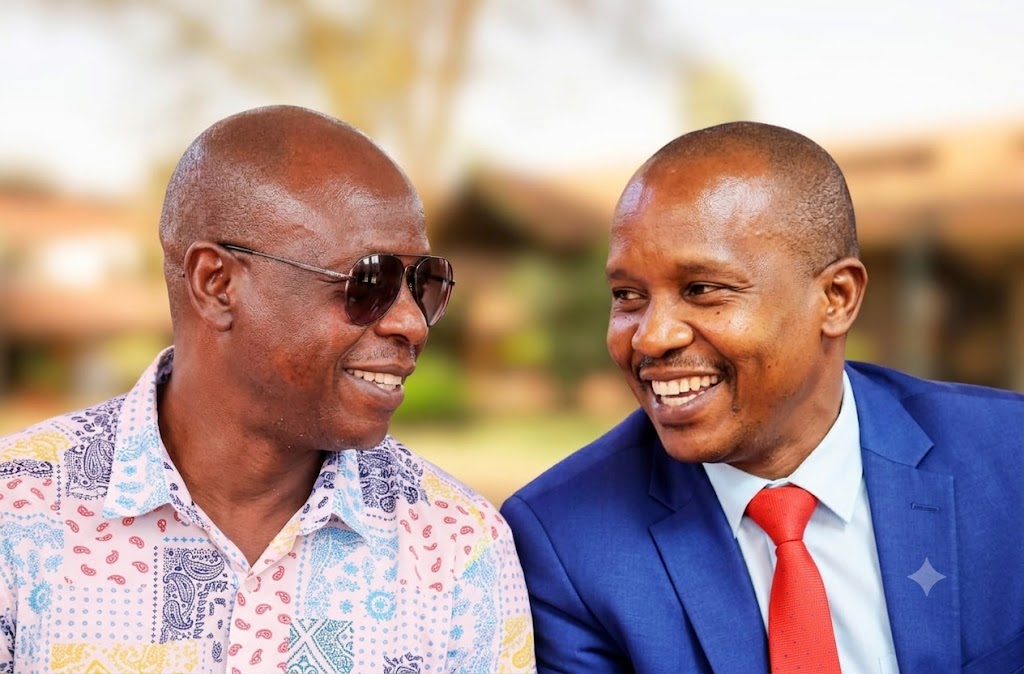
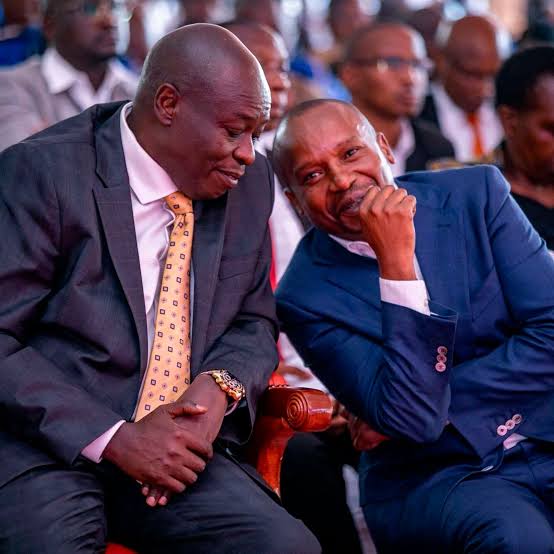
Rigathi Gachagua and his successor Deputy President Kithure Kindiki

In a rare moment of agreement between two bitter rivals, the former deputy president says his successor is right about one thing — though their reasons for wanting a united mountain could not be further apart.
By Dan Mwangi
Democracy for the Citizens Party leader Rigathi Gachagua has publicly backed Deputy President Kithure Kindiki’s call for the unity of the Mt Kenya region, while making clear that the two men want the same outcome for entirely different reasons.
The statement, striking in its rarity given the prolonged and often acrimonious rivalry between the two leaders since Gachagua’s impeachment in 2024, drew immediate attention across the political landscape. Gachagua, who has built his post-impeachment strategy on the architecture of opposition unity and the singular goal of removing President William Ruto from office, told supporters that Kindiki had, for once, arrived at the right conclusion — even if by the wrong route.
“Kindiki made a statement which made me happy,” Gachagua said. “Yesterday, he said the mountain was one and should not be divided. For what it’s worth, you are right — because the only way Ruto can come back as president is if the mountain is divided.”
The former deputy president went further, urging Mt Kenya residents not to be hostile towards Kindiki, describing him as “one of our own” despite their differences. He recalled that during Kindiki’s tenure as Interior Cabinet Secretary, he had exercised restraint during the 2024 anti-government protests — a gesture Gachagua contrasted pointedly with the conduct of other senior government figures. “Kindiki, as bad as he is, is a ‘yes sir’ kind of leader and one who is not self-aware,” Gachagua said. “He never sent goons to harm the people during protests when he was Interior CS, unlike Kipchumba Murkomen.”
The remarks landed a day after Kindiki publicly condemned efforts to fracture the region along East-West lines — a scheme attributed to allies of President Ruto, most notably Public Service Cabinet Secretary Geoffrey Ruku, who has advocated for carving out a “mini-mountain” of approximately 1.5 million voters from Meru, Tharaka Nithi, Embu and parts of Kirinyaga, positioning Kindiki as its kingpin. Kindiki himself has rejected that framing in public, even as his ground activities told a more complicated story. Between March and late April this year, the deputy president held 15 planned engagements within the Mt Kenya East orbit and none independently in the West — a pattern that political analysts said contradicted his unity message.
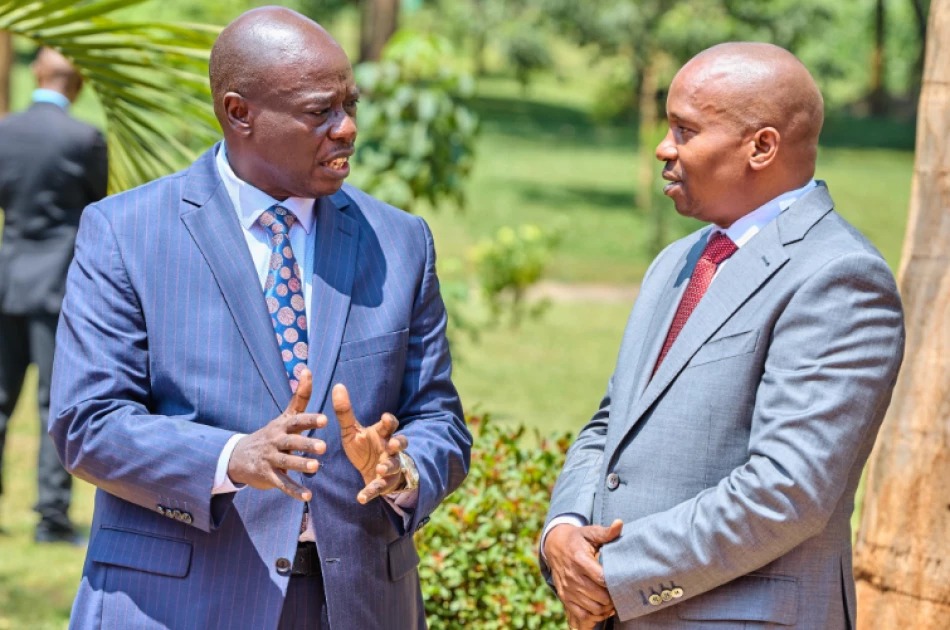
“I don’t want our community divided, or speaking in different languages,” Kindiki said during one of his public addresses. “We are one people. We are one community, and even in terms of politics, we have done a lot together, and we have a history. There is nothing that can divide us.”
What gives these declarations — from both men — their weight is not rhetorical but arithmetic. The Mt Kenya region, spanning ten counties including Kiambu, Nyeri, Meru, Murang’a, Nakuru and Embu, is projected to hold more than seven million registered voters by 2027, accounting for over a quarter of the national voter roll, according to data from the Independent Electoral and Boundaries Commission. In 2022, the region delivered approximately 2.9 million of Ruto’s 7.17 million votes — roughly 41 per cent of his total tally — making it the single most decisive bloc in his victory. The IEBC is targeting to register a further 1.7 million new voters from the region, representing nearly 27 per cent of its national new-voter target.
The economic dimension amplifies the political stakes considerably. The Mt Kenya region, with a population estimated at nearly 12 million people, recorded a GDP of approximately $21.57 billion (KSh2.79 trillion) in nominal terms in 2024 — a figure that reflects the concentration of agricultural, commercial and industrial activity across its counties. The region anchors Kenya’s tea and coffee sectors, dominates dairy farming, and houses significant manufacturing corridors along the Thika-Nairobi axis. The 2026 KNBS Economic Survey identified Murang’a County as the fastest-growing economy within the region, underlining a broader trend of expanding economic influence that gives Mt Kenya not merely votes but leverage — the kind that any serious presidential contender must negotiate rather than dismiss.
It is precisely this leverage that shapes the significance of Gachagua’s remarks about Kindiki. Political analyst Prof Gitile Naituli of Multimedia University has argued that Kindiki’s tonal shift towards conciliation reflects an acute awareness of his own vulnerability. “Gachagua is taking command of the public in Mt Kenya, so Kindiki’s move is wise and intelligent. If Kindiki recognises that his position could be at threat, you start creating a space to land,” Naituli said.
That landing space is precisely what Gachagua’s statement may have quietly offered. Should President Ruto choose to replace Kindiki as deputy president ahead of 2027 — a scenario that political insiders have not ruled out, given the turbulence of recent months — Kindiki would need a regional base from which to operate as an independent force. Gachagua’s implicit extension of goodwill, conditional and qualified as it is, represents the outline of such a base. The message to Kindiki is unspoken but legible: the mountain does not abandon its sons entirely, even those who chose the wrong side.
The rivalry between the two men has already spilled into direct political confrontation, with parallel rallies, shadow tours and competing appeals to the same electorate. Yet beneath the contest runs a current of shared identity that neither man can fully disown. Mt Kenya’s political culture has historically rewarded solidarity at moments of collective threat — it is a region that has produced three of Kenya’s five presidents precisely because, when it moves as one, no coalition can ignore it.
Gachagua has renewed his pledge to cap Ruto’s support in the region at two per cent of votes cast. Whether that target is achievable will depend on whether the mountain ultimately unites — and under whose banner.
For now, both rivals are saying the same word. Unity. They simply mean very different things by it.
Similar Posts by Dan:
- Nairobi factory bid aims to put Kenya on the map for precision infrared optics
- Ndindi Nyoro pulls a Kibaki stunt: The mountain stirs again as 2027 looms
- Ruto vs Uhuru: The war Kenya never saw coming
- Ruto’s reckoning: Gachagua puts four years on trial
- Mudavadi tells Sifuna: Dreaming about it won’t make you president
About the Author

 The Mt Kenya Times