Tourism or politics? The storm over Gachagua’s remarks and the high stakes for Kenya’s image
 The Mt Kenya Times
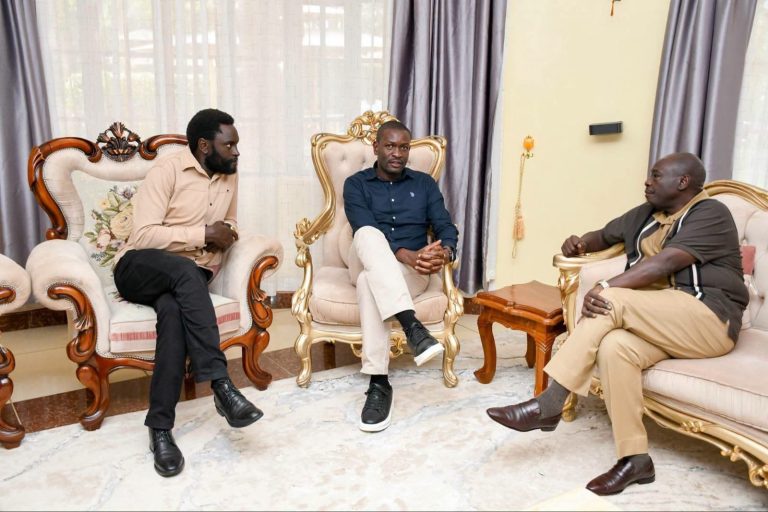
Former Deputy President Rigathi Gachagua
When a former deputy president tells the world to stay away, the damage rarely stops at the border.
By Hadassah Karangu
Former Deputy President Rigathi Gachagua has drawn sharp criticism from government officials and tourism industry leaders after urging foreign tourists and investors to postpone visits to Kenya until next year, citing the country’s current political climate.
The Ministry of Tourism responded swiftly, warning that statements capable of generating fear among international visitors risk undoing years of investment, diplomatic effort and carefully constructed global marketing campaigns. The ministry reiterated that Kenya remains open, safe and committed to delivering world-class experiences — a message it has been at pains to amplify as the country aggressively pursues its target of attracting more than five million tourists annually.
Tourism is not a peripheral industry in Kenya. It is one of the country’s largest foreign exchange earners, sustaining hundreds of thousands of jobs across hotels, safari operators, transport companies, conservation projects, coastal businesses and the vast informal economy that orbits them. When international arrivals decline, the consequences travel swiftly down the chain — from lodge managers in the Maasai Mara to curio sellers in Mombasa, from park rangers in Amboseli to boat operators on Lake Victoria. The industry does not absorb political shocks quietly.
That is what makes Gachagua’s remarks so contentious. International travellers, planning itineraries from London, Tokyo or New York, do not parse the internal dynamics of Kenyan opposition politics. What they encounter — on news platforms, social media feeds and travel advisory pages — is a message about Kenya as a country. A former deputy president advising the world to wait before coming is not a nuanced political statement in those contexts. It is a red flag.
Kenya has spent decades earning its reputation as one of the world’s most compelling travel destinations. The wildebeest migration across the Maasai Mara remains one of the great wildlife spectacles on earth. The Indian Ocean coastline, the dramatic landscapes of the Rift Valley, the biodiversity of its national parks and the richness of its many cultures have made Kenya a reference point in global tourism. That reputation was not built overnight, and it cannot be defended by any single ministry press release. It is built — and damaged — incrementally, by the accumulation of signals the country sends to the world.
Gachagua’s supporters counter that his remarks deserve a more generous reading. They argue that security, constitutional order and political stability are legitimate public interests, and that raising concerns about the country’s direction is a democratic right, not an act of economic sabotage. In their framing, the problem is not what Gachagua said but what prompted him to say it — and that durable tourist confidence can only be built on a foundation of genuine peace and transparent governance, not ministerial reassurances alone. It is a point that carries some weight. No marketing campaign has ever fully compensated for genuine instability.
But the distinction between principled political critique and language that damages national economic interests is one that experienced leaders are expected to navigate carefully. Words do not stay within borders in the digital age. A single statement from a prominent figure can be shared across international platforms within minutes, recalibrating risk assessments among tour operators, insurance underwriters and individual travellers who may never follow Kenyan politics closely but will notice a warning from a former deputy president.
The episode raises a question that resurfaces with each election cycle: where should political competition yield, if anywhere, to shared national interest? Democracy is not served by enforced silence, and opposition leaders who see genuine threats to public welfare should be free to say so. Yet leadership also carries an obligation to weigh consequences — particularly when the people most vulnerable to those consequences are not politicians but the Kenyan families whose incomes rise and fall with the tourist season.
Kenya competes in a global marketplace where perception carries weight that is disproportionate to its fairness. A country can be entirely safe while being perceived as dangerous, and that perception, once lodged in the international imagination, is expensive to dislodge.
As the 2027 election cycle draws closer and political temperatures rise, the challenge for leaders on all sides will be the same: to contest fiercely for power without weakening the confidence that tourists, investors and international partners place in the country itself.
When tourism thrives, it is not politicians who benefit first. It is the Kenyan whose livelihood depends, quietly and entirely, on the world continuing to believe in Kenya.
Similar Posts by The Mt Kenya Times:
- Mt Kenya Times ePAPER October 21, 2026
- Kenya confirms ninth Ebola case as outbreak remains contained within single cluster
- Musk pledges SpaceX share for every American child in 2027
- Abiy calls for deeper Kenya-Ethiopia trade partnership at Eldoret ceremony
- Kenya’s oil moment: Promise, responsibility and the long road from Turkana to market
About the Author