The blind sentinel: Kenya’s parliament as the executive’s willing instrument
 The Mt Kenya Times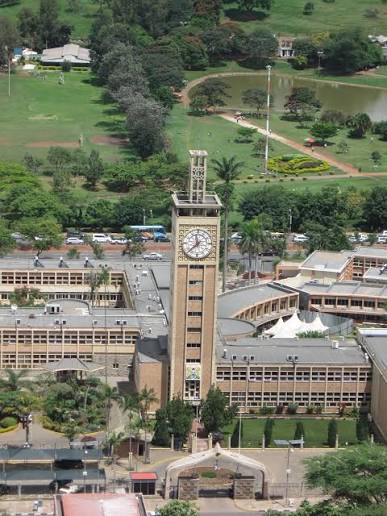
Kenya’s parliament
By Jerameel Kevins Owuor Odhiambo
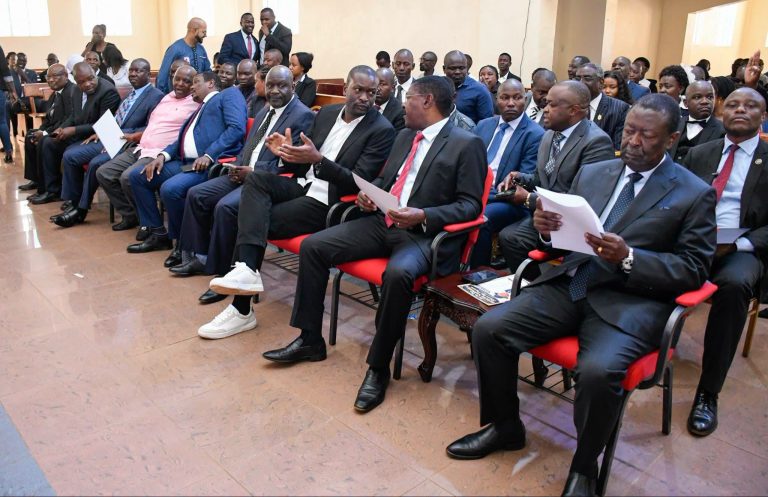
In the year of our Lord 2010, Kenyans rose as one and forged a Constitution that placed Parliament at the centre of the Republic’s democratic architecture. Article 94 declared that legislative authority derives from the people and is vested in Parliament; Article 95 charged the National Assembly with oversight of State organs, the review of the conduct of the President and other State officers, and the appropriation of public funds. The Public Appointments (Parliamentary Approval) Act was meant to turn the House into a rigorous gatekeeper of integrity. That was the promise. Sixteen years later the institution stands exposed as a body that has largely abdicated those duties, particularly in the passage of executive-sponsored bills, the near-automatic approval of presidential nominees, and the hollow performance of oversight over public authorities. The result is not mere institutional failure. It is a betrayal that corrodes the very foundation of representative government.
History is a stern teacher. In the early years after independence the National Assembly often functioned as an extension of the executive will. Under both Kenyatta and Moi, executive bills passed at rates that sometimes exceeded 80 percent, reducing the House to little more than a ceremonial echo chamber. The return of multiparty politics in 1992 and the reforms that culminated in the 2010 Constitution were supposed to reverse that trajectory. Parliament was given fiscal autonomy, stronger committees, and explicit powers of scrutiny. For a brief season it flexed those muscles. Then the old habits returned, dressed in new parliamentary robes. The current House has not merely drifted; it has marched deliberately back into the executive’s shadow. Majority members treat independence as a disposable luxury. The minority may still have its say, but the majority has long since decided that the executive shall have its way unquestioned, unexamined, and frequently rewarded.
Consider the legislative record. When the Finance Bill of 2024 arrived, the streets of Nairobi and other cities filled with young Kenyans whose futures were being mortgaged by new taxes and levies. Public participation, that constitutional requirement so often invoked and so rarely honoured, was treated as a box-ticking exercise. The bill sailed through. Allegations of monetary inducements handouts, “sweeteners,” development promises held hostage circulated with the persistence of a national scandal. The same pattern has repeated itself with housing levies, health insurance schemes, and other measures that transfer wealth from the many to the few while insulating the powerful from consequence. A legislature that cannot or will not subject executive proposals to genuine interrogation has ceased to be a legislature. It has become a notary public for presidential ambition.
The approval of nominees reveals the same moral and intellectual collapse. Chapter Six of the Constitution demands integrity. The Public Appointments Act requires examination of procedure, constitutional compliance, and personal suitability. In practice the process has become a ritual of endorsement. In 2024 the National Assembly received hundreds of public memoranda challenging Cabinet nominees on grounds of integrity, competence, and gender balance. Most were dismissed on technicalities or simply ignored. Nineteen of twenty-one were waved through after hearings that too often resembled polite interviews rather than adversarial scrutiny. Academic credentials remained in doubt; past associations with questionable networks went unprobed; constitutional thresholds on representation were treated as optional. When a former Cabinet Secretary later admitted that members had openly solicited money during vetting, the House did not erupt in shame. It continued business as usual. A body that sells its approval power ceases to be a guardian of the public interest. It becomes a marketplace.
Oversight of public authorities fares no better. Auditor-General reports flag irregular expenditure running into hundreds of billions. Parliamentary recommendations are implemented at a dismal rate sometimes as low as one in five. Departmental committees accumulate unanswered statements from Cabinet Secretaries while chairpersons chase political futures. Debt ceilings are adjusted or ignored with barely a murmur. The House that should stand between the citizen and the Treasury instead stands beside the Treasury, nodding. When the President himself publicly accused parliamentary committees of demanding bribes to pass favourable legislation or to influence impeachment proceedings, the response from the benches was defensive rather than purifying. The accusation landed because it rang true to a public that has watched the same drama for years: money changes hands, bills pass, governors fall or rise according to the size of the envelope, and the Constitution is left holding an empty bag.
This is not mere political theatre. It is the systematic hollowing out of the separation of powers. A parliament without foresight is a parliament that cannot see beyond the next electoral cycle or the next disbursement. It cannot weigh the long-term cost of debt against short-term political survival. It cannot protect the minority’s right to be heard when the majority has already sold its voice. Democracy, as the saying goes, is the rule of the majority with the minority’s voice protected. In the present arrangement the majority has exchanged that protection for access, patronage, and quiet envelopes. The minority’s voice becomes background noise, and the public interest is reduced to an afterthought.
The tragedy is compounded by the absence of shame. Members who once thundered about accountability now accept the role of rubber stamp with practiced ease. They collect allowances for committee sittings that produce little accountability. They defend the indefensible with procedural technicalities. They treat the Constitution as a document to be cited when convenient and ignored when inconvenient. The edifice of the grundnorm the foundational law has been reduced to a convenient backdrop for transactional politics. This is doleful not because it is unexpected, but because it was avoidable. The tools of independence were written into the 2010 text. The will to use them has been systematically surrendered.
What then is to be done? The first call is to the members themselves. Reclaim the dignity of the office. Reject the envelope. Subject every bill and every nominee to the full force of constitutional scrutiny. Demand that committees produce results rather than excuses. The second call is to the citizenry. Public participation must become more than a formality; it must become a sustained demand for accountability. Vote with memory. Refuse to reward those who traded oversight for comfort. Civil society and the media must continue to document, name, and shame the transactions that turn representation into brokerage. The judiciary must remain vigilant when the House abdicates, for the Constitution is not a self-executing document. And the executive, if it possesses any residual respect for the architecture it claims to serve, must stop treating Parliament as a subsidiary department and start treating it as a co-equal branch.
Kenya did not fight for a Constitution so that its Parliament could become a conveyor belt for executive convenience. The current House has chosen the path of least resistance and greatest reward. That choice is not destiny. It is a decision that can be reversed by those who still remember that power is a trust, not a personal estate. Until that reversal occurs, the nation will continue to pay the price in eroded trust, mounting debt, and a democracy that looks increasingly like a carefully staged performance rather than a living compact between rulers and ruled. The sentinel has closed its eyes. The question that remains is whether Kenyans will force them open again.
Similar Posts by The Mt Kenya Times:
- Mt Kenya Times ePAPER October 22, 2026
- Ruto heads to Harare for COMESA summit on trade and regional security
- Mudavadi and Wetangula walk out as Sifuna speaks at Nabwera memorial
- Police accountability on trial as seven officers face probe over journalist’s arrest
- Learners, teachers graduate from thrive for good organic farming training
About the Author