The Mt Kenya Times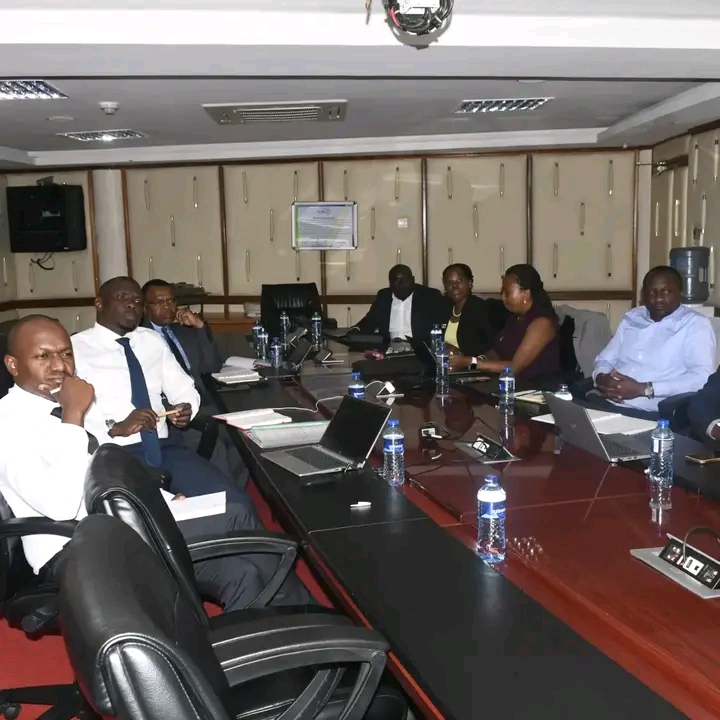
NuPEA, KenGen and KCB group meeting

The strategic meeting between NuPEA, KenGen and KCB Bank Group marks a decisive shift in Kenya’s nuclear journey — from technical planning to the harder question of who pays, how, and on whose terms.
By James Kilonzo Bwire
A strategic meeting between the Nuclear Power and Energy Agency, Kenya Electricity Generating Company and KCB Bank Group has moved Kenya’s nuclear power programme from the realm of feasibility into the more demanding terrain of financial architecture, as the country confronts the central question of how it will fund its first 2,000-megawatt nuclear power plant in Siaya County.
The gathering was not ceremonial. It addressed something far more consequential: whether Kenya can build a domestic commercial banking framework capable of financing one of the most capital-intensive infrastructure projects the country has ever attempted, rather than surrendering the financial terms — and the leverage that comes with them — to foreign sovereign lenders or vendor-tied credit arrangements. The presence of KCB, a bank with a demonstrated record in lead-arranging large energy and infrastructure deals, signals an intent to treat the nuclear project as a bankable megaproject that can be structured, syndicated and serviced through local institutions.
The timing matters. Kenya has already moved beyond preliminary feasibility studies into the execution readiness phase of its National Nuclear Power Programme. NuPEA has been designated as the coordinator of the nuclear programme, while KenGen has been formally assigned as the owner and operator of the plant. The division of roles is significant: NuPEA will steer policy, regulatory engagement and international partnerships, while KenGen carries the operational burden of developing, constructing and running the facility under the oversight of the independent Kenya Nuclear Regulatory Authority. With governance structures now defined, the next logical step is securing financing that matches the scale, duration and risk profile of a nuclear investment.
Financing a nuclear power plant is fundamentally different from financing conventional thermal or renewable projects. Nuclear demands patient capital — capital that can endure years of construction before a single unit of electricity is generated, while accommodating complex procurement obligations, safety compliance requirements and eventual decommissioning costs. Construction timelines stretch across decades, not years. Revenue only flows once the plant is operational, meaning lenders must be comfortable with a protracted period of outflows before any returns materialise.
This is precisely why domestic commercial banking capacity matters so acutely. Local banks understand the Kenyan regulatory environment, currency dynamics and public sector payment patterns in ways that foreign lenders cannot replicate. They can structure debt in alignment with national budgeting cycles, power purchase agreements and sovereign guarantees. KCB’s potential role as lead arranger is particularly relevant because that function demands not only balance sheet strength but the ability to syndicate debt across multiple lenders, manage covenants and coordinate disbursements in line with construction milestones. A foreign institution can provide capital; a local lead arranger can hold the whole financial architecture together.
The meeting’s emphasis on domestic banking capacity also reflects a broader strategic preference for reducing Kenya’s exposure to external debt denominated in foreign currencies. Nuclear projects are typically financed through a mix of equity, long-term debt and sometimes export credit or multilateral support. But overreliance on foreign currency loans introduces exchange rate risk that can destabilise project economics the moment the shilling weakens. By anchoring the financing framework in shilling-denominated debt and local institutional participation, Kenya can manage that risk more effectively while simultaneously deepening its domestic capital markets. This approach does not foreclose foreign participation; it simply positions local banks as the lead arrangers who set the terms and bring in international partners on conditions that protect national interests.
The alignment of financing with KenGen’s owner-and-operator governance model will require rigorous work on revenue streams, tariff structures and off-take arrangements. Lenders will need assurance that the electricity generated will be absorbed by the national grid at prices that cover operating costs and debt service, and that KenGen’s balance sheet can support the leverage a project of this scale demands. NuPEA’s involvement in the financial discussions ensures that policy-level commitments — including any potential sovereign support or multilateral backing — are integrated into the financial model from the outset rather than bolted on as an afterthought.
The choice of Siaya County as the plant’s location adds another layer of complexity that no financing framework can afford to ignore. Public consultations in the region have been contentious, with some meetings turning disruptive and even volatile, reflecting genuine community concerns about safety, environmental impact and equitable benefit sharing. These are not peripheral issues. They directly affect project risk and, by extension, lender confidence. A well-structured financing framework must treat social licence as part of project viability, ensuring that community engagement, compensation mechanisms and local development commitments are adequately funded, independently monitored and demonstrably credible. Lenders are increasingly attentive to environmental and social governance standards, and unresolved community opposition raises the cost of capital and delays disbursements. Community relations, in this context, is a financial instrument.
Kenya’s broader energy transition lends urgency to getting this right. The country has made substantial progress in geothermal, wind and solar development, but these sources cannot alone meet the baseload requirements of an industrialising economy seeking to expand manufacturing, mining and digital infrastructure. Nuclear offers a carbon-free, high-capacity alternative capable of complementing renewables and reducing dependence on hydropower, which remains vulnerable to climate variability. But the promise of nuclear energy is only realised if the financing is structured to ensure timely completion, operational safety and long-term affordability for consumers. A poorly arranged deal — one that produces cost overruns, construction delays or tariff shocks — could set back Kenya’s nuclear ambitions by a generation.
The NuPEA, KenGen and KCB meeting should therefore be understood as the beginning of a sustained institutional process, not a single decisive moment. It will require iterative engagement with the National Treasury, the Central Bank, and potential international partners including the International Atomic Energy Agency and export credit agencies. It will demand rigorous technical and financial modelling to determine the optimal mix of equity, debt and guarantees, and transparent public communication about how the project will ultimately be paid for and who will bear the risks if it does not go to plan.
KCB stepping forward as a potential lead arranger is an encouraging signal. But encouragement must be matched by discipline — in procurement, construction oversight and regulatory compliance — if the signal is to become a result.
Kenya’s first nuclear power plant will ultimately be defined less by the technology it employs or the site it occupies than by the quality of the financial and governance frameworks that underpin it. The foundations are now being laid in the right place: in the boardrooms where finance meets policy, and where Kenya’s energy future is being written in the language of shillings, covenants and long-term commitment.
Similar Posts by The Mt Kenya Times:
- Mt Kenya Times ePAPER October 22, 2026
- Ruto heads to Harare for COMESA summit on trade and regional security
- Mudavadi and Wetangula walk out as Sifuna speaks at Nabwera memorial
- Police accountability on trial as seven officers face probe over journalist’s arrest
- Learners, teachers graduate from thrive for good organic farming training
About the Author