Safaricom Ethiopia’s 15 million milestone: Africa’s boldest telecom bet begins to pay off
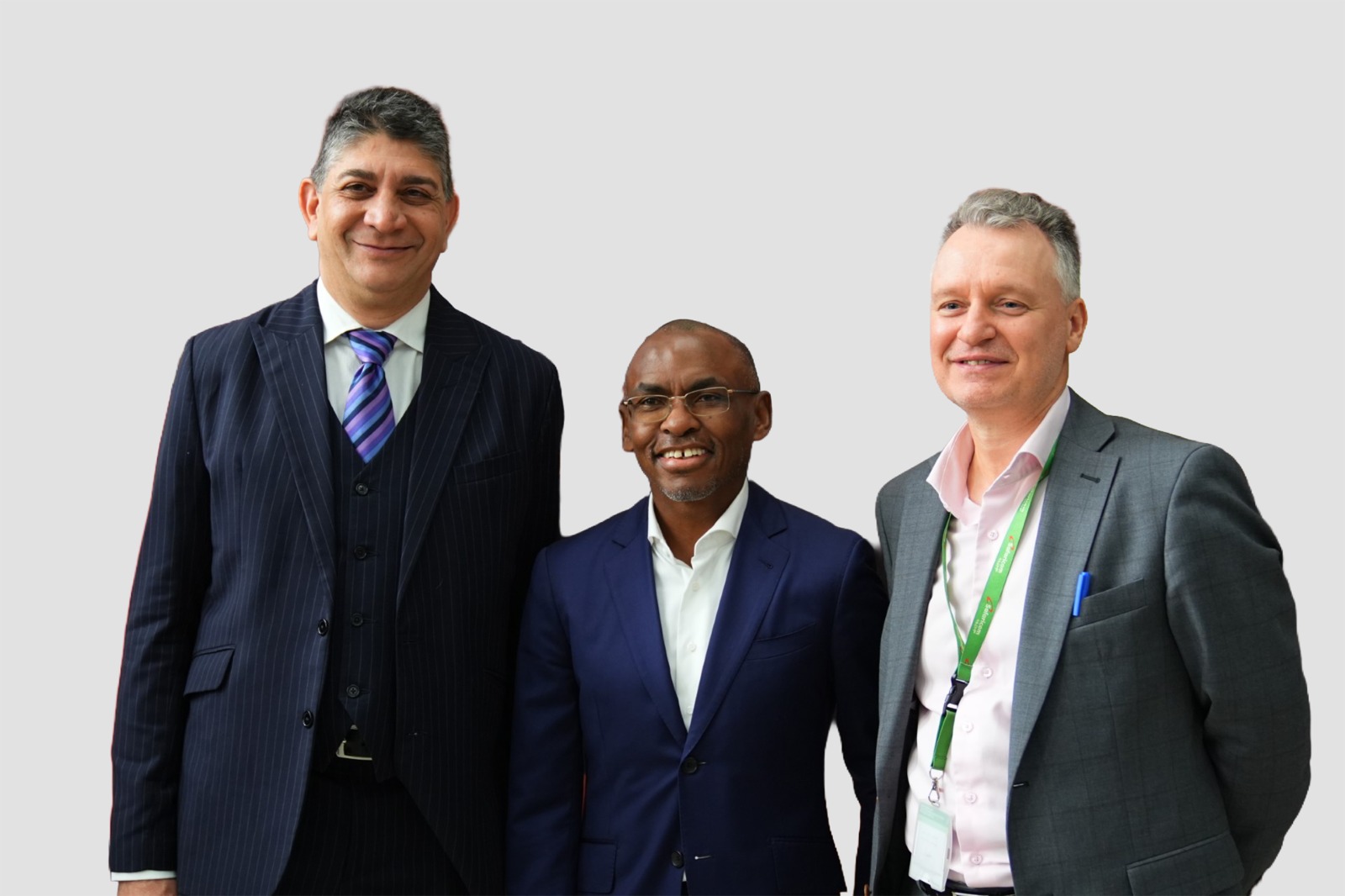
Vodacom Group Chief Executive Officer Shameel Joosub, Safaricom Group CEO Peter Ndegwa and Safaricom Ethiopia CEO Wim Vanhelleputte
Five years after receiving its licence and less than four years into commercial operations, Safaricom Ethiopia has surpassed 15 million active subscribers — vindicating a KSh110B gamble that many thought too risky to take.
By Grace Wanja
Safaricom Ethiopia yesterday announced it had surpassed 15 million 90-day active subscribers, marking five years since the Kenyan telecommunications giant received its unified licence from the Ethiopian government and cementing its position as one of the fastest-growing new telecom operators on the African continent.
The milestone, announced from Addis Ababa on Wednesday, is striking not just for the number itself but for the speed at which it was reached. The movement from 10 million active customers in July 2025 to 13.6 million by March 2026 and now more than 15 million suggests that the commercial engine is gaining momentum — and doing so in a market that once looked like Safaricom’s most consequential miscalculation.
When Safaricom led a consortium into Ethiopia in 2021, the decision drew as much scepticism as excitement. The consortium committed approximately KSh110B to secure a telecommunications licence. Safaricom was entering a market dominated by the state-owned Ethio Telecom, while Ethiopia was dealing with political instability, conflict, foreign-exchange shortages and an uncertain regulatory environment. The early losses were steep, the terrain was hostile and the timelines for profitability stretched uncomfortably far into the future.
That bet is now beginning to look prescient. The company reached the 15 million milestone as it marked five years since receiving a nationwide telecommunications licence from the Ethiopian government in July 2021, with commercial operations beginning in October 2022 after more than a year of building network infrastructure and distribution channels. That means Safaricom Ethiopia acquired 15 million active subscribers in under four years of actual trading — a pace that places it among the most remarkable growth stories in African telecoms.
The infrastructure behind that growth is equally impressive. The operator has built more than 3,500 mobile sites covering about 60 percent of Ethiopia’s population, with every site supporting 4G services and ready for 5G deployment. Chief Executive Officer Wim Vanhelleputte has described the rollout in terms that, while clearly promotional, are difficult to dispute on the facts. “Since receiving our licence, we have built more than 3,500 network sites, with our network now reaching around 60 percent of the country’s population. All our sites are 4G-enabled and 5G-ready, making our network state-of-the-art. This represents one of the fastest network rollouts by a greenfield telecom operator in Africa, and one of the fastest globally for a new entrant building a nationwide network from scratch,” Vanhelleputte said.
The network’s reach is not merely a commercial asset. In a country of more than 120 million people — Africa’s second most populous — connectivity has historically been the privilege of urban centres. Safaricom Ethiopia’s expanding footprint has begun extending reliable 4G coverage to smaller towns and rural communities that have never had meaningful access to high-speed data services, drawing more Ethiopians into the digital economy for the first time.
The financial trajectory is equally encouraging for a company that has absorbed years of significant losses in pursuit of long-term market position. During the financial year ending March 2026, Safaricom Ethiopia’s service revenue increased by 130.9 percent to ETB15.9B. Its M-Pesa customer base more than doubled to 5.2 million, while mobile data generated ETB9.6B and became its largest revenue contributor. The company halved its losses in the year to March 2026, supported by an improved macroeconomic environment and tariff reviews on voice and data services implemented in late 2025.
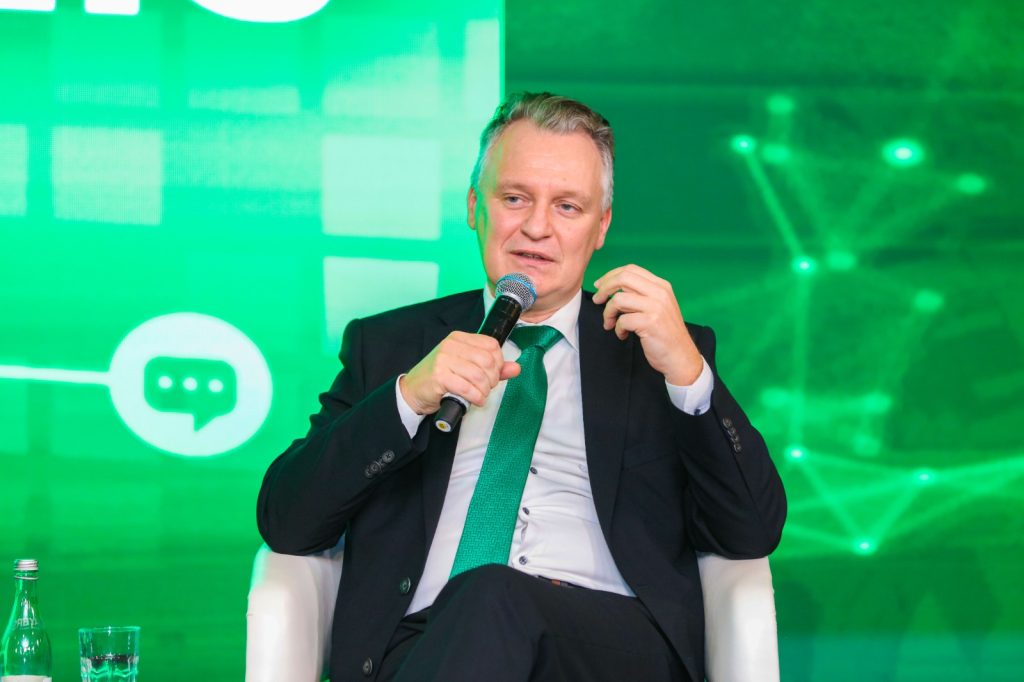
Vanhelleputte is now speaking with growing confidence about the path to profitability. Safaricom Ethiopia said the operation was moving closer to its targeted EBITDA breakeven in the 2027 financial year. That target — earnings before interest, taxes, depreciation and amortisation — represents the first meaningful profitability threshold for a capital-intensive business that has spent five years pouring money into infrastructure, licences, talent and distribution.
Beyond the commercial numbers, Vanhelleputte pointed to the company’s contribution to Ethiopia’s broader digital ecosystem. “We have also witnessed the emergence of world-class talent in information technology in Ethiopia, and we have played our part in supporting that journey. Beyond the impact of our core business, we have directly invested ETB139 million in community development and support, while our shareholders and partners have contributed an additional ETB545 million. This brings the total investment in communities to ETB684 million over the past four years of our operations,” he said.
Vodacom Group Chief Executive Shameel Joosub highlighted the pace at which Safaricom Ethiopia had expanded its subscriber base, noting that the operator had reached its current subscriber scale within five years — a milestone that can typically take significantly longer for a greenfield entrant. The Global Partnership for Ethiopia board, which convened for a town hall session with Safaricom Ethiopia staff, offered similarly warm assessments of the company’s trajectory.
The liberalisation of Ethiopia’s telecommunications sector — one of the last major African markets to open to private competition — has produced effects that extend well beyond a single operator’s balance sheet. The number of active customers on the network soared 46.1 percent year-on-year from 10.06 million in June 2025, and the acceleration of digital financial services through M-Pesa is drawing previously unbanked Ethiopians into formal payment systems at a pace that would have been unimaginable under the previous state monopoly.
Active data users were consuming an average of 6.5GB per month, representing a 53 percent increase in data consumption per user over the previous fiscal year — a figure that reflects not merely the spread of Safaricom’s network but a genuine shift in how Ethiopians are using connectivity in their daily lives, from commerce and education to communication and entertainment.
The story of Safaricom Ethiopia is, in microcosm, the story of what telecom liberalisation can achieve when it is pursued seriously and a credible private operator is willing to absorb the initial pain of building from nothing. The first years were bruising. The losses were real, the currency depreciated sharply and the operating environment remained challenging long after the licence was signed. But the subscriber numbers, the revenue trajectory and the approaching breakeven point now suggest that the pain was an investment rather than a loss.
For Safaricom’s Nairobi headquarters, the Ethiopian milestone also carries strategic weight. The Ethiopian operation was the company’s most ambitious international expansion and, for several difficult years, its most uncomfortable liability. That it is now approaching profitability — in a market of 120 million people with enormous room still to grow — transforms the calculus entirely.
Fifteen million subscribers in under four years of trading. Three thousand five hundred network sites. Sixty percent population coverage. An EBITDA breakeven on the horizon. The numbers tell a story of a company that backed itself in the hardest possible conditions and is beginning to be proved right.
Similar Posts by The Mt Kenya Times:
- Mt Kenya Times ePAPER October 22, 2026
- Ruto heads to Harare for COMESA summit on trade and regional security
- Mudavadi and Wetangula walk out as Sifuna speaks at Nabwera memorial
- Police accountability on trial as seven officers face probe over journalist’s arrest
- Learners, teachers graduate from thrive for good organic farming training
About the Author