Kenya’s AI interns need a judgment portfolio, not just a certificate

Gleb Tsipursky, PhD, a behavioral scientist, CEO of Disaster Avoidance Experts
A new internship programme connecting women to AI roles in public health is a strong start — but measuring technical skill alone will not be enough.
By James Mwangi
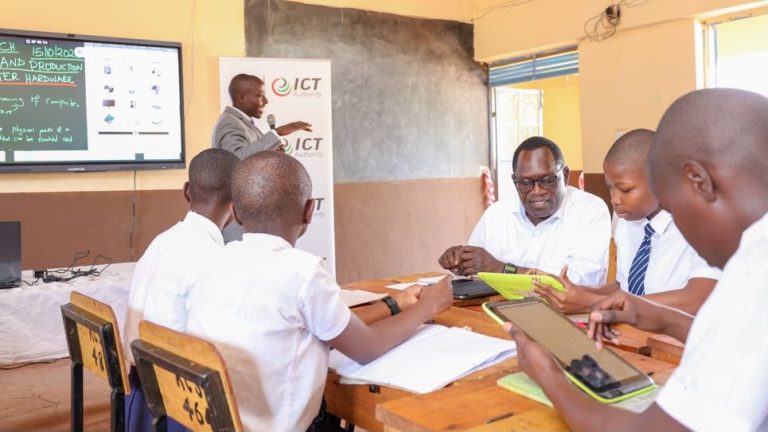
Kenya’s ENGAGE project yesterday showcased an internship model that few countries have managed to build at scale, placing women trained in artificial intelligence and data science into real public health roles across 38 sites, with 209 paid positions already delivered — but the programme’s next step should be as ambitious as its first.
The six-week placements give trainees practical exposure to AI tools in healthcare delivery, disease surveillance and health financing, connecting classroom learning to working environments where the stakes are real. That link between training and practice is valuable and relatively rare. What is currently missing is a structured way to measure something more important than course completion: judgment.
Every trainee should leave with what could be called a judgment portfolio — a concise collection of work samples demonstrating not only that she used AI tools, but that she verified their outputs, managed uncertainty, protected sensitive data and knew when to escalate a decision to a human expert. A certificate records attendance. A judgment portfolio reveals capability.
The distinction matters acutely in public health. Errors in disease surveillance or health financing carry consequences that go well beyond a flawed spreadsheet. Kenya’s Ministry of Health has emphasised data governance and responsible AI adoption, which makes human verification more important, not less. AI systems produce plausible-sounding answers that are sometimes wrong, and the skill employers increasingly need is the ability to recognise the difference.
The portfolio itself need not be complex. Four documented elements per work sample would suffice: what task the trainee gave the AI system, what evidence she used to verify the result, what uncertainty remained and what rule determined whether she could act or had to escalate. Failures should be included. A trainee who can explain why an AI output failed and how she caught it demonstrates more than any polished demonstration can show.
Kenya does not need to choose between faster AI adoption and stronger human capability. The internship programme already exists. Adding a judgment portfolio requires will, not a new budget.
Similar Posts by The Mt Kenya Times:
- Mt Kenya Times ePAPER October 22, 2026
- Ruto heads to Harare for COMESA summit on trade and regional security
- Mudavadi and Wetangula walk out as Sifuna speaks at Nabwera memorial
- Police accountability on trial as seven officers face probe over journalist’s arrest
- Learners, teachers graduate from thrive for good organic farming training
About the Author