A new chapter in the uneasy conversation between the government, traders and Kenya’s Gen Z
By Collins Kibet
Kenya’s tax debate has entered another defining moment. What began as a government effort to strengthen revenue collection and protect compliant businesses has once again placed taxation, the cost of doing business, and the voice of ordinary Kenyans at the centre of the national conversation.
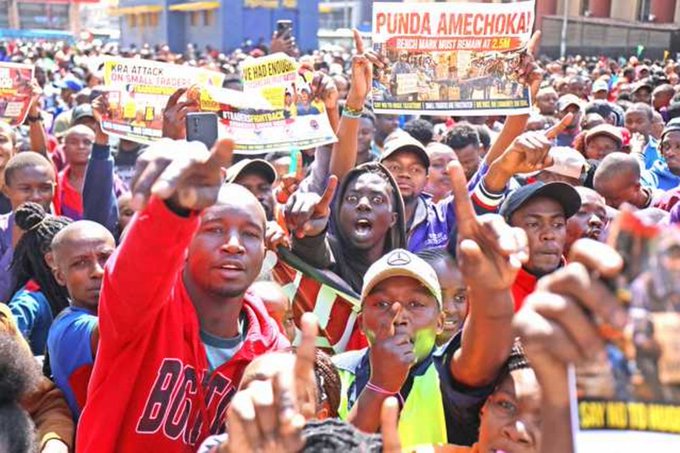
On Thursday, small-scale traders in Nairobi took to the streets to protest changes to import-duty valuation. The Kenya Revenue Authority had raised the minimum customs benchmark for a consolidated 40-foot container from KSh2.5 million to KSh3.2 million, effective 20 August. The authority maintains that the measure is designed to address under-declaration and undervaluation of imports — practices that, it argues, disadvantage compliant businesses and local manufacturers.
But for traders, the mathematics is not merely a question of customs valuation. It is a question of survival.
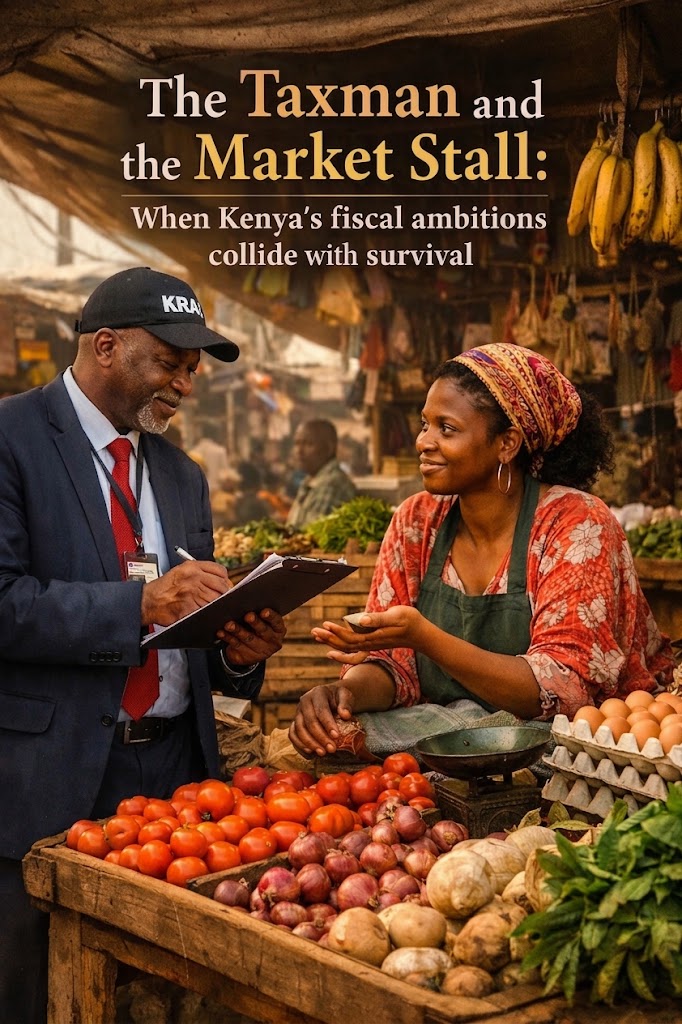
For a small trader operating on narrow margins, every additional cost eventually finds its way to the shop counter. Importation becomes more expensive, prices rise, consumers feel the squeeze, and the trader is left asking a question that has no comfortable answer: how much more can the small business absorb?
That question carries considerable political weight in a country where the memory of the 2024 Gen Z uprising remains vivid and unresolved.
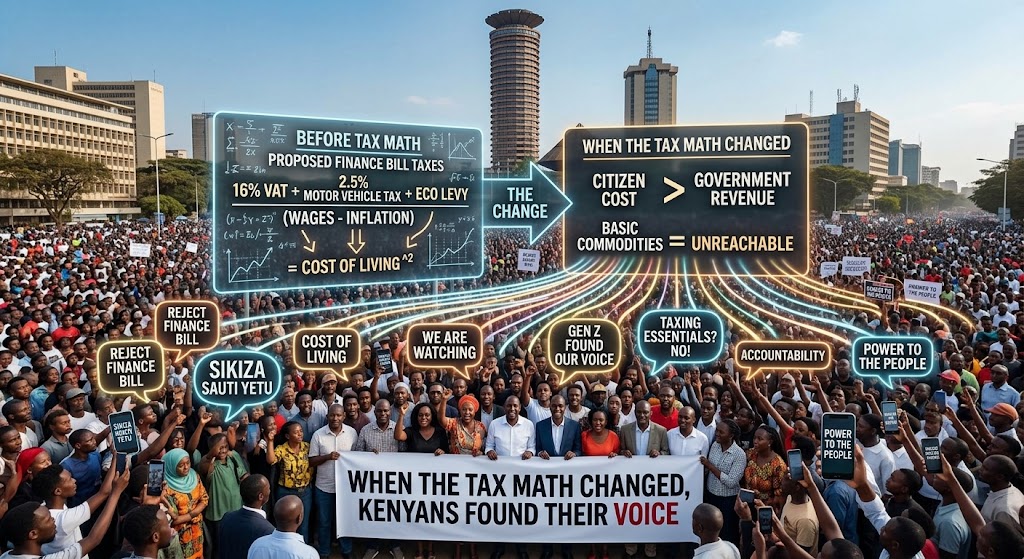
Two years ago, thousands of young Kenyans mobilised against the Finance Bill, transforming what initially appeared to be a debate over taxation into a far broader national reckoning — about the cost of living, public accountability, government spending, and the fundamental relationship between citizens and their leaders. The pressure was sustained, organised, and ultimately decisive. President William Ruto withdrew the Finance Bill. The lesson was unmistakable: Kenyans were no longer willing to discuss taxation only in boardrooms and parliamentary chambers. They wanted to be part of the conversation — and they were prepared to make themselves heard.
Today, that voice is being heard again. Not only from Gen Z, but from traders whose businesses form the backbone of Kenya’s informal and small-business economy. The faces have changed. The frustration has not.
The government, however, faces a genuinely difficult balancing act. Kenya requires revenue to finance public services, infrastructure, and national programmes, while simultaneously shielding households and businesses from excessive economic pressure. Revenue collection cannot be separated from the economic realities of the people expected to provide it. That tension is not new. But it is becoming harder to manage in an environment where citizens are more organised, more vocal, and less patient than at any point in recent memory.
This is where leadership becomes more than the ability to introduce policy. It becomes the ability to listen.
The events of the past two years have demonstrated clearly that Kenya’s younger generation is politically conscious, digitally connected, and increasingly unwilling to remain silent when policies threaten their livelihoods. The Gen Z movement changed the language of political participation. It showed that a generation once dismissed as apathetic could organise rapidly, challenge powerful institutions, and demand explanations — and win. That shift has not reversed. If anything, it has deepened.
The current traders’ protests deserve attention beyond the immediate customs dispute. They represent another test of whether government policy can be implemented alongside meaningful consultation with those directly affected — or whether the pattern of announce, resist, and retreat will define this administration’s relationship with ordinary Kenyans.
The question before the government is not simply whether taxes should be collected. Of course they should. It is whether the tax system can raise revenue without suffocating the very enterprises that generate economic activity in the first place.
A strong economy is not built on taxation alone. It requires businesses capable of surviving, workers capable of earning, consumers capable of spending, and young people capable of imagining a future within their own country rather than beyond it. When small traders find their margins crushed and their goods priced out of reach, the damage does not stay at the border. It ripples outward — through markets, through households, through communities that have no buffer against the pressure.
Kenya’s government has a legitimate responsibility to collect revenue and protect the integrity of the tax system. Traders, equally, have a legitimate right to question policies that they believe threaten their livelihoods. Between those two responsibilities lies space — not for confrontation, but for dialogue, transparency, and accountability. That space needs to be used.
Because when the tax mathematics changes, it is not only accountants who take notice. The trader notices. The consumer notices. The young person notices. The family notices. And when ordinary citizens begin asking questions, the answer cannot be silence.
Kenya does not need a war between the government and its people. It needs a government confident enough to hear its citizens, a private sector strong enough to create opportunity, and a generation young enough to demand a better future and courageous enough to participate in building it.
The tax debate, once again, is becoming something larger than taxation.
It is becoming a conversation about what kind of Kenya citizens want to inherit — and what kind of Kenya they are prepared to build.
Similar Posts by The Mt Kenya Times:
- Counting regions, chasing power: Kenya’s road to 2027
- Kipchoge completes the circle
- Who exactly has been governing Kenya?
- The payroll AI that actually earns trust
- What the Job story teaches Christians about suffering and faith
About the Author