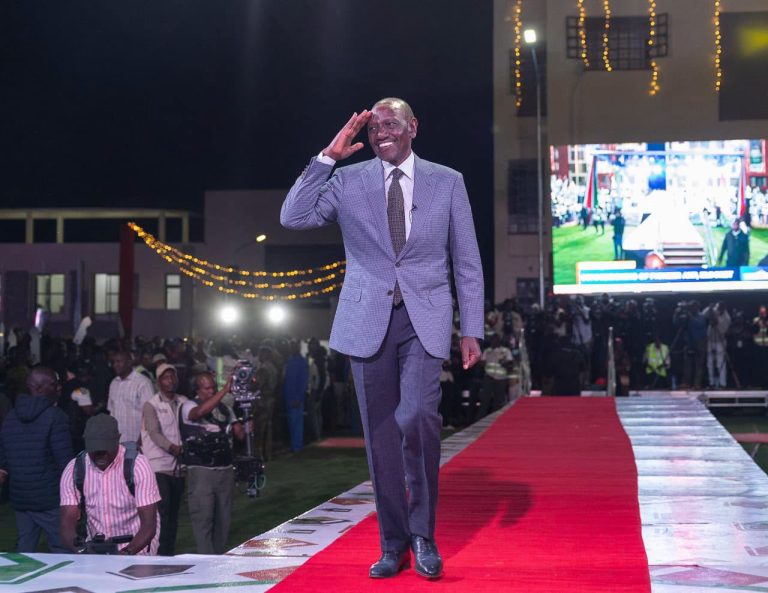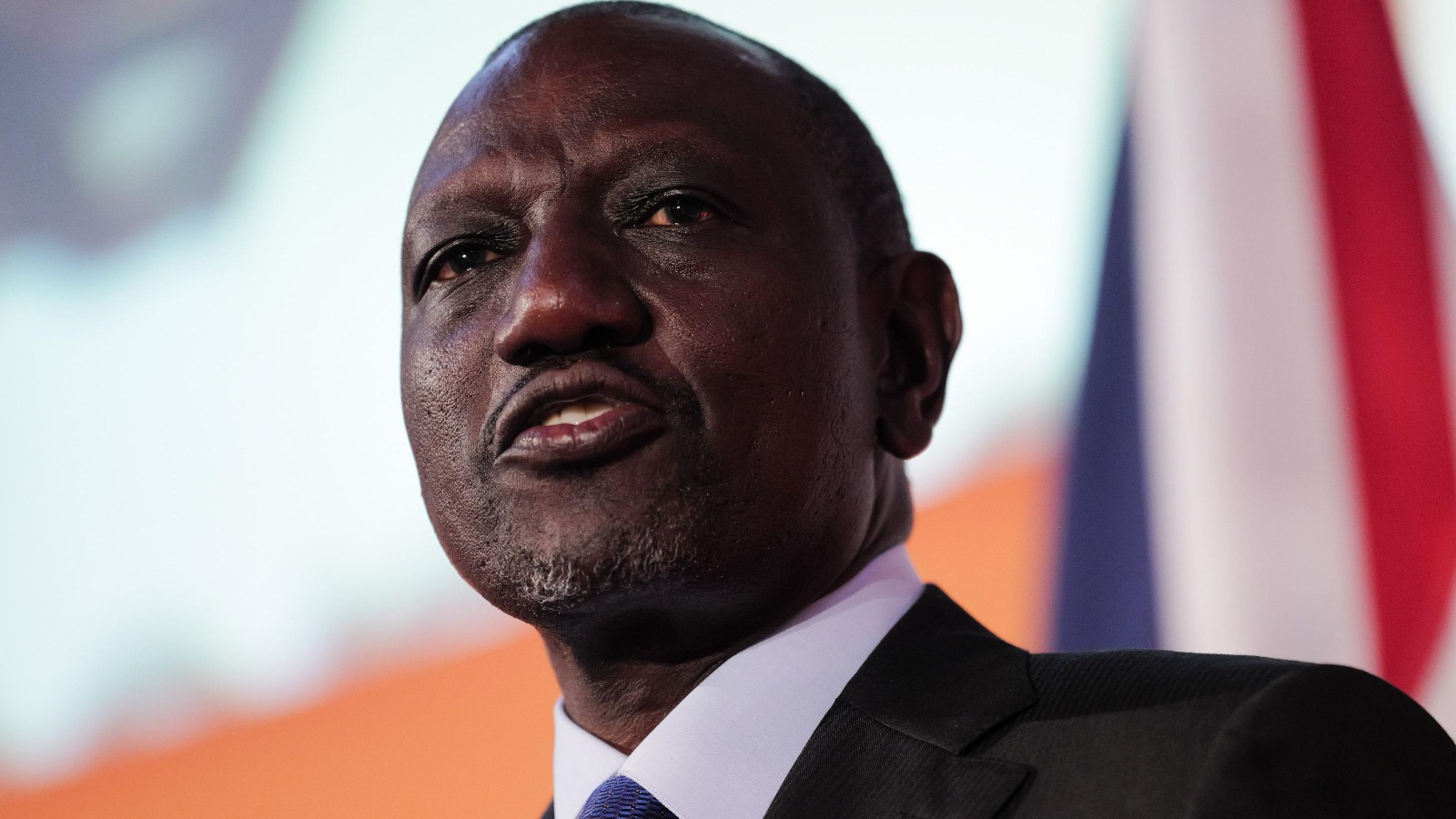
President William Ruto
The campaigns have not officially begun, but the counting has — and the gap between political arithmetic and everyday reality may decide everything
By Levis Wangamati
Kenya has a peculiar habit of beginning its national elections long before election day. The campaign posters may not yet cover every roadside, political rallies may not yet have reached their full roar, and the ballot papers remain far away. But politically, the country is already counting. Politicians are counting regions, parties are counting alliances, leaders are counting loyalists, and strategists are counting constituencies. Behind closed doors, one question is already taking shape: where will the winning numbers come from when Kenyans finally go to the polls?
This time, however, there is a difference that matters. Kenya is not merely behaving as though the election season has begun — the electoral process itself is moving, while political calculations are accelerating even faster. Governing, campaigning, coalition-building and succession politics are increasingly overlapping. The result is an unusually long political season in which tomorrow’s election is beginning to compete with today’s government for national attention.
President William Ruto’s political camp faces a complicated strategic test as a result. The broad arrangements surrounding his administration have expanded its political reach considerably, but wider alliances do not automatically eliminate internal competition. Sometimes expansive coalitions simply move the contest from outside the house to inside it. That is why succession calculations within the governing establishment matter so much right now. The question is no longer only how the government performs today, but who remains politically relevant when the next chapter begins.
Nowhere is this calculation more intense than in Mount Kenya. For years, Kenyan electoral strategy has treated the region as a political prize to be captured, negotiated with, or interpreted as a single collective voice. That assumption is becoming harder to sustain. Several competing centres of influence are emerging within the region, each seeking to shape its political future on its own terms. Deputy President Kithure Kindiki’s growing footprint in Mount Kenya East is an important part of that evolving contest — and it is not the only one.
Former Deputy President Rigathi Gachagua is simultaneously seeking to maintain and expand his influence through the Democracy for the Citizens Party (DCP). Political activity across Tharaka Nithi and the wider central region illustrates how local calculations are being reshaped around competing personalities, parties and interests. The significance of this contest extends beyond who is popular today. At its heart is a larger question: who will have the political legitimacy to negotiate the region’s economic and political interests when the next government is being formed?
The old assumption of a single, unified Mount Kenya political direction is giving way to something more fragmented and unpredictable. Regional loyalties, individual ambitions, generational shifts and competing political vehicles could produce a genuinely contested landscape by the time Kenyans vote. Gachagua’s mobilisation adds another variable that is difficult to model, while the government simultaneously attempts to consolidate its own influence across the same terrain.
Ruto faces an equally complex challenge within his own administration. He must demonstrate that his broad governing coalition can retain sufficient national support while managing the competing ambitions of influential figures within it. This makes Kenya’s political landscape considerably more complicated than a straightforward government-versus-opposition contest.
The opposition, for its part, is still searching for its most effective configuration. Several leaders are manoeuvring for influence ahead of the presidential campaign, and the process of converting individual strengths — regional support, national recognition, established constituencies — into a single coherent alternative has proven difficult. The emergence of platforms such as the Linda Mwananchi Movement illustrates that the search for a political centre capable of mounting a credible challenge remains unsettled.
The opposition’s biggest challenge may not be finding capable leaders. There is no shortage of those. It is finding sufficient consensus among leaders whose ambitions frequently overlap. A coalition can contain powerful personalities and still fail at the ballot box if its arithmetic never becomes genuine unity. Leaders who agree on the need for change must eventually confront harder questions: who leads, how is power shared, and what happens after victory?
Those questions are no easier inside the governing coalition. Broad alliances are simplest to assemble when their members share a common opponent. They become considerably harder to sustain when the conversation turns to the distribution of power after an election. That tension explains why Kenya’s political contest is increasingly becoming a battle over tomorrow’s government, even while today’s administration is still expected to deliver on its current mandate.
Then there is the institution that will ultimately manage the electoral contest itself. The Independent Electoral and Boundaries Commission sits at the centre of growing political scrutiny. High-profile figures, including Gachagua, have raised concerns about electoral technology, procurement and institutional integrity. The commission has rejected such allegations and maintained that its operations are guided by constitutional and legal requirements. But the exchanges have intensified the spotlight on an institution whose credibility matters more than perhaps any other in the months ahead.
Kindiki has urged the commission to remain firm against political pressure and challenged opponents to focus on presenting policy alternatives rather than undermining the body responsible for administering the election. Such exchanges are predictable in a competitive political system. The underlying question, however, is considerably more consequential: can Kenya build and maintain enough public confidence in its electoral infrastructure before the political temperature rises beyond the point where institutional assurances carry weight?
Electoral legitimacy begins long before results are announced. It depends on the credibility of the voter register, transparency in procurement, the independence of oversight institutions, and — above all — public confidence that the rules will be applied fairly. Allegations concerning electoral technology should neither be accepted as established fact without evidence nor dismissed simply because they come from political opponents. They deserve transparent and rigorous scrutiny. The consequences of widespread electoral distrust can extend far beyond a single election day, particularly when political rhetoric is already becoming more confrontational.
Leaders across the political spectrum, including Homa Bay Governor Gladys Wanga, have warned against political insults, intimidation and violence. Those warnings matter at a moment when campaign language is growing sharper. Elections should be fierce contests of ideas, policies and competing visions. They should not become tests of which political faction can most effectively intimidate the other.
Yet perhaps the most consequential part of the coming election is unfolding far from political rallies and elite strategy sessions. It is happening every day in local markets, shops, small businesses and ordinary households. Yesterday, small-scale traders in Nairobi demonstrated against new customs valuation rules introduced by the Kenya Revenue Authority. At the centre of the dispute is a revised KSh3.2 million cargo benchmark that traders argue places additional pressure on already struggling businesses. The authority has clarified that the benchmark is a standardised risk-management reference rather than a flat tax, but for small importers operating on narrow margins, the practical consequences remain a serious and immediate concern.
The dispute exposes a disconnect that political leaders would be unwise to ignore. While strategists spend their time counting constituencies, ordinary citizens are spending theirs counting the cost of survival.
That contrast could become one of the defining themes of the next election. Political strategists can spend months calculating which coalition will capture which voting bloc. But a voter struggling to restock a business, pay school fees, meet household expenses or manage rising living costs will assess political leadership through an entirely different lens. This is where the political class risks making a familiar mistake — confusing electoral arithmetic on a spreadsheet with the real and constantly shifting mood of the electorate.
A constituency is never simply a number on a political map. It is made up of people carrying economic pressures, historical memories, political expectations and personal experiences into the voting booth. A voter who supported one coalition in the last election is not permanently attached to it. Communities change direction. Previously secure regions become competitive. Yesterday’s stronghold becomes tomorrow’s battleground. No coalition agreement, however carefully constructed, can eliminate that uncertainty.
Kenya’s next political contest is taking shape, but it is not a straightforward battle between two traditional sides. It is a multidimensional contest involving shifting alliances, regional influence, institutional credibility, economic pressure and public trust. While political leaders calculate how to preserve their bases and build new coalitions, ordinary citizens are asking a simpler and more urgent question: will the next government make life more manageable?
Elections are never ultimately won on spreadsheets or in closed-door strategy meetings. They are decided when individual citizens enter the voting booth and make their choices. Politicians can count regions, alliances, parties and constituencies for as long as they wish. But the final number remains beyond their control until the ballots are cast.
The politicians may already be counting. Kenya’s voters still hold the final number.
Similar Posts by The Mt Kenya Times:
- Araujo sidesteps Liverpool permanency question as Anfield stint gathers momentum
- CAS to rule on Senegal’s AFCON title fight by end of November
- Let students reward their teachers with excellence, not expensive gifts
- The emperor’s new markets: How cartels in fertilizer, cement and steel still rule the regional kingdoms of SADC, COMESA and the EAC
- Kenya’s missing link in the war against corruption: Why government must invest in grassroots social audits
About the Author