The taxman and the market stall: When Kenya’s fiscal ambitions collide with survival
Kenya cannot build a bottom-up economy through top-down surprises — and the streets of Nairobi are saying so loudly.
By Levis Wangamati
An order is placed overseas. A deposit is sent through mobile money or a local bank, calculated to the last shilling based on current freight costs and projected market demand. Weeks later, the shipment lands at the port or an inland container depot. By the time the goods are routed through customs clearance, the arithmetic has shifted fundamentally. The valuation benchmark has been adjusted upward. Logistical and clearance charges have moved. The slim profit margin that made the import venture viable when the order was first placed begins to evaporate — before the merchandise has even been unpacked in a local store.
For a large multinational corporation with deep financial reserves, diversified supply chains and a dedicated legal department, that kind of friction is a manageable variance on a quarterly balance sheet.
For a small trader operating out of a cramped stall in Kamukunji, Gikomba or along the bustling stretch of Luthuli Avenue, it represents an entirely different order of magnitude. It can mean the difference between keeping a business afloat and shutting down permanently under a mountain of unpayable debt.
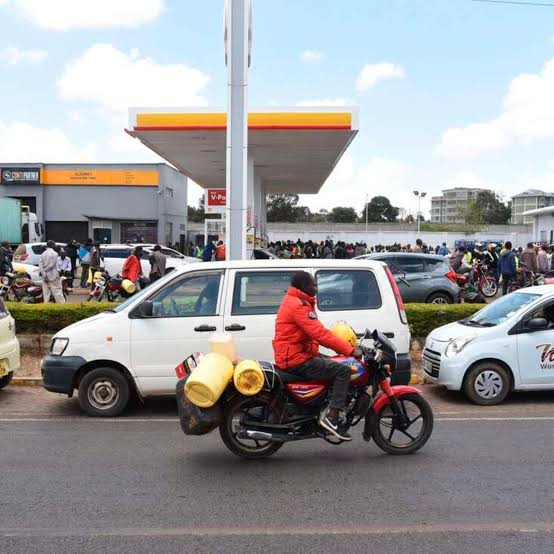
That is the stark reality underlying yesterday’s clashes in Nairobi’s Central Business District between small-scale importers and the Kenya Revenue Authority over adjustments to consolidated cargo taxation. What appears from the sterile, air-conditioned corridors of government offices as a routine technical question of customs yield and revenue optimisation is, on the ground, an existential question of economic survival.
And that distinction matters profoundly.
When policymakers and tax technocrats decide to nudge a customs valuation benchmark upward, the language used to justify the move is clinical, orderly and administrative. We hear terms like revenue mobilisation, compliance efficiency, closing loopholes and creating a level playing field. On paper, the spreadsheet is clean. The policy memo reads logically. The projected Treasury inflows look convincing.
The marketplace, however, is none of those things.
The real marketplace is volatile, unforgiving and intensely competitive. Operating margins are razor-thin. Capital is often mobilised through loans, savings groups or borrowed resources. Stock can sit on shelves for weeks as consumer purchasing power fluctuates. Customers negotiate aggressively over every coin. Transport costs are unpredictable. Rent does not wait for bureaucratic adjustments. School fees do not pause because a container took an extra week to clear. Neither do family medical bills or the next inventory cycle.
A small trader does not experience a tax or valuation adjustment as a percentage point on a macroeconomic chart. They experience it as lost inventory, a cash-flow deficit, delayed debt repayments or a business model that suddenly ceases to make any economic sense.
This is where Kenya’s broader fiscal policy confronts a profound structural contradiction.
The state is trying to walk in two directions at once. On one hand, it seeks more revenue from an informal economy that it simultaneously wants to expand, formalise and elevate as the engine of grassroots prosperity. It speaks the language of bottom-up economic transformation while frequently designing taxation from the top down. It celebrates the resilience of the small entrepreneur in policy speeches, yet often meets that same entrepreneur at the customs border primarily as a revenue target.
That is the defining irony of our current economic model.
You cannot simultaneously ask the informal sector to serve as Kenya’s socioeconomic shock absorber, its largest employment generator and its grassroots growth engine — while treating every additional financial squeeze as though the sector possesses an infinite capacity to absorb pain.
The informal economy is not a minor side road running parallel to the formal economy. It is the main highway. It absorbs millions of citizens whom the formal labour market cannot accommodate. It builds commercial ecosystems where traditional institutions hesitate to invest. It moves goods into neighbourhoods and communities that conventional retail networks rarely reach.
Granted, it is messy. It is difficult to regulate. It grapples with genuine compliance challenges that any serious state must address. Yet it is also remarkably resilient. And governments should exercise real caution before they tax that resilience into fragility.
None of this is an argument that small traders should be placed above the law. A functioning state requires predictable revenue to finance public infrastructure, education, security and healthcare. Customs authorities have a legitimate responsibility to protect revenue, enforce standards and prevent abuse of trade frameworks.
However, strict enforcement is not synonymous with economic intelligence.
A tax policy that maximises immediate collection from a struggling enterprise today may inadvertently destroy the very business ecosystem that would have generated sustainable taxable activity tomorrow. That is the long-term calculation that policymakers too often overlook — and too rarely pay the price for overlooking.
The deeper problem is not taxation itself. It is unpredictability.
When importers cannot estimate what a shipment will cost before committing capital, business planning becomes speculation. When valuation rules change without adequate transition periods, risk is shifted disproportionately onto the smallest market participants. When clarification arrives only after protests have erupted, government is no longer managing policy. It is merely managing the consequences of policy.
That is why the familiar sequence has become so deeply troubling. A policy shift is announced. Traders raise concerns. Protests erupt. Security forces deploy. Clarifications are issued. Meetings are convened. Promises are made. Then the cycle repeats itself.
This is not a functioning feedback loop. It is institutional firefighting.
The solution cannot simply be another round of official statements or vague assurances that stakeholders are being engaged. Kenya needs permanent mechanisms that make meaningful consultation unavoidable rather than reactive. Major customs duty and valuation adjustments affecting small-scale importers should be accompanied by realistic transition windows, giving traders adequate time to adjust supply chains and honour existing financial commitments.
The government should also consider a transparent, tiered framework that clearly distinguishes between multinational corporations moving thousands of containers and associations of traders pooling modest resources to import a single consignment. These are fundamentally different economic actors and should not be treated as though they operate under identical conditions.
Beyond that, a dedicated trade ombudsman mechanism linking the Kenya Revenue Authority directly with market associations, clearing agents and small-business representatives would help bridge the growing gap between Times Tower and the market stalls. A trader should never feel that their only path to being heard is marching into the central business district under the threat of teargas. That is not a concession to disorder. It is sound economic governance.
The objective must be to move policy arguments from the streets to the negotiating table — replacing confrontation with predictability and emergency clarifications with genuine institutional dialogue.
Kenya does not have to choose between collecting revenue and protecting small businesses. It simply has to become considerably better at doing both.
A market stall is never just a physical space. It is somebody’s capital. Somebody’s rent. Somebody’s school fees. Somebody’s payroll. Somebody’s second chance. And when the state squeezes that micro-economy without providing room to breathe, the consequences eventually travel far beyond the market stalls and return — with interest — to the state itself.
The lesson from Nairobi’s streets must therefore extend beyond the latest tax dispute.
Kenya cannot build a bottom-up economy through top-down surprises. It cannot demand compliance without offering predictability. It cannot celebrate entrepreneurship while making survival increasingly difficult. And it cannot continue waiting for the teargas to clear before it starts listening.
The marketplace should be where economic policy builds livelihoods. Not where it goes to fight.
Similar Posts by The Mt Kenya Times:
- Mt Kenya Times ePAPER October 17-18, 2026
- Ruto bets billions on Kerio Valley — with one eye on 2027
- Ruto’s health ministry kills Murang’a’s digital hospitals
- Kenya bets on Mount Kenya to drive a billion-shilling tourism revival
- Do you have a wealth vision? Or are you just working until you die?
About the Author