The Mt Kenya Times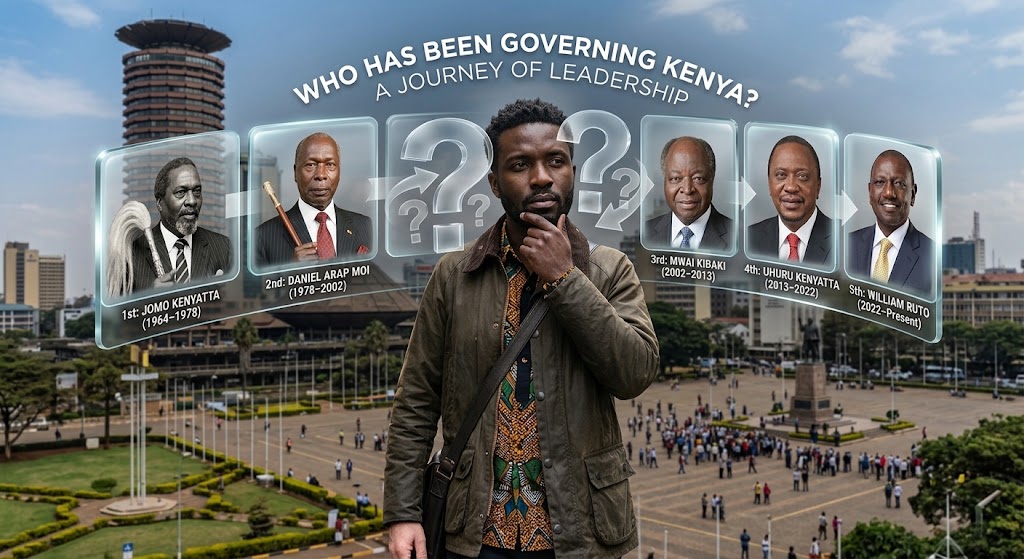
“A government cannot spend five years explaining why the opposition would have governed worse. At some point, it must explain what it did with the power Kenyans gave it.”
There is a curious habit taking root in Kenyan politics. Whenever the government is asked what it has achieved, somebody seems ready with an answer about what the opposition has failed to do. Ask about the cost of living and the conversation suddenly travels back into the history of the opposition. Ask about unemployment and we are reminded that opposition politicians have never created enough jobs. Ask about healthcare and, somehow, we end up discussing the failures of another administration. Raise corruption and before long we are being taken on a tour of scandals from another era. The ordinary Kenyan is therefore left with a deceptively simple question: who exactly has been governing Kenya?
The answer should not require much political mathematics. The government has the mandate to govern. It controls the Executive, prepares and implements the national budget, collects taxes, formulates policies, appoints public officials and directs an enormous institutional machinery that is ultimately financed by the Kenyan taxpayer. The opposition does not possess these instruments of government. Yet there is an increasing tendency to speak as though the opposition should explain why hospitals are struggling, why roads have not been completed, why young people cannot find work or why the cost of living remains difficult for ordinary families. This is where political rhetoric stops being amusing and starts becoming a problem of democratic accountability.
Kenyans did not vote in 2022 simply to determine which politicians would defeat their opponents. They voted because political parties and candidates presented promises and visions of a better country. They were promised economic transformation, employment opportunities, improved healthcare, agricultural prosperity, better education, housing, infrastructure and a more dignified relationship between citizens and the State. The political formation that won the election therefore inherited much more than an election certificate. It inherited public authority, public resources, government institutions and, above all, the responsibility to deliver on the promises made to the electorate. The opposition inherited something different: the responsibility to scrutinise power.
That distinction is important because criticism of government is not, by itself, an act of sabotage. In a functioning democracy, an opposition is expected to question decisions, examine expenditure, expose failures, challenge policies and offer alternative approaches. It is supposed to make those exercising power uncomfortable when they are tempted to forget that public office is a temporary trust. Opposition politicians are not expected to build every government hospital, employ every nurse, repair every road or collect the taxes from which national programmes are financed. Their constitutional and political role is to scrutinise those who do.
A government should therefore not treat every difficult question as an attack on the State. Public office is not private property, and accountability is not disrespect. Citizens have every right to ask what has happened to the resources and authority entrusted to their leaders. Indeed, a government that is confident in its record should welcome evidence-based scrutiny because good performance does not become less impressive simply because somebody asks questions about it.
But the opposition cannot escape accountability either. There comes a point when a political movement that hopes to take power must move beyond telling Kenyans what is wrong and explain what it would do differently. It cannot build a credible national alternative entirely from anger, slogans and a catalogue of government failures. At some point, the opposition must answer a straightforward question: if you were given the opportunity to govern, what exactly would you do? That is the democratic conversation Kenya needs. The government should bring its record. The opposition should bring its alternative. The voter should bring memory.
And memory is becoming increasingly difficult for politicians to control. The digital age has quietly destroyed one of the oldest privileges of political life—the ability to forget what was said. Campaign promises are recorded. Manifestos remain online. Interviews can be replayed. Speeches are clipped and circulated. Statements that once disappeared with the political wind can now return years later with remarkable precision. A politician may forget a promise, but the internet has a long memory, and so increasingly does the voter.
This could make the 2027 General Election an important test of Kenya’s political maturity. The Kenyan voter is becoming less willing to accept the idea that political loyalty requires unconditional defence of one’s political camp. A citizen can support the government and still criticise it. A voter can oppose the government and still acknowledge when it has done something right. Someone can change their political opinion without seeking permission from a party headquarters. That is not betrayal. It is the normal behaviour of a citizen who understands that political parties exist to serve the public, not the other way around.
For too long, political competition in Kenya has encouraged citizens to choose sides first and examine evidence later. If one’s political camp succeeds, the achievement is celebrated without qualification. If it fails, an explanation is quickly found somewhere else. If an opponent does something useful, its importance is minimised. If one’s own side makes a mistake, history is summoned as a defence. The result is a political culture in which accountability can become secondary to loyalty.
A mature democracy must be more demanding than that. A government can achieve something significant and still fail elsewhere. An opposition can identify a genuine problem and still offer a poor solution. A government can inherit difficult circumstances and nevertheless be accountable for how it responds to them. An opposition can correctly expose a weakness without necessarily possessing the right remedy. Democracy is not a football match in which every event must be interpreted as either victory or defeat. It is an accountability system in which evidence should matter more than political allegiance.
That is why the coming election should not be reduced to a contest of personalities, insults, historical grievances and carefully manufactured political drama. The incumbent should not be judged by whether the opposition has built a road. It should be judged by whether the government built the roads it promised. It should not be judged by whether opposition politicians created enough jobs. It should be judged by whether government policies produced meaningful and measurable opportunities for Kenyans to work, earn and live with dignity. It should not be judged simply against the failures of previous administrations. It should be judged against its own promises, its own policies and the enormous authority entrusted to it by the electorate.
The opposition, meanwhile, must face equally serious questions. What is its economic plan? How would it create employment? How would it reduce the burden on ordinary households? How would it improve healthcare and education? How would it fight corruption differently? How would it manage public debt and scarce public resources? Most importantly, what would it actually do rather than merely oppose? These questions are not designed to favour one political side. They are designed to restore the voter to the centre of the democratic conversation.
Kenya does not need politicians who simply tell citizens whom to hate. It needs political leaders capable of explaining what they have done, what they failed to do and what they intend to do next. The government has every right to defend its record, but it should defend it with evidence. The opposition has every right to criticise, but it should criticise with facts and present credible alternatives. The citizen, meanwhile, has the ultimate responsibility and privilege of listening to both sides, examining the evidence and making an independent judgment.
Eventually, the political theatre will end. The rallies will stop, the music will fade, campaign posters will peel from walls, the convoys will disappear and the microphones will fall silent. What will remain is the voter and the memory of what was promised. That is when politics becomes accountability.
The question will not be who shouted the loudest, who produced the most entertaining political clip or who managed to blame the previous administration most convincingly. The question will be much simpler and much harder: who kept their promises, who failed, who explained those failures honestly, who offered a credible alternative and who can still be trusted with the enormous power that comes with public office?
Because Kenyans did not elect governments to spend five years explaining why somebody else would have governed worse. They elected them to govern. And when the music stops, the posters disappear and the political excuses run out, there will be one final institution that no politician can campaign against, intimidate or permanently silence: the memory of the Kenyan voter. In 2027, that memory may prove more powerful than any slogan.
“The ballot will not ask who had the best excuse. It will ask who deserved the people’s trust”
Similar Posts by The Mt Kenya Times:
- Understanding parentification and its impact on learning
- Gachau bows out, but the passion stays
- AI Curse or boon: The Future of Intelligence: Artificial or Emotional?
- Dr. Ekrah Ndung’u wins TVET advocacy award after 12 years
- Mt Kenya Times ePAPER October 17-18, 2026
About the Author