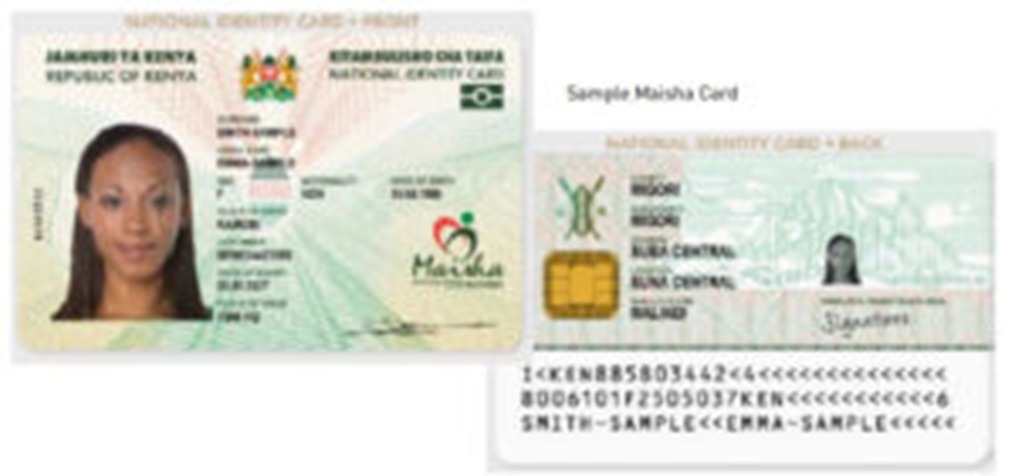
Maisha Card

By James Kilonzo Bwire
The Kenyan government’s recent announcement that citizens will need to renew their National Identity Cards (commonly known as Maisha Cards) every 10 years has sparked a mix of reactions.
While the stated goals of modernizing the ID system, enhancing security, and keeping personal data current are reasonable, the policy raises some concerns that merit further discussion.
Principal Secretary Julius Bitok justified the move by noting that it aligns with practices in other African countries like Uganda, Tanzania, Nigeria, Senegal, and international standards.
The Maisha Card features a microchip with security features and personal details, similar to ATM cards, which have a 10-year lifespan.
Bitok emphasized that the expiration date is not tied to election cycles.
One positive aspect is that applicants renewing expired IDs will not need to provide fresh biometrics, only updated passport photos. This avoids the burden of repeated biometric data collection. However, it raises questions about the long-term integrity of the biometric database if it is not periodically refreshed. Facial features can change over a decade, potentially reducing the accuracy of facial recognition systems.
The Maisha Card’s microchip technology promises enhanced security compared to the previous ID cards. But the 10-year expiration could be perceived as a financial burden on citizens, especially those in lower income brackets.
While the government has not announced renewal fees, past attempts to introduce charges for ID applications and replacements faced public backlash and court challenges.
To address these concerns, the government should:
Clearly communicate the rationale and benefits of the 10-year renewal policy to citizens, emphasizing how it improves security and service delivery.
Ensure the renewal process is efficient, accessible and affordable for all, with minimal bureaucratic hurdles.
Provide options for citizens to update their photos and other details more frequently if desired, to maintain the integrity of the biometric database.
Explore ways to subsidize or waive renewal fees for economically disadvantaged groups to make the policy equitable.
Continuously monitor and audit the system to identify and address any privacy or security vulnerabilities.
Potential Benefits of the 10-Year Renewal Policy
Proponents argue that the 10-year renewal policy offers several benefits:
Enhances security by regularly updating ID cards with new security features and reducing the circulation of expired cards that could be misused.
Keeps personal data current, ensuring the government has accurate information on its citizens for planning and service delivery.
Aligns Kenya with international best practices on ID card validity periods, facilitating cross-border recognition and transactions.
Provides an opportunity to gradually phase out old ID cards and transition to the new Maisha Card system.
Generates revenue for the government through renewal fees to sustain the ID system, although this should be balanced against affordability concerns.
Potential Drawbacks and Risks
Critics argue that the 10-year renewal policy has several potential drawbacks and risks:
Imposes a recurring financial burden on citizens, especially the poor, to maintain a mandatory ID.
Increases the risk of exclusion if citizens fail to renew their IDs due to lack of awareness, resources or access to renewal centers.
Creates a backlog of renewal applications every 10 years, potentially overwhelming the ID issuance system and causing delays.
Raises privacy concerns if the government fails to properly secure the personal data collected through the renewal process.
Erodes trust in the ID system if the renewal process is perceived as inefficient, corrupt or politically motivated.
Conclusion
The Kenyan government’s decision to require 10-year renewals for National IDs is a significant policy shift that aims to modernize the ID system and enhance security. While the goals are reasonable, the policy must be implemented transparently, efficiently and equitably to gain public trust and support. The government should address concerns about affordability, data integrity, and exclusion to ensure the Maisha Card serves all citizens effectively. Ongoing monitoring, evaluation and public engagement will be crucial to refine the policy and make it a success.
The writer is a communication and Media personality from Nakuru CountyMaisha Card
Similar Posts by The Mt Kenya Times:
- Mt Kenya Times ePAPER October 20, 2026
- Ruto rallies Kalenjin elders in Rift Valley unity push
- Sonko bid to nullify impeachment judgments fast-tracked in court
- Arrest the sponsors, not just the foot soldiers, Kalonzo tells police
- Police and politics shut down Kitale’s busiest market
About the Author