The Mt Kenya Times
By David Ndirangu
Worth Noting:
- Polluters who operate with carbon credits below the allocated amount are subjected to heavy penalties. To avoid the penalties they must spend money to buy carbon credits to cover the shortfall. Some companies produce less emissions than the amount allocated. They therefore find themselves with surplus carbon credits which they can either keep for the future or sell to those ones in need of them.
- The carbon credits marketplace comprises two segments; The Regulated market and the Voluntary market. The regulated market is set by the cap-to-trade regulations and is at the regional or state level. The voluntary market is where individuals or enterprises buy carbon credits to offset their carbon emissions and is optional.
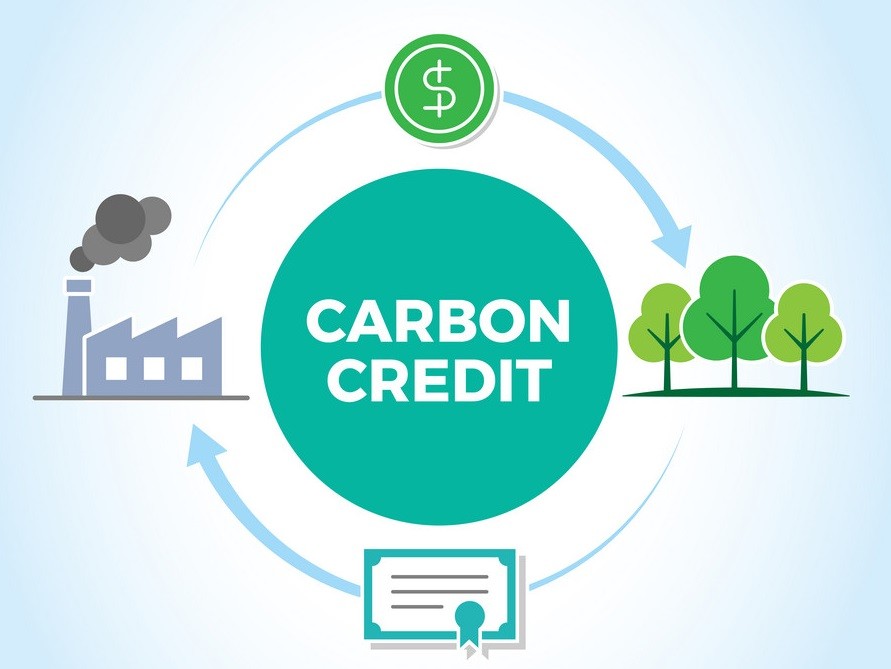 Carbon credits – refers to measurable, verifiable emission reductions from certified climate action projects. These are projects that reduce, avoid or remove CO2 (Carbon dioxide) or greenhouse gases (GHG) emissions into the environment. Carbon credits also commonly known as carbon allowances work like permission slips for emission of GHG. These are marketable permits that each reflect one metric ton of CO2 (or GHG) that a business is allowed to emit. The Kyoto Protocol of 1997 and the Paris Agreement of 2015 are the two International accords that laid out international CO2 emission goals creating the first international carbon market. This monetisation of pollution is effectively an environmental tax designed to change human behaviour for the better.
The Carbon credits assign value to actions that reduce, avoid or remove GHG emissions. The scheme rewards the ‘good guys’ who clean the environment while imposing the cost of the ‘bad guys’ (perpetrators).
A carbon credit represents the right to emit GHG equal to one ton of CO2 which is equivalent to a 3,862 kms (2,400 miles) drive in terms of CO2 emissions according to Environmental Defense Fund. Carbon credits are given under what is known as “cap-and-Trade” programs. These are regulations that set a limit on carbon (or GHG) emissions per enterprise each year– the cap. The cap gradually decreases over time making it harder and harder to stay within the cap. Enterprises are thus compelled to reduce emissions to stay under their caps.
Polluters who operate with carbon credits below the allocated amount are subjected to heavy penalties. To avoid the penalties they must spend money to buy carbon credits to cover the shortfall. Some companies produce less emissions than the amount allocated. They therefore find themselves with surplus carbon credits which they can either keep for the future or sell to those ones in need of them.
The carbon credits marketplace comprises two segments; The Regulated market and the Voluntary market. The regulated market is set by the cap-to-trade regulations and is at the regional or state level. The voluntary market is where individuals or enterprises buy carbon credits to offset their carbon emissions and is optional.
Carbon offsets are created when individuals or enterprises undertake or finance projects that reduce GHG emissions. Projects that reduce carbon emissions can be categorised into; Mechanical and natural. Natural projects include activities to do with reforestation and restoration of wetlands – they collect CO2 from the environment. To capture one ton of CO2 emissions one should grow approximately 50 trees for one year.
Mechanical solutions include investments in new technology that result in higher operational efficiency that in turn lower emissions for example renewable energy projects and direct carbon capture technology projects. Carbon offsets can be considered as a measurement unit to ‘compensate’ businesses investing in green project initiatives (natural or mechanical) that eliminate emissions.
Once an offset has been produced, it can either be kept by the producer or traded in the voluntary carbon credit market.
Renewable energy projects, energy efficient projects, carbon and direct methanol capture, and land use and reforestation are some of the popular projects used for carbon offsets. There are third party independent auditors who collect, verify and analyse data to confirm validity of each offset project both for regulated and voluntary markets.
Kenya has been active in the carbon credit market primarily through projects that generate carbon offsets for instance in sustainable land use, reforestation, renewable energy and energy efficiency. In June 2023, through the Nairobi Auction, Kenya became the largest issuer of carbon credits in the voluntary market in Sub Saharan Africa by selling a record 2.2 million tons of carbon credits to Saudi Firms valued at US$25 million.
Enabled by the Climate Change Act 2023 and the finalising of regulations to create an enabling environment for carbon trading in the country, the Kenyan carbon market is poised to join the other leading global carbon markets.
The Carbon Market Guidebook for Kenyan Enterprises was launched on 12th April 2024 by the Kenya Private Sector Alliance (KEPSA) in conjunction with The World Bank Group to promote the Kenyan Carbon Market. It provides practical insights on carbon project development aimed at catalysing more sustainable business practices and more importantly offering the much needed non-debt, results based financing especially to Small and Medium Sized Enterprises (SMEs). Carbon avoidance projects in Kenya have for some time been working with local communities to avoid emissions by distributing more efficient devices like improved cook stoves (jikos), home biogas and solar systems.
Water filters that provide access to clean safe water without the need to boil the water have also been done in many areas. In these cases the communities involved have been benefiting financially from selling their carbon credits.
The Capital Markets Authority (CMA) is also working tirelessly towards positioning Kenya as a global carbon credits hub in Africa.
David Ndirangu Bsc. International Business Administration (USIU- A) CPA (K). Business Management Consultant and Author of the book; This is DAVE. Email: ndirangudavid2023@gmail.com
Similar Posts by The Mt Kenya Times:
- Mt Kenya Times ePAPER September 22, 2026
- Ruto offers Kenya as test case on African risk
- Gachagua demands fuel deal accountability, accuses Ruto of deception
- Azimio is dead. Long live the Ukombozi Alliance
- Court frees former presidents to play politics
About the Author