How Kenya’s parliament dismantled a deputy presidency in 72 hours
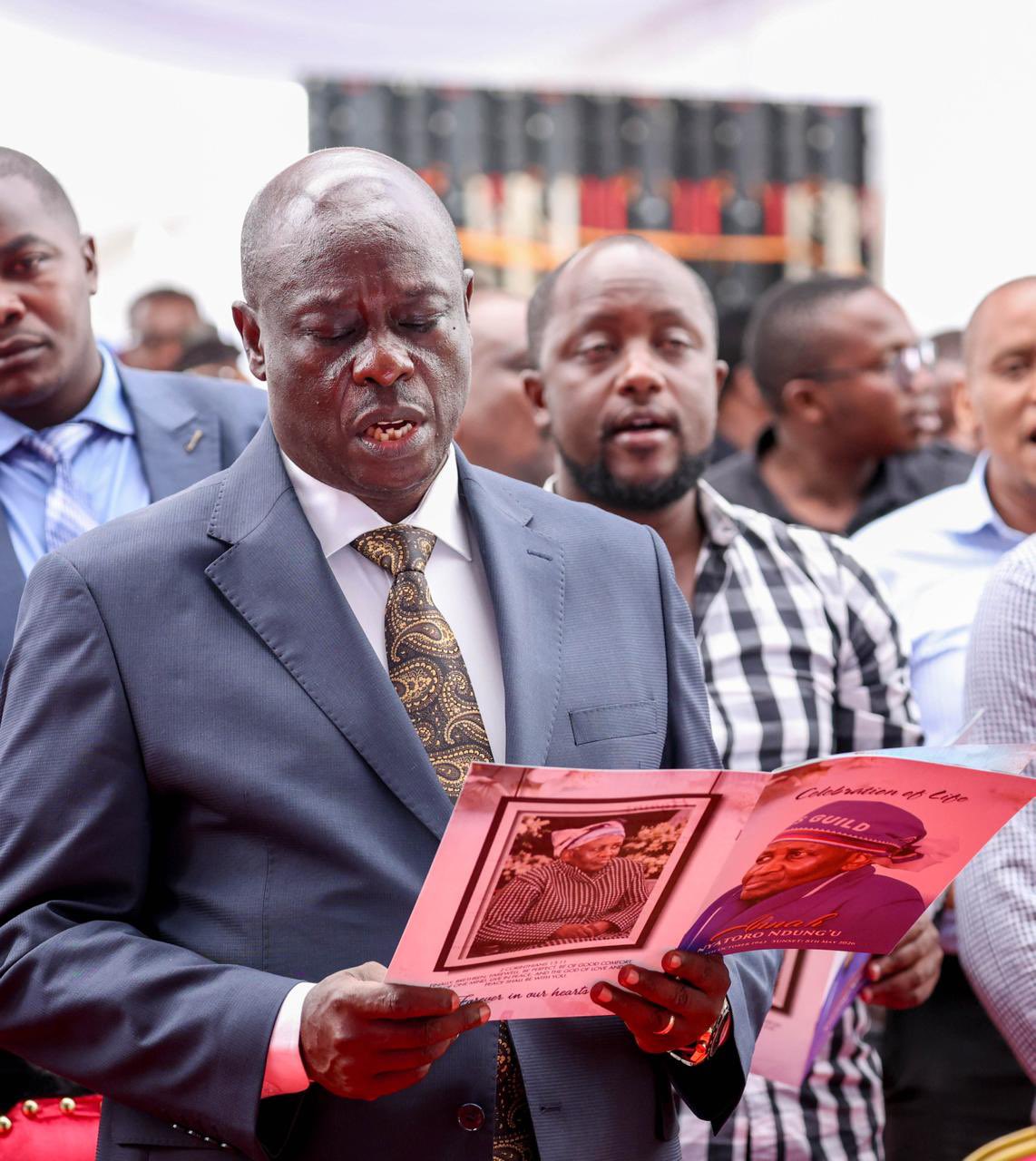
DCP Party leader Rigathi Gachagua
The three days that removed Rigathi Gachagua from office rewrote constitutional history — and left a trail of legal questions that courts are still untangling
By MKT Reporter
The Kenyan Senate voted on the night of October 17, 2024, to remove Deputy President Rigathi Gachagua from office, making him the first holder of that position to be impeached and ousted under Kenya’s 2010 Constitution — a verdict delivered in the absence of the man it destroyed.
What unfolded across three electric days in October 2024 was unlike anything Kenya’s post-2010 constitutional order had produced. It was part trial, part political theatre, part legal storm — and it ended not with a defendant in the dock but with a man allegedly lying in a hospital bed at Karen Hospital, his lawyers pleading in vain for a two-day adjournment while senators voted in a late-night session that sealed his fate. To understand how the country arrived at that moment, one must go back to where the drama properly began: not in the Senate chamber, but on the floor of the National Assembly, nine days earlier.
On October 8, 2024, Members of the National Assembly voted to impeach Deputy President Gachagua in a sitting where 281 MPs supported the ouster motion sponsored by Kibwezi West MP Mwengi Mutuse, with only 44 lawmakers opposing the motion and one abstaining. Only 233 MPs were needed to meet the two-thirds constitutional threshold. The margin was not just sufficient — it was emphatic. National Assembly Speaker Moses Wetang’ula declared the motion carried and notified the Senate of the resolution within the constitutionally required two days, setting in motion the clock that would govern everything that followed.
The motion, which had been initiated by Mutuse, accused Gachagua of gross misconduct and violations of the Constitution, with the accusations stemming from alleged gross violations of constitutional provisions including Articles 10, 27, 73, 75, 129, 147, and 152, that provide for the National Values and Principles of Governance and others that govern the integrity of leadership. The charges were sweeping in both scope and ambition. They included insubordination to the president, inciting ethnic violence, corruption, undermining government, and money laundering, among others — charges Gachagua rejected as politically motivated.
The Senate trial opened on Wednesday, October 16, with Senate Speaker Amason Kingi presiding over a chamber whose every word was being watched by a nation holding its breath. Appearing before the Senate that morning, Gachagua pleaded not guilty to each of the charges as they were read aloud by Senate Clerk Jeremiah Nyegenye. “Not guilty,” he said, again and again, with a deliberateness that seemed intended as much for history as for the senators in the room.
From the outset, the legal battle was fiercely contested. Gachagua’s legal team, led by Senior Counsel Paul Muite, filed a preliminary objection seeking to have Senior Counsel James Orengo barred from representing the National Assembly, arguing that Orengo, as a full-time state officer, should not be permitted to take part in the impeachment process. “It would be prejudicial to our client if this House will allow Senior Counsel James Orengo to represent the National Assembly in this process,” they submitted. The objection was dismissed by Speaker Kingi, who ruled that Orengo’s appearance did not constitute gainful employment. It was the first of many procedural skirmishes that would define the proceedings.
Speaker Kingi gave direction allocating the National Assembly three hours to present its case, supported by evidence and witnesses, with an additional two hours reserved for cross-examination and re-examination, and one hour for senators to ask questions, request clarifications, and summarise the first day of proceedings. The National Assembly’s prosecution was methodical. Three witnesses were called: Mutuse himself, as the mover of the motion in the National Assembly; Dr Andrew Mulwa, who had served as acting Chief Executive Officer of the Kenya Medical Supplies Agency; and Ahmed Abdi, the deputy CEO of the Ethics and Anti-Corruption Commission.
Mutuse, appearing before the Senate he had helped place under the national spotlight, was characteristically blunt about his intentions. He told the House that his purpose was not to prove criminal or civil culpability, but to hold the country’s second-in-command to political accountability. The day ended with the National Assembly having called only two of its four witnesses, and Speaker Kingi adjourned proceedings to the following morning.
Day two, Thursday October 17, was supposed to be Gachagua’s moment. According to the schedule set by Speaker Kingi, Gachagua’s legal team, led by Muite, was to present their defence including witness testimonies and cross-examination between 10:35 a.m. and 1:00 p.m., with both sides allocated two hours each for re-examination and cross-examination thereafter. The afternoon was to be given over to senators’ questions and closing statements, followed by a closed session and then the debate on the charges. It was an orderly, almost textbook constitutional process — until it was not.
By midday, the plan had shattered. Gachagua did not take the witness stand. His lawyers told the Senate he had fallen ill with intense chest pains and had been taken to hospital. Muite rose to address the House and pleaded with senators to grant his client five additional days — until Tuesday, October 22 — so that Gachagua could appear and defend himself against the 11 allegations. The Senate’s response was swift and unsparing. When the matter was put to the vote, the House rejected the proposal after a brief debate, choosing instead to continue with the trial.
That decision — to proceed without the accused — would become the most legally explosive aspect of the entire episode. The Senate later upheld five charges in a late-night vote on October 17, 2024, and at the time the senators were voting, Gachagua was admitted to hospital and was unable to defend himself from the charges. Gachagua and his legal team have argued, in court proceedings that have continued well into 2025 and 2026, that this constituted a fundamental violation of his right to a fair hearing under Articles 47 and 50 of the Constitution.
The 67 lawmakers of the Senate found the Deputy President guilty on five grounds but absolved him on six charges. A total of 54 senators upheld the first count on gross violation of national values and governance principles. The five upheld charges centred on inflaming ethnic tensions through divisive speeches, promoting ethnic discrimination, violating his oath of office, and publicly attacking the National Intelligence Service. As a result, the verdict of the Senate confirmed the impeachment, and he ceased to hold office. President William Ruto subsequently nominated then Interior Cabinet Secretary Professor Kithure Kindiki as his replacement, though Kindiki’s swearing-in was briefly delayed by conservatory court orders before he was eventually inaugurated on November 1, 2024.
The legal battle ignited by those three days has since taken on a life of its own. Gachagua and more than 40 co-petitioners have argued that the legislature violated his constitutional right to a fair hearing by proceeding with the impeachment while he was allegedly unwell. At the centre of the dispute is a cardiologist’s affidavit. Renowned cardiologist Dr Daniel Gikonyo of The Karen Hospital stated in his affidavit that Gachagua had been admitted to the hospital after suffering severe chest pain consistent with a possible cardiac event, rushed to Karen Hospital on October 17 at about 3 p.m., and was advised to remain admitted for close monitoring for between 48 and 72 hours.
The Senate has mounted a fierce challenge to that account. The system-generated hospital report attached to the affidavit appears to contradict the explanation, indicating that Gachagua was admitted on October 17, 2024, at 4:18 p.m. and discharged on November 20, 2024, at 1:36 p.m. — meaning, if accurate, he remained hospitalised for 31 days, a duration the Senate argues is wholly incompatible with the constitutional timelines governing the impeachment process.
Parliament’s lawyers have defended the process robustly. National Assembly lawyer Tom Ojienda told the three-judge bench hearing Gachagua’s appeal that the former deputy president had sufficient time between the reading of charges on October 9 and the Senate trial on October 16 and 17 to prepare his case. “As we submit, my lord, the petitioner was afforded every opportunity and was substantively heard by the Senate before it arrived at the decision to impeach,” he said.
The constitutional stakes of the High Court petition have also introduced an almost surreal dilemma. The court heard that quashing Gachagua’s impeachment could trigger a two-Deputy Presidents crisis, with advocates pointing to a potential constitutional power crisis over who lawfully occupies the office. Gachagua himself, having initially sought reinstatement, later dropped that demand and instead sought financial compensation for his removal — a pivot that spoke volumes about the political realities he now faces.
What those three October days ultimately revealed was the extraordinary speed at which constitutional machinery can be weaponised — or, depending on one’s vantage point, legitimately deployed — against an individual who falls foul of the executive. The charges were sweeping, the process was compressed, the legal fights were fierce, and the final act was conducted without the principal player in the room. Whether that amounts to constitutional justice or constitutional failure is now a question Kenya’s courts must answer.
The man who once stood alongside President Ruto to win the 2022 election has announced he intends to challenge Ruto for the presidency in 2027. The courtroom battles will likely shape whether that ambition survives. For now, Kenya’s constitution has been tested in ways its drafters may not have fully anticipated — and the full verdict on those three days in October is still being written.
Similar Posts by The Mt Kenya Times:
- Zelenskyy accuses Trump of rewarding Putin as Pope pleads for peace from a hospital bed
- Mashujaa Day 2026: What does Kenya owe the heroes it exports?
- My Mother Tongue — The Most Sacred Voice Of My Heart
- General conditions for the development of preschool-age children
- The Poet’s Silence, The World’s Noise: Who Needs Literature Today?
About the Author