The augmented professional: Why AI won’t take your job — but someone using it will
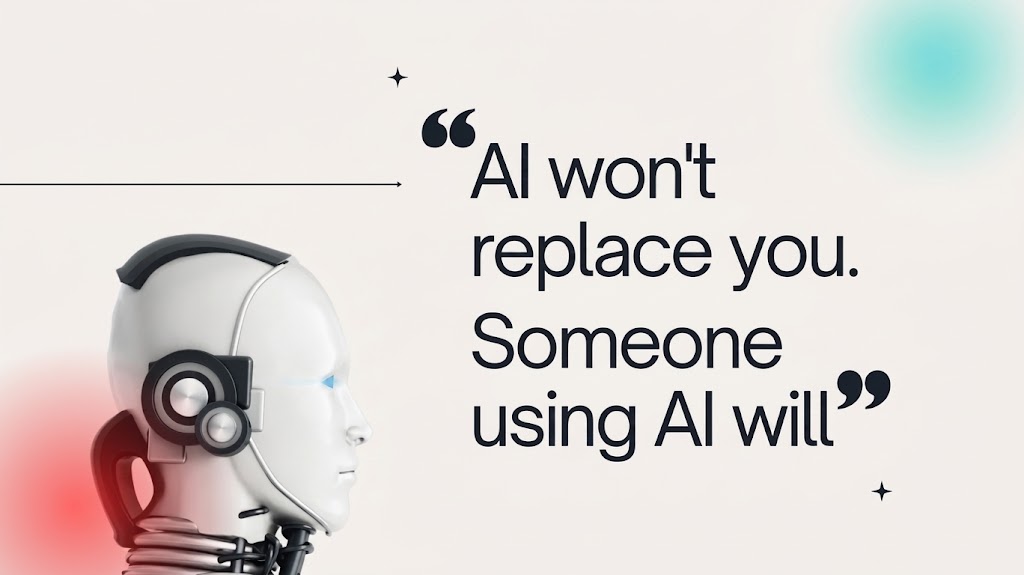
Smart professionals are not waiting to see what artificial intelligence will do to their careers — they are already using it to leave everyone else behind.
By David Nyaga
Every time a new era of automation arrives, the same panic sweeps through the global workforce: the machines are coming for our jobs. But as artificial intelligence weaves itself into daily operations at remarkable speed, the picture emerging is far less frightening — and considerably more exciting. AI is not arriving as a wholesale replacement for human expertise. It is arriving as a co-pilot. The real threat to career stability is not the technology itself; it is the colleagues who embrace it wholeheartedly while others stand at the sidelines, watching.
The gap between a traditional professional and an AI-augmented one is no longer theoretical, and the numbers are striking. A landmark joint study by Harvard Business School and Boston Consulting Group found that professionals using AI completed tasks more than 25 per cent faster and delivered output of more than 40 per cent higher quality than their unassisted peers. Crucially, the technology proved to be a powerful equaliser. Senior experts in the study recorded a 17 per cent performance boost; junior professionals experienced a 43 per cent improvement — a leap that dramatically accelerated their skill development and accuracy. McKinsey’s projections reinforce the same trend: while a significant portion of current work activities carry automation potential, this translates far more to the augmentation of roles than to their disappearance. Leading organisations are already reporting substantial productivity gains simply by keeping humans firmly in the loop.
When routine, repetitive tasks are compressed by automation, workers are freed to concentrate on high-value, complex problem-solving — and this holds true across every major sector. In engineering and infrastructure, for instance, AI can model thousands of structural variables and optimise complex blueprints in seconds. But no algorithm replaces a senior engineer’s contextual judgment, their ability to navigate real-world physical constraints, or their skill in negotiating with city planners and local stakeholders. In media and communications, algorithms can generate baseline research and synthesise vast datasets instantly, yet the human storyteller remains indispensable — injecting empathy, cultural nuance, and investigative instinct into a narrative. Even in manufacturing and industrial operations, smart factories do not run themselves. They depend on augmented technicians who can interpret predictive maintenance data, blending machine efficiency with human ingenuity on the factory floor.
Adapting to this shift demands a new mindset. The Harvard researchers identified two successful approaches for the modern worker: the “Centaur,” who strategically divides labour by delegating specific tasks to AI while handling the remainder manually; and the “Cyborg,” who intertwines their entire workflow with AI at a granular, sub-task level. Whichever method a professional adopts, the core lesson is the same. The future of work belongs to those who treat machine intelligence not as a competitor to be feared, but as a megaphone for their own brilliance.
Similar Posts by The Mt Kenya Times:
- Mt Kenya Times ePAPER October 17-18, 2026
- Ruto bets billions on Kerio Valley — with one eye on 2027
- Ruto’s health ministry kills Murang’a’s digital hospitals
- Kenya bets on Mount Kenya to drive a billion-shilling tourism revival
- Do you have a wealth vision? Or are you just working until you die?
About the Author