Book Review of Tughlaq
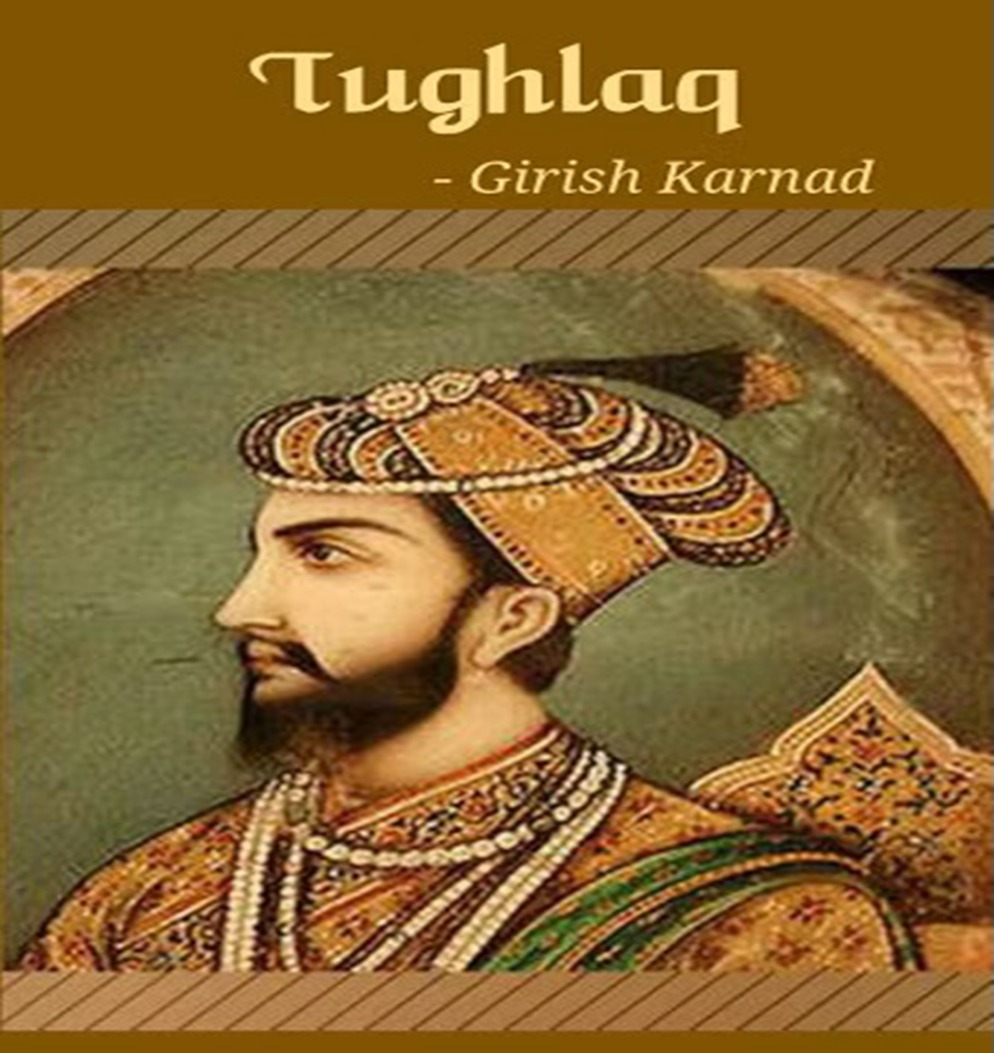
Tughlaq written by Girish Karnad
Reviewed by Huma Saleem
Girish Karnad was a famous Indian playwright, actor, and writer. He was born in 1938. He played an important role in making Indian theater modern and meaningful. Karnad often combined history, mythology, and politics in his play. Through which his writing becomes deeper and thought-provoking. His most famous plays are Tughlaq and Hayavandana. His writing style is considered very unique and powerful.
Tughlaq is a famous Indian historical play written by Girish Karnad in 1964. It is one of the most important works in modern Indian theater. It is a historical political drama set in 14th-century India. This play is about the life of Mohammed bin Tughlaq, who was a brilliant and intelligent but controversial ruler of the Delhi Sultanate. He has a command on different schools of thought like philosophy, mathematics, and poetry. But unfortunately he failed to rule effectively. Through Taghlaq’s story, Karnad tries to tell us that personal intentions are not enough to lead personal thoughts; a good end cannot justify wrong meaning. When things are in a rush, they collapse, as we have seen in Tughlaq’s character. Karnad’s Tughlaq is a powerful historical play that not only reflects the reign of Tughlaq but also represents political idealism and its downfall deeply. This story is presented in the Middle Ages of India.
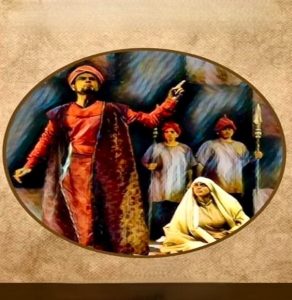
Tughlaq made big decisions in his reign. He considered Hindus and Muslims equal and didn’t make any difference between religions. Moreover, it was a good decision. But then he converted the capital from Delhi to Daulatabad, and thousands of people were killed. As Girish Karnad stated “I have decided to move my capital from Delhi to Daulatabad… Daulatabad is in the center of my empire, and it is only right that the heart of the empire should beat in the center.” He introduced the copper coins that became the cause of destruction. As Girish Karnad says,
“I want to build a new world, Barani. A world where a man’s religion won’t decide whether he lives or dies… and Daulatabad is where that dream must take root.” He punished the people. His intentions were good, but they gave bad results. Karnad wanted to implement his personal decisions, and inaccurate techniques can be the cause of destruction.
Tughlaq himself is a character that is not completely satisfied. He had psychological issues. Aziz was a dual and layered character. He tried to take advantage. He highlighted that corruption was not only in the kings but also in the ordinary people. Barany was a loyal advisor who slowly lost hope over time. Shahab was a true friend of Tughlaq, whom Tughlaq himself ordered to be killed because after becoming powerful he became suspicious, cruel, and isolated. These characters together create a complete and vivid picture.
This play contains very profound themes but is easy to understand. Firstly, power made a man lonely. Tughlaq had everything, but in the end, he had not a loyal friend. Secondly, the mixing of religion and politics was dangerous. Thirdly, when a ruler did not understand the public, it created space. The play was written in 1964, but its ideas are still applicable.

She is Huma Saleem. She is an M.Phil. Scholar of English Literature from The University of Chenab, Gujrat. She enjoys exploring literature from different cultures and perspectives. She has a strong background and is particularly engaged in areas such as drama, feminism and literary theory. Her reviews reflect her passions for books and her growing expertise as a literary scholar.
Similar Posts by The Mt Kenya Times:
- Diaspora Times Global Oct 17 – Oct 23, 2026
- Is social media a blessing or a curse for university students?
- Light at last: How electricity is reshaping Nandi and Uasin Gishu
- The triple squeeze: how EPRA’s fuel price hike is reshaping the survival equation for the common mwananchi
- Zelenskyy accuses Trump of rewarding Putin as Pope pleads for peace from a hospital bed
About the Author