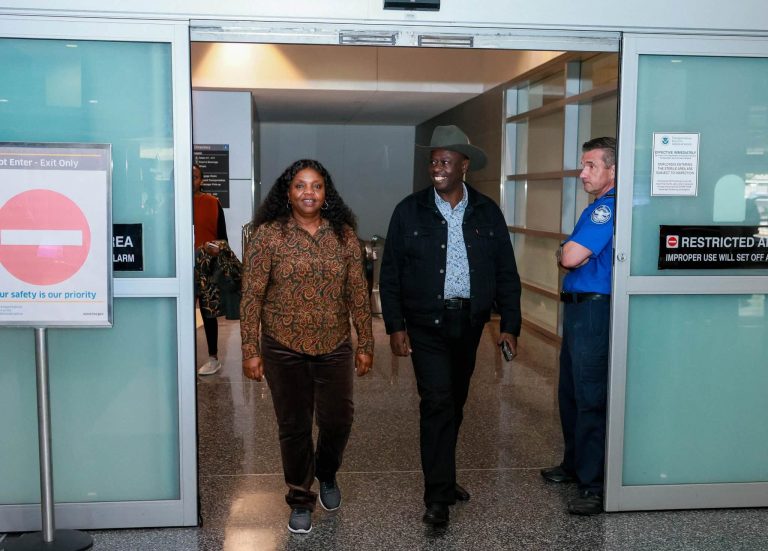
Health Cabinet Secretary Aden Duale
Health Cabinet Secretary Aden Duale faces a formal National Cohesion and Integration Commission inquiry after remarks made in Garissa County were widely interpreted as targeting the Kikuyu community — triggering condemnation from Mount Kenya leaders and reigniting tensions ahead of the 2027 General Election.
By David Kimani
The National Cohesion and Integration Commission has launched a formal investigation into Health Cabinet Secretary Aden Duale following allegations of ethnic incitement arising from remarks he made in Garissa County on July 20, days after the ruling United Democratic Alliance suffered a significant defeat in the Ol Kalou parliamentary by-election.
The controversy centres on statements Duale made in Lafey Constituency in which he appeared to suggest that the Kikuyu community had adopted the attitude that “no one else should live well in Kenya.” He then quoted a Somali proverb — “Waraabe la-tagis bartay, ka-ridis waa ku dhib” — which critics translated as a reference to a hyena that, having tasted meat, cannot be stopped. The remarks, filmed and circulated extensively on social media, ignited immediate outrage across political and civic circles, drawing particular condemnation from Mount Kenya leaders who interpreted them as a deliberate ethnic slur.
Kirinyaga Governor Anne Waiguru was among the first senior figures to respond, describing the remarks as deeply divisive and unbecoming of a Cabinet secretary. “Kenya is held together by the principle that every community belongs to this nation equally,” Waiguru said. “Remarks that single out any ethnic group — particularly in the charged atmosphere that follows an election — are irresponsible and dangerous. We expect better from those entrusted with national office.”
Githunguri MP Gathoni Wamuchomba was more direct, calling on the NCIC to move swiftly and decisively. “This is not a matter of political interpretation,” she said. “When a senior government official uses public platforms to profile a community, it crosses a clear legal and moral line. The commission must act, and it must act without fear or favour.” Wamuchomba added that the timing of the remarks — coming in the immediate wake of UDA’s loss in Ol Kalou — suggested a political motive that made them all the more troubling.
Kabado wa Kabado, the veteran politician and Mount Kenya elder statesman, said the incident exposed a pattern of selective rhetoric that had no place in a constitutional democracy. “We have built this country on the understanding that no community is more Kenyan than another,” he said. “When leaders forget that, or choose to set it aside for political convenience, they undermine the very foundation of the republic. Duale must answer for what he said.”
The formal complaint was lodged with the NCIC by Abdi Noor, a civil society advocate who filed the case in his personal capacity. “Today, I lodged a formal complaint with the National Cohesion and Integration Commission against CS Aden Duale over alleged ethnic incitement, profiling of the Kikuyu community, and inflammatory public remarks that threaten national cohesion,” Noor wrote. “No public official should divide Kenyans along ethnic lines. I have urged the Commission to investigate the matter and take appropriate action.”
Duale responded with a comprehensive denial, insisting that his words had been stripped of their meaning and weaponised by political opponents. “I have been widely misquoted and my remarks delivered in Lafey Constituency have been taken out of context to advance false and misleading narratives,” he said. “The phrase I used is a well-known Somali proverb that has long been part of our oral tradition. It is a figurative expression about the difficulty of ending entrenched habits or long-enjoyed advantages. It was never directed at any community or intended to demean anyone.”
The Cabinet secretary maintained that his message had been about inclusivity, not division. “My message was about the importance of embracing inclusivity as the Government continues to ensure that all Kenyans, regardless of their region or ethnicity, have an opportunity to serve the nation,” he said. “Attempts to portray my remarks as ethnic incitement are therefore dishonest and a deliberate distortion of what I said.”
Duale also turned the controversy back on his critics, accusing them of applying inconsistent standards. “I find it regrettable that some of those now expressing outrage remained silent when inflammatory remarks targeting the Somali community were made in the past,” he said. “Public leaders should reject selective outrage and apply the same standards consistently. Kenya’s strength lies in its diversity. My commitment remains to national unity, peaceful coexistence and equal opportunity for every Kenyan, without exception.”
The political backdrop to the affair is impossible to ignore. UDA’s loss in the Ol Kalou by-election on July 16 was widely read as a significant setback for President William Ruto’s party in Mount Kenya, a region that delivered his 2022 election victory but has shown signs of restlessness as economic frustrations deepen. Any perception that senior government officials are responding to that loss with ethnic recrimination rather than political reflection will only sharpen the tensions the party can least afford.
The NCIC, for its part, has urged calm and called on all political actors to exercise restraint ahead of the 2027 General Election cycle. The commission has broad powers under the National Cohesion and Integration Act to investigate, prosecute and sanction individuals found to have engaged in hate speech or ethnic incitement — powers it has not always deployed with the consistency its mandate demands.
Whether Duale’s proverb was a cultural reference or a coded provocation may ultimately be a matter of interpretation. What is not a matter of interpretation is the impact his words have had on communities already navigating a fractious political environment. In the court of public opinion in Mount Kenya, the damage is already done.
The NCIC’s investigation will determine what happens next in the courts of law. But in the court of political trust, the verdict may already be in.
Similar Posts by The Mt Kenya Times:
- Mt Kenya Times ePAPER October 27, 2026
- Sifuna draws hope from Serbia and Brazil as Kenya’s 2027 race heats up
- Uhuru calls for unity as he marks 65th birthday
- Kenya establishes international crimes division: Justice delayed, but will it be delivered?
- World marathon champion Jepchirchir suspended in fresh blow to Kenya’s clean sport drive
About the Author