The analogy of plight and plunder: The case of a haemorrhaging nation
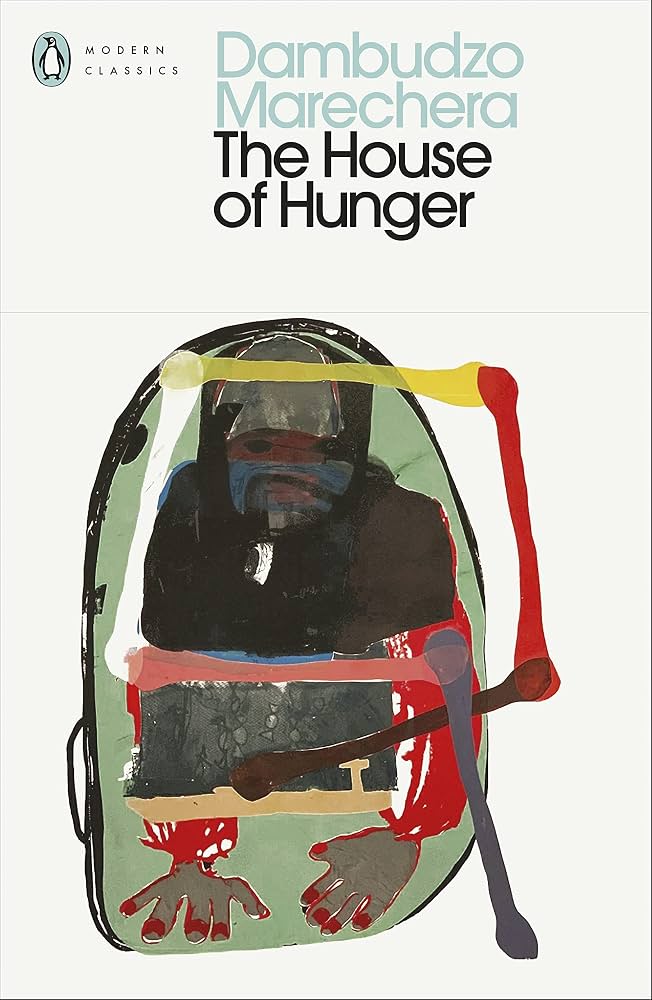
Nearly five decades after Dambudzo Marechera wrote The House of Hunger, Zimbabwe’s citizens find themselves living inside the very nightmare he described — and a controversial constitutional amendment is tightening the walls.
By Alice Nyamande
We are still living in Marechera’s House of Hunger.
Dambudzo Marechera’s landmark work begins with a young man gathering his belongings and walking away from a home he can no longer endure. He leaves because the house is choking him. But what happens when the house is an entire country? Where does a nation gather its belongings and go?
Published in 1978 and set against the suffocating conditions of colonial Rhodesia, The House of Hunger is not simply a story about people without food. Marechera’s hunger is physical, emotional, intellectual and political — the hunger of people deprived of dignity, security, opportunity and hope. Its bodies are bruised because its society is bruised. Its homes are broken because the political order has entered the home and poisoned relationships between parents, children, lovers, neighbours and friends.
Almost five decades later, Zimbabwe increasingly resembles the house from which Marechera’s narrator tried to escape. The flag has changed. The anthem has changed. The administrators have changed. But the architecture of hunger remains.
In Marechera’s world, poverty is not an unfortunate accident. It is an atmosphere — one that enters the township, the school, the beerhall, the bedroom and the human mind. That atmosphere is suffocatingly familiar to contemporary Zimbabweans.
Our people wake up every morning to invent survival. Teachers sell goods from car boots. Nurses leave the country. Graduates become vendors. Pensioners watch the value of a lifetime’s work disappear. Parents measure out meals so that children may eat while adults pretend not to be hungry. Families live with unreliable electricity, deteriorating infrastructure and public services that no longer correspond with the taxes and levies extracted from citizens. The World Bank has estimated that electricity shortages alone cost Zimbabwe approximately 6.1 percent of gross domestic product annually.
This is not only economic hunger. It is the humiliation of standing in a queue for what should be ordinary. It is the humiliation of holding qualifications that cannot purchase bread. It is the humiliation of crossing borders in search of work, only to be insulted, hunted or treated as an unwanted burden in someone else’s country. Marechera understood that prolonged deprivation changes people. Hunger eventually moves from the stomach into the soul.
The deepest poverty in The House of Hunger is the destruction of the human person. People drink to forget. They fight because they cannot confront the real source of their suffering. They turn their frustration against spouses, children, neighbours and themselves. The oppressed begin to reproduce the violence of the system that oppresses them. This is one of Marechera’s most disturbing warnings — that a nation may remove its colonial rulers without removing colonial habits of command, surveillance, exclusion and punishment. Repression does not become freedom merely because it is administered by former liberators.
Today, Zimbabweans increasingly measure their words. People lower their voices in restaurants. They look around before discussing politics. They wonder who is recording the conversation. They hesitate before forwarding a message. A country in which citizens are afraid to speak honestly has already entered Marechera’s house.
Nothing illustrates Zimbabwe’s political hunger more starkly than Constitutional Amendment Bill No. 3. On July 7, 2026, President Emmerson Mnangagwa signed the amendment into law. Among its most consequential provisions are the extension of presidential and parliamentary terms from five to seven years, the postponement of elections previously expected in 2028 to 2030, and the replacement of the direct popular election of the president with selection through Parliament.
Supporters describe these changes as necessary for continuity, stability and institutional modernisation. But stability without democratic consent is stagnation. Continuity without accountability is captivity. A constitution is not the private property of a government, a political party or a temporary parliamentary majority. It is an agreement between generations — defining not only how power is acquired, but how it is limited. CAB3 takes something fundamental from the citizen: the direct power to choose the country’s president. It moves the decisive vote from millions of Zimbabweans into a Parliament already dominated by one political formation. This is not a minor administrative adjustment. It is the redesigning of the national house while the occupants are still inside it.
Behind the respectable vocabulary of efficiency and development lies an old hunger — the hunger of rulers who cannot imagine a country continuing without them. Zimbabwe does not belong to any individual. Liberation credentials cannot become a permanent title deed to the republic.
Against this already tense background, an alleged political hit list has circulated on social media, purporting to name opposition politicians, activists, religious figures, former security officials and government critics in Zimbabwe and neighbouring countries. My name appears on that list. Its authorship and authenticity have not been independently established, and no responsible person should present an anonymous document as proven fact. But an unverified threat is not necessarily a harmless one. The purpose of anonymous political intimidation is often psychological — it tells those named that they are being watched, tells their families to be afraid, tells supporters to keep their distance and encourages citizens to silence themselves before anyone formally orders them to do so.
The alleged list must be subjected to an urgent, credible and independent investigation. The Zimbabwe Peace Project recorded 228 human rights violations affecting 5,996 people during June 2026 alone, including intimidation, threats to personal security and restrictions on expression, assembly and association. The list has emerged precisely as authorities warn against demonstrations planned for July 31, with government officials confirming that security forces are on standby. The combination of public warnings, heightened security rhetoric and an anonymous list of perceived opponents creates exactly the climate of fear that Marechera depicted.

A demonstration is not an insurrection. A placard is not a firearm. A slogan is not an act of war. Citizens must pursue change peacefully and lawfully, and protesters must reject violence and destruction absolutely. But the state carries an even heavier responsibility. It possesses the police, the military, intelligence institutions and the machinery of prosecution. It must therefore exercise greater restraint, not less. A democratic government protects peaceful citizens even when those citizens are condemning it. The answer to public anger over CAB3 is not intimidation — it is dialogue. The answer to political criticism is not a list — it is accountability. The answer to peaceful protest is not a gun — it is democracy.
Marechera did not portray oppression as something committed only by distant rulers. The house survives because people inside it cooperate with its cruelty — informers, opportunists, educated people who manufacture respectable explanations for injustice, victims offered small privileges and then recruited to police other victims. Some parliamentarians elected on promises of change have helped weaken the constitutional power of the people. Some religious leaders bless every action of the powerful while telling the poor to wait for justice in heaven. The House of Hunger is not sustained by one man alone. It is sustained by systems of patronage, fear, silence and collaboration.
Marechera’s narrator could physically walk away from the house. Zimbabweans cannot all walk away from Zimbabwe — and millions who have tried are scattered across South Africa, the United Kingdom, Australia and beyond. But exile is not a national development strategy. We must dismantle the House of Hunger without destroying the country. That requires peaceful constitutional resistance, independent institutions, courageous journalism, principled religious leadership and citizens who refuse to become instruments of fear.
CAB3 must remain subject to constitutional and judicial scrutiny. The alleged hit list must be independently investigated. The right of Zimbabweans to disagree with their government must be defended. Above all, Zimbabweans must reject the temptation to reproduce the cruelty they oppose.
The tragedy is not merely that Marechera foresaw our condition. The tragedy is that, nearly fifty years later, we continue to perform his nightmare. Zimbabwe remains hungry — hungry for justice, for accountable leadership, for institutions that protect rather than persecute, for a constitution that cannot be rewritten whenever power becomes afraid of the people.
The House of Hunger is still standing. But no house built on fear can stand forever.
Similar Posts by The Mt Kenya Times:
- Mt Kenya Times ePAPER September 9, 2026
- Meet the people tour: Kalonzo Musyoka’s grassroots push for national renewal
- If Kenya’s economy is growing, why are Kenyans still struggling?
- The people saving Kenya are the ones Kenya keeps abandoning
- Ndindi Nyoro: Ruto’s project or the opposition’s new wild card?
About the Author