The Rise Of The Dragon: A Generational Struggle For Power And Equality
 The Mt Kenya Times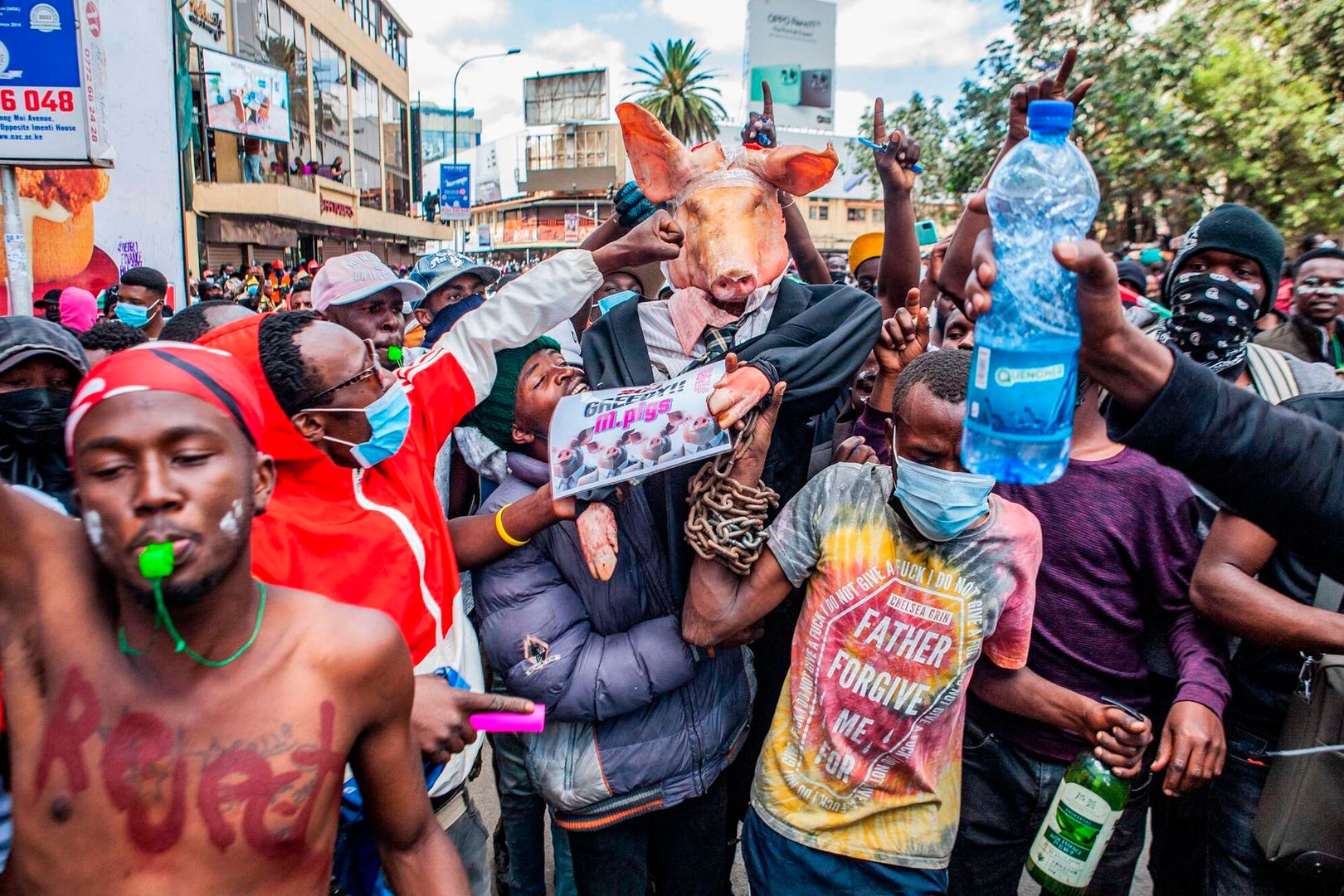
Protesters during the Anti-finance bill demonstrations along Kenyatta Avenue in Nairobi on 25th June 2024. Photo | Courtesy

By: Midmark Onsongo
Worth Noting:
- Generation Z has witnessed the failings of the system built by Millennials and has no intention of inheriting the same broken structure. They refuse to listen to the same old songs and dance to the same tired rhythms. Instead, they’re focused on learning how to catch their own fish—not just any fish, but the ones that sustain them in a system they’ve reimagined. It doesn’t matter what kind of fish they catch, as long as they enjoy the services their nation offers. Yet, their mentality is no longer interested in fish from a fisherman they cannot trust.
- These young dragons, as they see themselves, are not content with the status quo. They know they are the future and that the jungle will soon belong to them.
The generational clash between Millennials and Generation Z has reached a tipping point, with each group embodying distinct philosophies and visions for the future. Millennials, who once carried the weight of hope and change, now find themselves entangled in a web of contradictions and complacency. They have worked tirelessly to increase their net worth, yet ironically, they will spend only a fraction of their wealth, leaving behind a fortune that may never be fully realized. Meanwhile, the less fortunate among them struggle to make ends meet, with their children bearing the brunt of economic hardship. In a world where a child burdened with a Ksh. 55,000 debt is awarded a mere Ksh. 5,000 bursary, the question arises: does this token gesture truly help?
Even if the bursary were increased to Ksh. 10,000, it would still fall woefully short. The harsh reality is that Millennials, who now hold the reins of power as principals and vice-chancellors, refuse to allow students with fee arrears to access classes. They claim these institutions belong to the government, failing to grasp that they themselves are the government. This generation has adopted a cynical worldview, believing that “oppress to succeed” is the only path forward. But Generation Z, the emerging force on the horizon, has a different mantra entirely: “If you’ve danced to the tunes of oppression, we’ll make sure the music stops.”
Generation Z has witnessed the failings of the system built by Millennials and has no intention of inheriting the same broken structure. They refuse to listen to the same old songs and dance to the same tired rhythms. Instead, they’re focused on learning how to catch their own fish—not just any fish, but the ones that sustain them in a system they’ve reimagined. It doesn’t matter what kind of fish they catch, as long as they enjoy the services their nation offers. Yet, their mentality is no longer interested in fish from a fisherman they cannot trust.
These young dragons, as they see themselves, are not content with the status quo. They know they are the future and that the jungle will soon belong to them. They understand that they will remain the enemy of the state until they themselves sit on the throne. But patience is not their strong suit; they can’t wait for the day they rule, and while it may take a decade or two for the old guard to fade away, Generation Z is already preparing to shape the future from behind the scenes. They won’t just be on the winning side; they’ll be on the trusted side—the side that shapes decisions, even if they hold no formal power.
Millennial politicians, with their grand promises and small offerings, have underestimated this new generation. They offer petty bursaries and crumbs from their tables, hoping to keep the youth quiet and compliant. But they fail to see that Generation Z has grown up differently. Even the weakest among them are the smartest, and those who might be considered the least informed are still more knowledgeable than the corrupt and greedy role models of the Millennial generation. While the older generation indulges in opulence and misuses public funds, Generation Z looks on with a mix of disgust and determination. They know they can control the leadership only if they harness their massive population and vote for change.
Is there any offence when a young person stands up and declares, “I’m a grown man”? These children—now adults—are demanding a country where the rules governing them suit their needs. They envision a nation where every Kenyan is equal, but instead of being heard, they were snubbed and labeled as inexperienced criminals. The Millennials, who once dreamed of change, now cling to power, ignoring the very voices that could lead them to a better future.
The story of the dragon, the lion, and the donkey serves as a powerful metaphor for this generational struggle. The dragon, representing Generation Z, is a force of nature, retreating only to gather strength for the next battle. When the dragon releases its flame, it scorches the jungle, forcing King Lion—the Millennial ruler—to reshuffle his closest allies and negotiate with the once-disdained donkey. The lion, once proud and disdainful, now finds itself in an uneasy alliance with the very creature it swore never to associate with. This alliance, born out of necessity, is fraught with tension and mistrust.
But the dragon, though it has retreated for now, watches closely, knowing that its moment will come again. When it returns, it will not be to simply reclaim lost territory, but to transform the jungle entirely. The dragon’s fire will burn through the old laws and structures, leaving nothing but ash for the new order to rise from. However, this victory will not come without its own challenges. The dragon’s anger and impatience could lead to chaos, and even though they are capable of winning the war, they must be cautious not to let their victory spiral into destruction.
When the dragon returns, it will do so with two mindsets: to kill or be killed. The dragon places its meal—a symbolic victory—on the tallest cliff in the jungle. If it wins, it will return to enjoy its spoils and call others to celebrate. But if it is defeated, the meal will remain on the cliff, a testament to the fallen warrior. Another dragon, passing by, will see the dry, rotting meal and understand that one of their own has perished in battle. This knowledge will not deter them but will instead fuel their desire for revenge, carried out with caution and precision.
Generation Z is a unique breed. They are the dragons of the modern age, creatures of immense power and potential. They have sung the song “King Lion must go” for years, and they’ve seen the lion negotiate with the donkey in ways that were once unthinkable. The dragon’s flame has already destroyed the lion’s law-making chamber, forcing the king to shuffle his closest allies. But the lion, true to its political nature, has found a way to survive—at least for now.
The dragon has retreated, trusting the donkey for too long, but this trust has become a form of psychological torture. The dragon will return, and when it does, the jungle will be a mess. The lions, donkeys, and all creatures of the jungle will feel the heat of the dragon’s flame. The question remains: will the dragons of Generation Z occupy the jungle? The answer is yes, but it will be a victory hard-won, and the jungle may never be the same again.
In the end, Generation Z will rise to power, but they must do so with wisdom and restraint. They cannot afford to be consumed by their desire for revenge, lest they become the very tyrants they sought to overthrow. As they stand on the precipice of power, they must remember that true victory lies not in dominance, but in creating a world where every creature in the jungle—whether dragon, lion, or donkey—can live with dignity and equality.
This article was scripted by;
MIDMARK ONSONGO
(Sustainable economist, Geo-Politics strategizer)
Similar Posts by The Mt Kenya Times:
- Mt Kenya Times ePAPER October 23, 2026
- Ruto’s parting COMESA call: Remove the barriers, honour the commitments
- Direct hospital access to KEMSA cuts drug delays, says PS
- Africa can’t wait: Continent seeks $1 trillion for climate adaptation
- Ruto passes the baton as Africa’s trade bloc faces a fragmenting world
About the Author