The Mt Kenya Times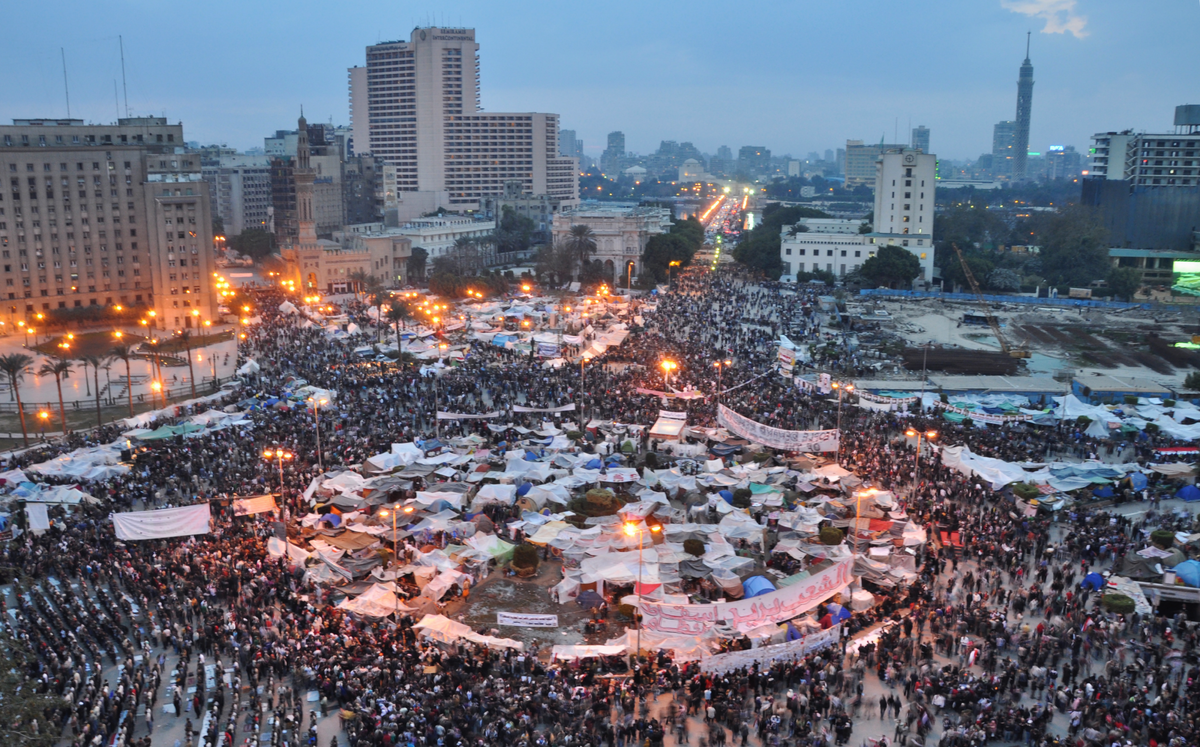
The Arab Spring
By: Midmark Onsongo
Worth Noting:
- After 18 days of sustained protests and growing international pressure, Mubarak stepped down on February 11, 2011, handing power to the military. His departure was a monumental moment in the Arab Spring, symbolizing the power of collective action and the ability of ordinary citizens to bring down a dictator. However, Egypt’s journey toward democracy was far from straightforward.
- The brief period of democratic governance that followed Mubarak’s ousting was marred by political infighting, economic instability, and the eventual return of military rule under Abdel Fattah el-Sisi, who came to power in a 2013 coup. This outcome highlighted the complexities and challenges of political transitions in the wake of revolutionary movements.
The Arab Spring, a watershed moment in the history of the Middle East and North Africa, was a series of anti-government protests, uprisings, and armed rebellions that swept across the Arab world beginning in December 2010. This movement fundamentally reshaped the political landscape of the region, challenging long-standing authoritarian regimes, and inspiring a wave of social and political activism. The term “Arab Spring” itself reflects the optimism and hope that initially accompanied these revolts, although the outcomes were varied and, in many cases, tragic. The movement’s origins can be traced back to Tunisia, but its influence rapidly spread across multiple nations, each with its unique context and outcome.
The catalyst for the Arab Spring was a single act of desperation by Mohamed Bouazizi, a street vendor in Sidi Bouzid, Tunisia. On December 17, 2010, Bouazizi set himself on fire after police officers confiscated his wares and humiliated him publicly. His self-immolation was not just a personal tragedy but a powerful symbol of the oppression, economic hardship, and lack of dignity that many in Tunisia and the broader Arab world faced. The event sparked mass protests across Tunisia, fueled by widespread anger at President Zine El Abidine Ben Ali’s regime, which had ruled the country with an iron fist for 23 years. The protests quickly escalated, and on January 14, 2011, Ben Ali fled to Saudi Arabia, marking the first major success of the Arab Spring.
Tunisia’s Jasmine Revolution, as it came to be known, set off a chain reaction across the Arab world. Inspired by Tunisia’s success, protests erupted in Egypt on January 25, 2011. These protests were largely organized through social media platforms such as Facebook and Twitter, reflecting the significant role that technology played in the Arab Spring. In Cairo, Tahrir Square became the epicenter of the Egyptian revolution, where hundreds of thousands of protesters gathered, demanding the resignation of President Hosni Mubarak. Mubarak had ruled Egypt for nearly 30 years, and his regime was notorious for its corruption, repression, and human rights abuses.
After 18 days of sustained protests and growing international pressure, Mubarak stepped down on February 11, 2011, handing power to the military. His departure was a monumental moment in the Arab Spring, symbolizing the power of collective action and the ability of ordinary citizens to bring down a dictator. However, Egypt’s journey toward democracy was far from straightforward. The brief period of democratic governance that followed Mubarak’s ousting was marred by political infighting, economic instability, and the eventual return of military rule under Abdel Fattah el-Sisi, who came to power in a 2013 coup. This outcome highlighted the complexities and challenges of political transitions in the wake of revolutionary movements.
In Libya, the situation quickly escalated into a full-scale civil war. Protests against Muammar Gaddafi, who had ruled Libya for 42 years, began in February 2011 in Benghazi. The unrest soon spread, and the conflict intensified as Gaddafi’s forces cracked down brutally on the protesters. The international community, led by NATO, intervened under the pretext of protecting civilians, launching airstrikes against Gaddafi’s forces. The intervention played a crucial role in the eventual downfall of Gaddafi, who was captured and killed by rebel forces in his hometown of Sirte on October 20, 2011. Gaddafi’s death marked the end of his long and oppressive regime, but it also plunged Libya into chaos. The country became embroiled in a protracted conflict among rival militias, with no central government able to establish control. Libya’s descent into anarchy serves as a stark reminder of the dangers of power vacuums in post-revolutionary contexts.
Syria’s experience during the Arab Spring was perhaps the most tragic and devastating. What began as peaceful protests in March 2011 against President Bashar al-Assad’s authoritarian regime quickly escalated into a brutal civil war. Assad’s government responded to the protests with overwhelming force, using live ammunition, mass arrests, and torture to quell dissent. The violence only fueled more anger, and soon the conflict spiraled out of control, with various rebel groups taking up arms against the government. The situation was further complicated by the involvement of regional and international powers, with Russia and Iran backing Assad, while the United States, Turkey, and several Gulf states supported different factions of the opposition.
The Syrian Civil War has been one of the deadliest conflicts of the 21st century, resulting in hundreds of thousands of deaths and displacing millions of people. The war also gave rise to extremist groups like ISIS, which exploited the chaos to establish a so-called caliphate in parts of Syria and Iraq. Despite numerous efforts by the international community to broker a peace deal, Assad remains in power, and Syria remains deeply divided, with no clear resolution in sight. The Syrian conflict has had far-reaching consequences, including a massive refugee crisis that has impacted Europe and the broader region.
In Yemen, the Arab Spring also led to a prolonged and complex conflict. Protests against President Ali Abdullah Saleh began in January 2011, with demonstrators demanding an end to his 33-year rule. Saleh’s government responded with violence, but the protests continued, eventually leading to Saleh agreeing to step down in November 2011 as part of a deal brokered by the Gulf Cooperation Council (GCC). However, the political transition that followed did little to stabilize Yemen. The country soon descended into civil war as various factions, including Houthi rebels, sought to assert control. The conflict escalated further in 2015 when a Saudi-led coalition intervened to support the internationally recognized government against the Houthis. The war in Yemen has created one of the world’s worst humanitarian crises, with millions facing starvation and disease.
In Bahrain, the Arab Spring manifested in the form of the Pearl Revolution, which began in February 2011. The majority Shiite population took to the streets to demand political reforms and an end to the Sunni monarchy’s discrimination against them. The Bahraini government, with support from Saudi Arabia, responded with a brutal crackdown, deploying security forces to disperse the protests and demolishing the Pearl Roundabout monument, which had become a symbol of the uprising. Although the protests were suppressed, the underlying sectarian tensions in Bahrain remain unresolved, and the monarchy’s grip on power remains tight.
The Arab Spring’s impact extended beyond these countries, influencing events in Algeria, Jordan, Morocco, and other parts of the Arab world. In some cases, governments were able to preempt widespread unrest by implementing limited reforms or by increasing state repression. However, the fundamental issues that drove the Arab Spring—economic inequality, corruption, human rights abuses, and the lack of political freedom—remain unresolved in many parts of the region.
As we reflect on the Arab Spring more than a decade later, it’s essential to recognize the role that youth, particularly Generation Z, played in these movements. Social media became a powerful tool for organizing, communicating, and mobilizing protests, allowing young people to bypass traditional state-controlled media and connect with like-minded individuals across the region. The Arab Spring demonstrated that when a generation decides to take a stand, they can challenge even the most entrenched regimes.
In Kenya, the youth have already shown their capacity to influence political outcomes. President William Ruto, who once fiercely opposed the Building Bridges Initiative (BBI), should take note of the lessons from the Arab Spring. If Generation Z in Kenya, who are increasingly politically active and technologically savvy, were to mobilize in large numbers, no amount of political maneuvering could save his administration. The next wave of protests might very well focus on rejecting what Ruto himself once opposed, reminding him that in politics, positions and alliances can shift rapidly, especially when driven by the energy and determination of a younger generation.
The Arab Spring has shown that the voices of the youth cannot be ignored. Whether through peaceful protests or more radical actions, young people have the power to reshape their societies. The events of the Arab Spring are a powerful reminder that ignoring the demands of the youth can have profound and sometimes unexpected consequences. Leaders who fail to heed these lessons do so at their peril, as the tides of history have a way of turning against those who resist change.
This article was scripted by;
MIDMARK ONSONGO
(Sustainable economist, Geo-Politics strategizer)
Similar Posts by The Mt Kenya Times:
- Dolly Parton: A life that gave more than it took
- Porsche 911 GT3: The driver’s car that defies the spec sheet
- Name, shame, ban: Police put violent political actors on notice ahead of 2027
- Kanja puts recruits through their paces ahead of Kiganjo passing-out
- Humbelani Priscilla Nemanzemba: Building Africa’s entrepreneurial future, one business at a time
About the Author