Consulting Engineers Urged To Bridge Academia-Industry Gap At 3rd Annual ACEK Conference
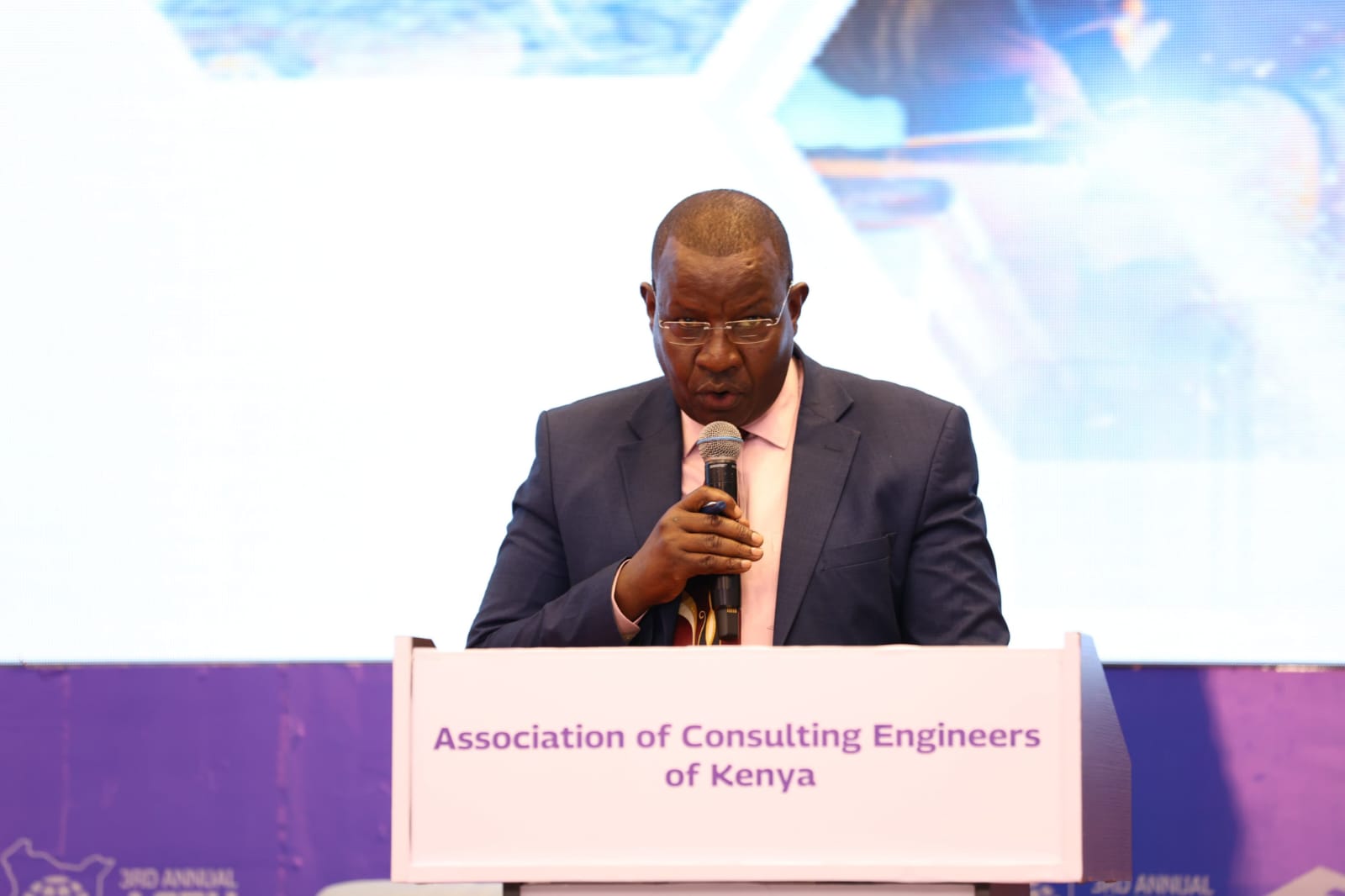
Eng. Simon Korir, Director of Water Infrastructure Development at MOWSI , representing the Cabinet Secretary Ministry of Water, Sanitation and Irrigation Eng. Erick Muriithi.
By Aoma Keziah

The 3rd Annual Association of Consulting Engineers of Kenya (ACEK) Conference brought together over 350 delegates in Nairobi to deliberate on the sustainability of the engineering profession. The conference, which serves as a key platform for discussing emerging issues in the industry, saw consulting engineers challenged to play a more active role in bridging the gap between engineering academia and the industry.
In his opening remarks, Eng. Simon Korir, Director of Water Infrastructure Development at MOWSI , representing the Cabinet Secretary Ministry of Water, Sanitation and Irrigation Eng. Erick Muriithi, emphasized on the future of water and sanitation rests in the hands of engineers.
“ It’s engineers who will tackle the challenges of water and irrigation to boost food production. We’re thrilled that ACEK is hosting this conference, and we fully support this cause. The conference theme aligns perfectly with the innovation needed in our infrastructure development strategy,” noted Eng. Korir
“ The future of engineering lies in our ability to innovate and lead by working together and fostering collaboration, we can ensure a more resilient engineering”.
Consulting engineers make up 584 registered in engineers in the country while Professional are 3107 and Graduate engineers 22,141. We are implementing strategies to increase registration, fast track career progression guidelines, Building Control Bill to ensure that our infrastructure and expanding the Graduate Engineers Internship Program,” remarked Erastus Mwongera Chairperson Engineers Board of Kenya.
ACEK Chair Eng. Jane Mutilili also challenged engineers to push beyond boundaries to enhance Kenyas global competitiveness through integration of advanced technologies and materials in building projects.
The conference featured a series of discussions and workshops on various topics, including sustainable engineering practices, technological advancements, and the future of consulting engineering in Kenya. One of the key highlights was a panel discussion on how to effectively integrate academic research into practical engineering solutions.
The conference also addressed the importance of sustainable engineering, with discussions on how consulting engineers can contribute to the global sustainability agenda. Delegates agreed that adopting sustainable practices is not only a professional responsibility but also a necessity in the face of climate change and environmental degradation.
As the conference concluded, there was a resounding call for continued dialogue and collaboration among stakeholders in the engineering sector. The delegates committed to working towards a more integrated approach to engineering education and practice, with the ultimate goal of enhancing the sustainability and impact of the profession in Kenya and beyond.
Similar Posts by Aoma Keziah:
- Nationwide Youth Business Drive Enters Last Lap With New Nyota Trainings
- Green Light From Washington Sets G42 On Fast Track to Build Region’s Most Powerful AI Network
- Safina Eyes Kariobangi North Seat in Intensified Push Before Poll Day
- KEBS Opens Talks With Manufacturers On New Standards Levy Order 2025
- Kenya, Uganda And South Sudan Chart Way Forward On East Africa Rail Corridor
About the Author

 The Mt Kenya Times