Tragedy At Hillside Endarasha School: A Call For Urgent Action On School Safety
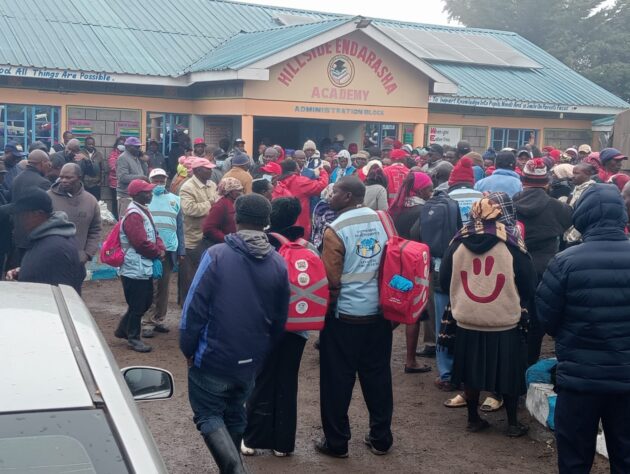
Parents at Hillside academy Kieni, Nyeri

By: James Kilonzo Bwire
In response to the tragic fire incident at Hillside Endarasha School in Nyeri County, which resulted in the loss of over 21 pupils, Head of Public Service Felix Koskei has ordered the Ministry of Education to initiate immediate inspections of all school infrastructure. This directive aims to ensure compliance with safety regulations and standards across educational institutions in Kenya. The recent tragedy has reignited concerns regarding the safety of school environments, particularly in boarding schools, where students are often vulnerable to various risks.
Reports indicate that many schools have not fully implemented the Ministry of Education’s Safety Standards Manual, introduced to address such safety concerns. Factors contributing to this lack of compliance include inadequate funding, poor supervision, and a general disconnect between policy and practice. The Safety Standards Manual outlines essential safety measures, including proper infrastructure, emergency exits, and regular safety drills. For instance, dormitories are required to have multiple exits, fire extinguishers, and clear emergency protocols. However, the implementation of these guidelines has been inconsistent, leading to unsafe conditions in many schools.
The Hillside Endarasha fire, which was reportedly sparked by an electrical fault, underscores the urgent need for stringent safety measures. Eyewitness accounts reveal that the dormitory’s semi-permanent structure, primarily made of wood and cardboard, contributed to the rapid spread of the flames. With 156 boys housed in the ill-fated dormitory, the lack of adequate escape routes and emergency preparedness became tragically evident. Many students were unable to escape due to the overwhelming smoke and flames, highlighting the dire consequences of neglecting safety protocols.
The Ministry of Education, alongside other stakeholders, must prioritize the enforcement of safety regulations to prevent further tragedies. This includes not only physical inspections but also the establishment of comprehensive safety programs that involve training for staff and students on emergency preparedness. Furthermore, schools should be equipped with firefighting equipment and conduct regular safety drills to ensure that students know how to respond in emergencies.
As the Ministry embarks on this inspection initiative, it is crucial that they address the systemic issues that have hindered the effective implementation of safety measures in schools. Ensuring the safety of students should be a paramount concern, and proactive steps must be taken to create secure learning environments. The recent incident serves as a stark reminder of the urgent need for action to protect the lives and well-being of all learners in Kenya.
Additionally, the government must hold accountable those responsible for the tragic lapses in safety that led to this incident. This includes not only school administrators but also local authorities who may have failed to enforce safety regulations. The community’s trust in the educational system hinges on the government’s commitment to safeguarding students’ lives.
In conclusion, the heartbreaking events at Hillside Endarasha School should serve as a catalyst for change in how safety is prioritized in Kenyan schools. A comprehensive review of safety standards, increased funding for infrastructure improvements, and a commitment to accountability are essential steps toward ensuring that such a tragedy never occurs again. The lives of young learners are precious, and it is the collective responsibility of the government, school administrators, and communities to protect them.
James Kilonzo Bwire is a Media and Communication practitioner.
Similar Posts by The Mt Kenya Times:
- When political rallies become danger zones
- Paper chasing in the shadow of substance: Kenya’s tragicomic obsession with metrics over mastery
- Why we have accents: The hidden story behind the way we speak
- Utumishi girls fire and the search for justice
- Mt Kenya Times ePAPER September 21, 2026
About the Author