Violence in Nembure, Embu County
Deaths, injuries and burning vehicles are turning Kenya’s democratic gatherings into tests of survival — and the country cannot afford to look away
By Levis Wangamati
A political rally in Kenya was once a familiar democratic ritual. A politician arrives, microphones are tested, songs fill the air, supporters wave party colours, speeches begin and the crowd eventually goes home. That familiar picture is increasingly being interrupted by something far darker: stones, machetes, burning vehicles, gunshots, injured citizens and, in the most tragic cases, bodies being carried away from places that were supposed to host political meetings.
The question this forces is one Kenya cannot afford to postpone: what happens to democracy when attending a political rally begins to carry a genuine risk to one’s life?
The latest figures are sobering. At least 11 people have reportedly died in violence linked to political rallies since February, according to the media. Human Rights Watch has separately documented attacks around political gatherings in recent months, reporting deaths and injuries while raising concerns about the safety of participants, journalists and bystanders. The figures come from different periods and sources, but they point toward the same uncomfortable reality: political violence is surfacing repeatedly in Kenya’s public political space well before the 2027 general election. What should be a peaceful expression of political choice is becoming a test of how much disorder a crowd can absorb before someone gets hurt.
On August 16, violence surrounding a Linda Mwananchi gathering in Homa Bay reportedly involved attackers armed with machetes, guns and sticks. Human Rights Watch said at least three people were killed and journalists covering the incident were attacked and robbed of equipment. In Nairobi, three men died after the September 13 Linda Mwananchi rally, with police describing them as victims of mob justice while relatives disputed the circumstances. Such competing accounts are precisely why investigations matter — every unexplained death leaves behind not only grieving families but a dangerous vacuum in which political narratives fill the space that evidence should occupy.
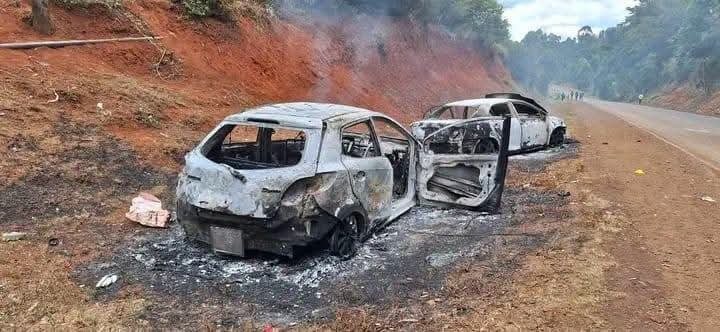
Then came Embu. What happened at Nembure Stadium demonstrated how quickly a political gathering can descend into disorder. Moses Munene and Mike Lewis — two young men — died after suffering gunshot wounds, according to postmortem examinations reported by The Standard. Several vehicles were also torched during the confrontation. The circumstances surrounding the shooting remain a matter for investigation, but the medical findings established a critical fact: both men died from gunshot injuries. In a country where political accusations travel faster than investigations, that distinction matters. Justice cannot be built on rumours, slogans or whichever version of events happens to dominate social media on a given afternoon.
Responsibility for what is unfolding cannot rest entirely on politicians standing behind microphones. Police have a constitutional duty to protect citizens and maintain public order. Political leaders and their supporters carry obligations under the law and the electoral framework. The Kenya National Commission on Human Rights has repeatedly flagged concerns about political violence and electoral malpractice, including reports during the Ol Kalou by-election campaigns of organised attacks, hired gangs, voter bribery, intimidation, gunshots and destruction of property. Such reports should not be dismissed as ordinary political noise. Once violence, intimidation and manipulation become embedded in political mobilisation, the freedom to participate stops being equally available to all Kenyans.
There is another uncomfortable dimension: the growing normalisation of the political crowd as cover for ordinary criminal behaviour. A person carrying a machete does not become less dangerous because he stands among supporters of a political movement. An attack does not become acceptable because the victim belongs to a rival camp. Once violence is tolerated on the basis of political affiliation, the line between political competition and criminality becomes dangerously blurred — and citizens begin absorbing a lesson that no democracy should teach: that political loyalty can provide permission to harm another Kenyan.
The state faces difficult questions about enforcement and accountability. Interior Cabinet Secretary Kipchumba Murkomen told the Senate that at least 1,189 people had been sentenced for offences linked to political violence and goonism since 2022. That figure shows enforcement has not been entirely absent, but the recurrence of attacks raises a more pressing question: whether accountability is reaching those who organise, finance or encourage violence, rather than only those caught at the bottom of the chain. If violence repeatedly surrounds political gatherings, the public deserves to know not only who threw the first stone but who created the conditions in which throwing stones became thinkable.
Human Rights Watch has called for prompt and transparent investigations into attacks ahead of 2027, arguing that citizens should be able to exercise political rights without fear. Such investigations matter not simply because victims deserve justice, but because credible findings establish a factual record that separates evidence from political accusation. Without that record, every incident becomes another battle of competing narratives, with camps blaming each other and the public left to decide what to believe based on edited videos and partisan commentary.
Kenya has already experienced the consequences of failing to confront political violence early. The 2007–2008 post-election crisis remains a powerful reminder of how rapidly political competition can acquire a communal and violent character. That history does not mean every current incident will develop into a similar catastrophe — it would be irresponsible to suggest it will — but it does provide reason to take warning signs seriously. Prevention is always easier before violence becomes embedded in political culture.
The human cost behind these statistics resists easy summary. Behind every reported death is a family receiving a phone call that changes everything. Behind every burned vehicle is someone’s livelihood. Behind every injured journalist is a professional being prevented from doing a job that serves the public. Behind every frightened rally attendee is a citizen quietly calculating whether participating in politics is worth the personal risk. These are not campaign-season inconveniences that disappear when politicians leave the stage. They shape how ordinary Kenyans experience democracy — and a right that people are afraid to exercise is a right that weakens in practice.
The attacks on journalists are a particular concern in an election-bound country. Reporters are present at rallies precisely because the public needs an independent record of what happened. When they are assaulted or their equipment stolen, the immediate victim is the journalist; the wider casualty is public information. If reporters begin fearing political gatherings, fewer independent witnesses will be present when violence occurs — and fewer witnesses make accountability harder. A democracy cannot demand transparency from politicians while allowing those who document political events to become targets.
The answer is not to discourage citizens from attending political meetings. Peaceful assembly and political participation are constitutional rights, and security concerns must never become a pretext for suppressing legitimate competition. The challenge runs in the opposite direction: creating conditions under which people can attend rallies, support candidates, criticise leaders and report stories without being attacked. That requires an environment where disagreement remains disagreement and political identity does not become a licence for intimidation. Kenya does not need quieter politics. It needs safer politics.
Political rivalry is normal. Heckling is part of political competition. Sharp speeches are part of campaigning. But burning a vehicle is not political expression. Attacking a journalist is not political expression. Shooting or killing another citizen is certainly not political expression. Those are matters for the criminal justice system — and the political colour of the person involved should never determine whether the law regards the conduct as wrong.
Kenya still has time to address the pattern before the next election. Investigations can be completed, suspects can be prosecuted where evidence supports charges, political leaders can discipline supporters who cross legal boundaries and security agencies can deploy impartially. None of this requires waiting until election day. The period before an election is precisely when institutions and parties have the opportunity to establish the standards that will govern the campaign season. Waiting for the next tragedy before acting means learning the same lesson after another family has already paid the price.
The warning signs are visible in the deaths, injuries, burned vehicles and repeated confrontations documented across the country. The question is no longer whether political violence exists — it is whether Kenya will allow it to become an ordinary feature of political life.
Because when citizens begin calculating danger before deciding whether to attend a political rally, democracy has already lost something important. The ballot should be where political battles are ultimately settled — not the street, the stadium or the roadside. Kenya should demand politics that can be passionate without being violent, competitive without being destructive and powerful without turning ordinary citizens into casualties.
A political rally should end with arguments about speeches and policies. Not questions about who will make it home alive.
Similar Posts by The Mt Kenya Times:
- Ronaldo, 41, back with Portugal as 1,000-goal milestone beckons
- Stress and depression: When the body speaks what the mouth cannot say
- Paper chasing in the shadow of substance: Kenya’s tragicomic obsession with metrics over mastery
- Why we have accents: The hidden story behind the way we speak
- Utumishi girls fire and the search for justice
About the Author