Stress and depression: When the body speaks what the mouth cannot say
 The Mt Kenya Times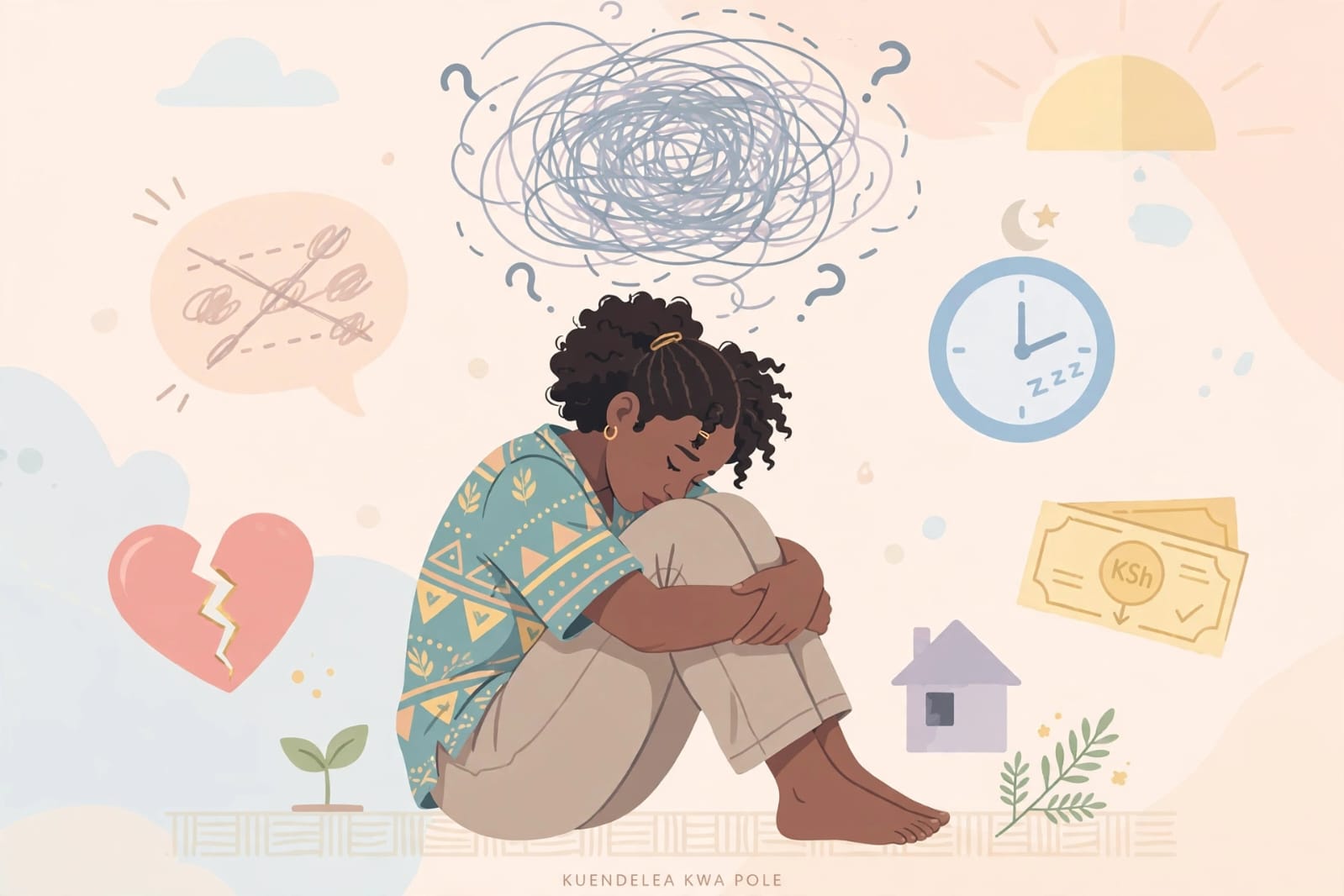
Stress and depression
Millions of Kenyans carry the weight of chronic stress and undiagnosed depression — but both conditions are manageable, and help is closer than most people think
By Wanjohi P. Mugambi
Stress is something every Kenyan knows. You wake up early with no fare, school fees are due, your phone is full of messages from people who need help you do not have. Your chest feels tight, your head aches, sleep escapes you, and small things make you angry quickly. That is stress — the body’s response when life demands more than you currently have. It is not a disease. It is a signal that you are overloaded.
When stress arrives, the body changes. The heart beats faster, breathing becomes shallow, muscles tighten and the stomach churns. Two internal systems kick in simultaneously. One releases adrenaline, producing that familiar tension and restlessness. The other releases cortisol, a stress hormone that helps in the short term but causes real harm when it stays too long. Brief stress can actually be useful — it sharpens focus before an exam or pushes you to finish work before the rains come. But when stress persists for months, it begins wearing the body down slowly. Sleep deteriorates, memory weakens, illnesses come more frequently, ulcers develop and blood pressure climbs.
Stress comes in different forms. There is the short, sharp kind that passes — a sudden accident, a funeral, an examination. There is the repeating kind — monthly anxiety about rent, termly dread over school fees. And then there is the kind that never leaves: years of poverty, caring for a sick relative with no support, living in a home where shouting and violence are daily realities. That last kind is the most damaging, because the body is never given a chance to recover.
Depression is different — and widely misunderstood.
Many people believe depression is simply sadness, or worse, a sign of weakness. It is neither. Depression is a medical condition that changes how a person feels, thinks, sleeps, eats and sees the future. It is diagnosed when someone experiences persistent low mood or loses interest in things they once loved for more than two weeks, in ways that disrupt daily functioning. They may sleep too much or not at all. They may lose their appetite entirely or eat compulsively. Exhaustion follows them even after a full night’s rest. They feel worthless, guilty, like a burden to everyone around them. Concentration becomes difficult. Thoughts turn toward death, or the quiet sense that life has lost meaning. Not everyone experiences every symptom, but when five or more persist for weeks and make it hard to work, study or be present with family, it is no longer stress. It is depression.
Globally, approximately 280 million people live with depression. In Kenya, the Ministry of Health estimates that one in ten people will experience a common mental health problem in their lifetime — yet only one in ten of those will access help. Stigma plays a large role. So does the severe shortage of trained counsellors. In many Kenyan languages, there is no direct word for depression, so people arrive at health facilities describing physical pain instead: “kichwa inaniuma kila siku” — the head hurts every day. The body is speaking what the mouth has not been permitted to say.
Stress and depression are connected, though the relationship is not automatic. Chronic stress can open the door to depression, but not everyone who experiences prolonged stress will become depressed. Childhood experiences, family history, coping patterns and the presence or absence of social support all influence that outcome. When stress persists, it depletes the brain chemicals responsible for motivation and a sense of wellbeing. It also feeds negative thinking — the quiet internal voice that says you are worthless, the world is hostile, nothing will improve. Once those thoughts take root, they tend to remain even after the original stressor has passed. People begin withdrawing — from friends, from church, from work, from their shamba — and sometimes turning to alcohol. Those behaviours deepen the depression further. It becomes a cycle: stress drives withdrawal, withdrawal deepens depression.
In Kenya, this pattern looks different depending on gender. Men are raised with the message that showing emotion signals weakness. When depressed, many do not say they are sad. They become angry, drink more, take unnecessary risks or go silent and disappear from family life. Women, meanwhile, carry enormous domestic, financial and sometimes physical burdens, yet are often told simply to be strong and pray harder. Both groups suffer. Both suffer largely in silence.
So what actually helps?
Talking is one of the most powerful tools — not casual venting, but structured conversation with a trained professional who listens without judging and helps challenge distorted thinking. Cognitive behavioural therapy works by identifying the automatic negative thoughts that pull a person under and replacing them with more accurate, kinder ones. Interpersonal therapy examines relationships, losses and role changes that contribute to low mood. Even small, consistent daily activities — a walk, cleaning the house, visiting a neighbour — restore a sense of purpose and agency.
Lifestyle matters more than most people appreciate. Sleeping seven to nine hours is not indulgence; it is part of treatment. Poor sleep makes depression measurably worse. Walking briskly for thirty minutes, five days a week, can reduce depressive symptoms by nearly a third. Social connection lowers stress hormones. Alcohol, despite feeling like relief, is a depressant — it worsens symptoms the following day and beyond.
Where symptoms are moderate to severe, or where thoughts of death are present, professional medical help is essential. Medication can help restore the brain’s chemical balance. It is not addictive, it does not alter personality, but it must be prescribed and monitored by a qualified doctor. In Kenya, free mental health assessment is available by calling 1199, and county hospital mental health units offer support across the country. In schools and workplaces, education about mental health reduces stigma and encourages people to seek help before a crisis develops.
Here is what every person should hold onto: stress is manageable when recognised early. Depression is treatable — eight in ten people improve with proper care. Seeking help is not weakness. It is health literacy.
And if you are trying to support someone who is struggling, do not tell them to be strong or to pray more. Say instead: “I have noticed you seem tired and withdrawn lately. Have you spoken to anyone? I can go with you to the clinic.” That single sentence can save a life.
You are not alone. Many Kenyans are carrying stress and depression quietly because life has been hard. But no one was meant to carry it entirely alone. The body that learned to hold stress can also learn to release it. The mind that found its way to hopelessness can find its way back to hope.
Similar Posts by The Mt Kenya Times:
- Taufiq Rafat: Voice of Pakistani English Literature
- Nomthandazo Mgcina: A young voice for education, sisterhood and youth empowerment
- Ronaldo, 41, back with Portugal as 1,000-goal milestone beckons
- When political rallies become danger zones
- Paper chasing in the shadow of substance: Kenya’s tragicomic obsession with metrics over mastery
About the Author