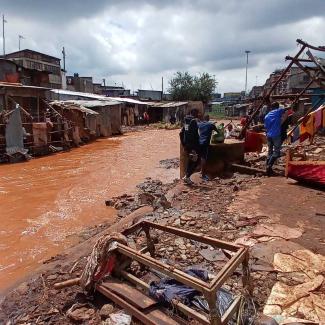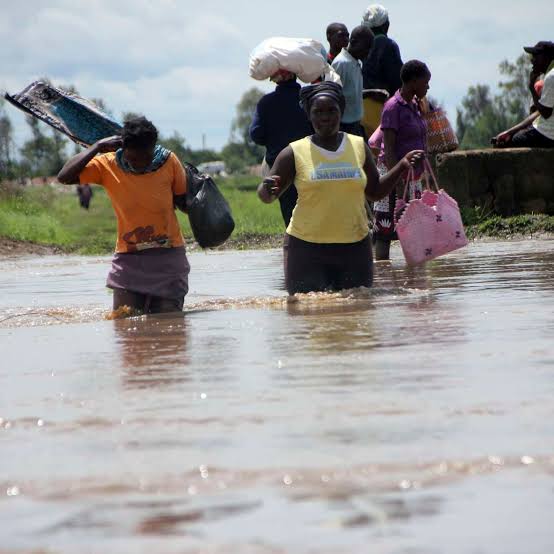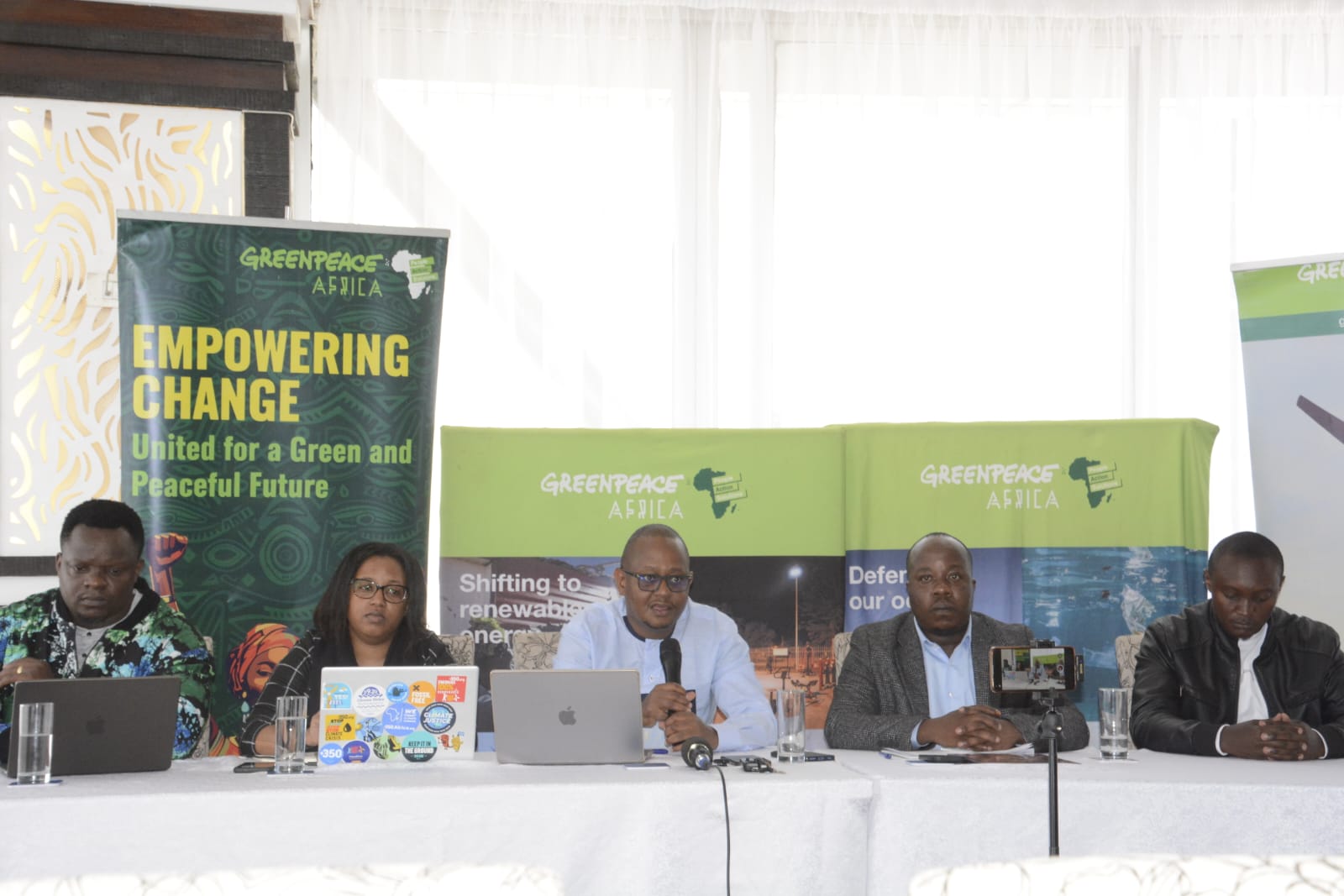
From Left to Right: Greenpeace Africa's Communication Manager Ferdinand Omondi, Senior Africa Campaigner for Oil Change International Charity Migwi, Greenpeace Africa's Pan African Political Analyst Fred Njehu and Volunteer Anthony Otieno from Maai Mahiu where Devastating floods killed over 50 people
By Aoma Keziah
As COP29 in Azerbaijan draws near, African negotiators have been urged to seize the opportunity and secure equitable climate finance for the continent. Greenpeace Africa, along with climate justice movements, has presented a call to action to the African Group of Negotiators (AGN), pushing for an ambitious and needs-based climate finance framework.
Amos Wemanya, Responsive Campaigns Lead at Greenpeace Africa, emphasized the urgency of the moment stating that Climate negotiations have perfected the act of kicking the can down the road.
“COP29 must put a stop to kicking the poor in the stomach. The climate crisis is biting in Africa. Communities’ lives and livelihoods are on the line. For this COP29 to succeed, an ambitious and needs-based new collective and quantified goal on climate finance must be established.”He said
The document presented to African negotiators outlines several key demands, including a New Collective Quantified Goal (NCQG) that focuses on increasing public climate finance.
The campaigners also called for a Climate Damages Tax (CDT) on fossil fuel extraction, a measure they believe will generate necessary funds for climate action. They stressed the need for public, debt-free financing to prevent further economic burdens on African nations. In addition, they firmly rejected any support for fossil fuel production, describing it as a dangerous distraction that exacerbates the climate crisis.
Charity Migwi, Senior Africa Campaigner at Oil Change International, echoed that Climate finance should not be used to finance fossil fuel expansion.
“ Fossil-driven development contradicts Africa’s visions and sustainable development goals. Under the New Collective and Quantified Goal on climate finance, funding should not go to dangerous distractions that are expensive, speculative, a proven failure, or unproven at scale, typically serving to prolong the lifetime of fossil fuel assets.” Migwi stated
Adding a voice from the frontline, Antony Madilschy Otieno, a Greenpeace volunteer and resident of Mai Mahiu, recounted a tragic climate disaster that took place in his community earlier this year
“What happened in the early hours of April 29, 2024, in the Mai Mahiu area must never be allowed to happen again. Where human greed, profits-over-lives mentality, and a wanton disregard for human life through continued fossil fuel production and their excessive greenhouse gas emissions, causing freak and unmitigated weather patterns, coupled with human negligence, resulted in a disastrous and highly preventable calamity that needlessly took the lives of so many innocent people on that morning.”He stated
He also called for urgent action, demanding an end to fossil fuels and insisting that polluters be held accountable for the destruction caused by their emissions.
“Never again. We’re calling for polluters to pay for the damages they have caused, such as the destroyed land, lost livelihoods, and the loss of human life experienced in the Mai Mahiu area, and for urgent climate reparations NOW.”Otieno added
As the world turns its attention to COP29, Greenpeace Africa urges African negotiators to advocate for a climate finance plan that genuinely addresses the continent’s unique challenges. Wealthy nations and fossil fuel companies, they argue, must pay their fair share and support Africa’s transition to a sustainable future.
Similar Posts by Aoma Keziah:
- Nationwide Youth Business Drive Enters Last Lap With New Nyota Trainings
- Green Light From Washington Sets G42 On Fast Track to Build Region’s Most Powerful AI Network
- Safina Eyes Kariobangi North Seat in Intensified Push Before Poll Day
- KEBS Opens Talks With Manufacturers On New Standards Levy Order 2025
- Kenya, Uganda And South Sudan Chart Way Forward On East Africa Rail Corridor
About the Author


 The Mt Kenya Times