The Mt Kenya Times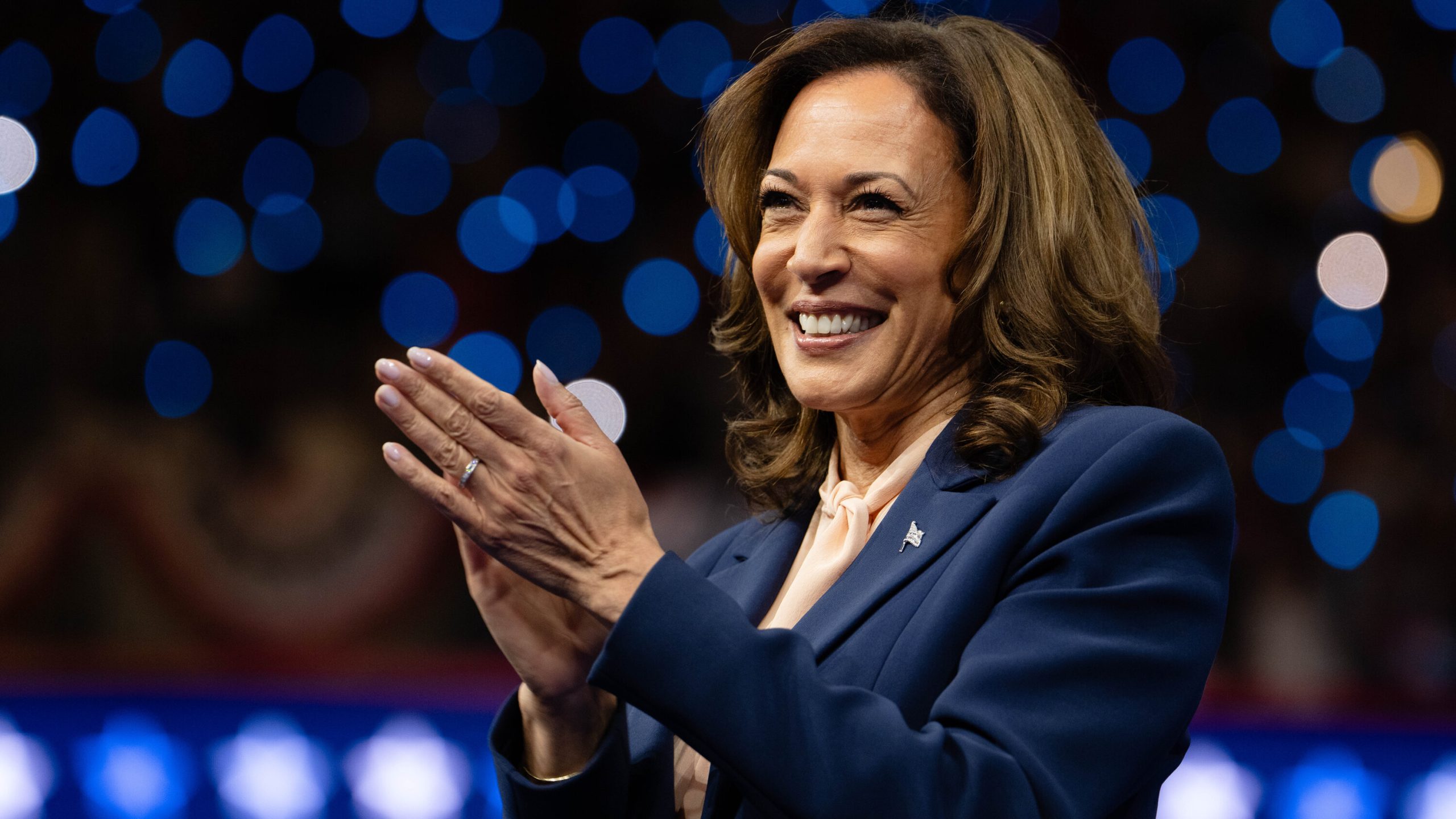
Kamala Harris
Examining Kamala Harris’s Vocal Critique of Trump Amidst Her Silence on Key Issues
By: Midmark Onsongo
Worth Noting:
- For instance, during a campaign event in Chicago on September 15, 2022, she reiterated her commitment to reproductive rights and climate change, yet the vagueness of her proposals leaves many citizens questioning their feasibility. How can one take bold steps when the path forward is shrouded in ambiguity? This contrasts sharply with Trump’s fiery rhetoric and unapologetic embrace of his base, a strategy that undeniably resonates with millions.
- Indeed, the allure of Trump’s brand of politics—direct, confrontational, and unapologetically populist—has proven effective. Polls suggest that Trump remains a formidable candidate, with an average approval rating around 43% among Republican voters as of October 2023. His charisma, often likened to that of a seasoned showman, has enabled him to dominate headlines while Harris seems relegated to the sidelines, trapped in a feedback loop of critique rather than innovation.
The empty barrel always makes the loudest noise, and Kamala Harris seems to be leading the chorus of cacophony that drowns out the real melodies of governance. The Vice President’s oratory flourishes have become almost theatrical, as she takes center stage to hurl accusations at Donald Trump, a man she seems to believe is the root of all evil in American politics. However, while she’s busy with her melodrama—rallying supporters in cities like Atlanta, Georgia, on November 17, 2022, or in Detroit, Michigan, on October 30, 2022—her actual agenda appears to be drowned in the noise. The irony is palpable; while Harris can skillfully deliver a blistering critique of her predecessor, she often neglects to articulate a clear vision of her own. Is this a political strategy, or merely a diversion from a lack of substantive policies?
At every turn, Harris positions herself as a fierce opponent of Trump, employing hyperbolic language and vivid imagery to paint him as a villain in a dystopian narrative. Her remarks are peppered with allusions to a darker era of American politics, invoking the specter of January 6 and the insurrection that rattled the nation. But let’s not forget the critical irony—her fierce denunciations come amid rising crime rates and economic instability that plague many American cities.
Her criticisms resonate like echoes in a canyon, reverberating but failing to deliver tangible solutions. “We will not go back to the days of division,” she proclaims, yet her rhetoric often serves to deepen the divide rather than bridge it. Where is the roadmap that details how she plans to unify a fractured nation? Amidst the vitriol, one can’t help but wonder: what is Harris truly offering?
Her rhetoric often drips with sarcasm aimed at Trump, whom she labels “a danger to democracy,” yet the real danger might be in her inability to pivot from criticism to constructive governance. In her speeches, Harris often oscillates between bravado and defensiveness, portraying herself as the stalwart defender of democracy while failing to outline her initiatives clearly.
For instance, during a campaign event in Chicago on September 15, 2022, she reiterated her commitment to reproductive rights and climate change, yet the vagueness of her proposals leaves many citizens questioning their feasibility. How can one take bold steps when the path forward is shrouded in ambiguity? This contrasts sharply with Trump’s fiery rhetoric and unapologetic embrace of his base, a strategy that undeniably resonates with millions.
Indeed, the allure of Trump’s brand of politics—direct, confrontational, and unapologetically populist—has proven effective. Polls suggest that Trump remains a formidable candidate, with an average approval rating around 43% among Republican voters as of October 2023. His charisma, often likened to that of a seasoned showman, has enabled him to dominate headlines while Harris seems relegated to the sidelines, trapped in a feedback loop of critique rather than innovation. Is Harris’s strategy merely to hope for Trump’s missteps or does she truly believe that her words alone can shift the tide of public opinion?
Harris’s choice of rhetoric often paints her as a hero in a battle against tyranny, yet the irony lies in her silence on pressing issues such as inflation and homelessness. Despite the urgency of these crises, Harris appears to be more focused on the theatrics of political performance than on tangible solutions. During her speech at a rally in Philadelphia on November 2, 2022, she noted, “We must fight for the soul of our nation,” but one must ask: what does this fight look like? A series of platitudes and lofty goals does little to fill the empty bellies or address the anxieties of working-class Americans. The paradox is that while Harris projects strength, her inability to translate that strength into policy weakens her stance.
In contrast, Trump, for all his shortcomings—his divisive language, controversial policies, and often erratic behavior—has a singular ability to connect with his audience. His rallies are not mere performances; they are movements that draw thousands, fueled by a sense of shared identity and purpose.
Trump’s simple, catchy slogans and promises of “Making America Great Again” resonate with a constituency that feels left behind, making them feel seen and heard, even if the reality is often far from that promise. While Harris uses complex language and political jargon that may alienate many, Trump speaks in a way that is immediately accessible, often using onomatopoeia and vivid imagery to illustrate his points—effectively painting a picture that captivates and mobilizes.
So what’s next for Kamala Harris? She needs to move beyond mere noise and develop a narrative that resonates with voters on a deeper level. What does she plan to do that she cannot do now? In her rallies, she often reminds audiences of her role in the Biden administration, yet one must question the effectiveness of that alliance when public trust appears to be waning. The administration’s struggle with inflation, which hit a peak of 9.1% in June 2022, has overshadowed their achievements, and Harris’s voices in the din of disappointment sound increasingly hollow. Can she pivot from being a critic to becoming a catalyst for change?
In this political theater, the role of the Vice President has transformed into one of fierce opposition rather than constructive collaboration. Harris has become the proverbial mouthpiece, delivering fervent speeches that resonate with part of the electorate but fail to inspire broader consensus. Her approach can often be described as an oxymoron—promoting unity while engaging in divisive rhetoric. The underlying question remains: can she harness her energy into a force that not only criticizes but also mobilizes?
As we look ahead to the 2024 elections, it’s crucial to note that while Harris continues her tirades against Trump, the clock is ticking. She must rise to the occasion, evolve her strategy, and take the initiative. It is a paradox of modern politics that those who shout the loudest often drown out the very message they aim to deliver. Will Kamala Harris be the leader who transcends mere rhetoric and offers a vision that captures the hearts and minds of a divided nation? Or will she remain the empty barrel, making noise without substance? The stakes have never been higher, and the choice is not merely between two candidates; it’s between two futures—one defined by the echoes of the past and the other by the possibilities of change. If Harris wishes to reclaim the narrative, she must transform from a vocal critic into a dynamic leader, one whose actions speak louder than words in a world that craves authenticity over theatrics.
This article was scripted by;
MIDMARK ONSONGO, SGS
(Socio-Geographic Scholar)
Similar Posts by The Mt Kenya Times:
- Mt Kenya Times ePAPER October 26, 2026
- Sakaja challenges Kamukunji police over Eastleigh suspect bail
- Muturi demands binding livestreaming rules for 2027 polls to prevent repeat of 2022 chaos
- NTSA calls for road safety to be declared a national disaster after 24 die in Mtito Andei crash
- Ruku turns on Waiguru over deputy president ambitions: ‘That seat is not being contested for’
About the Author