The Mt Kenya Times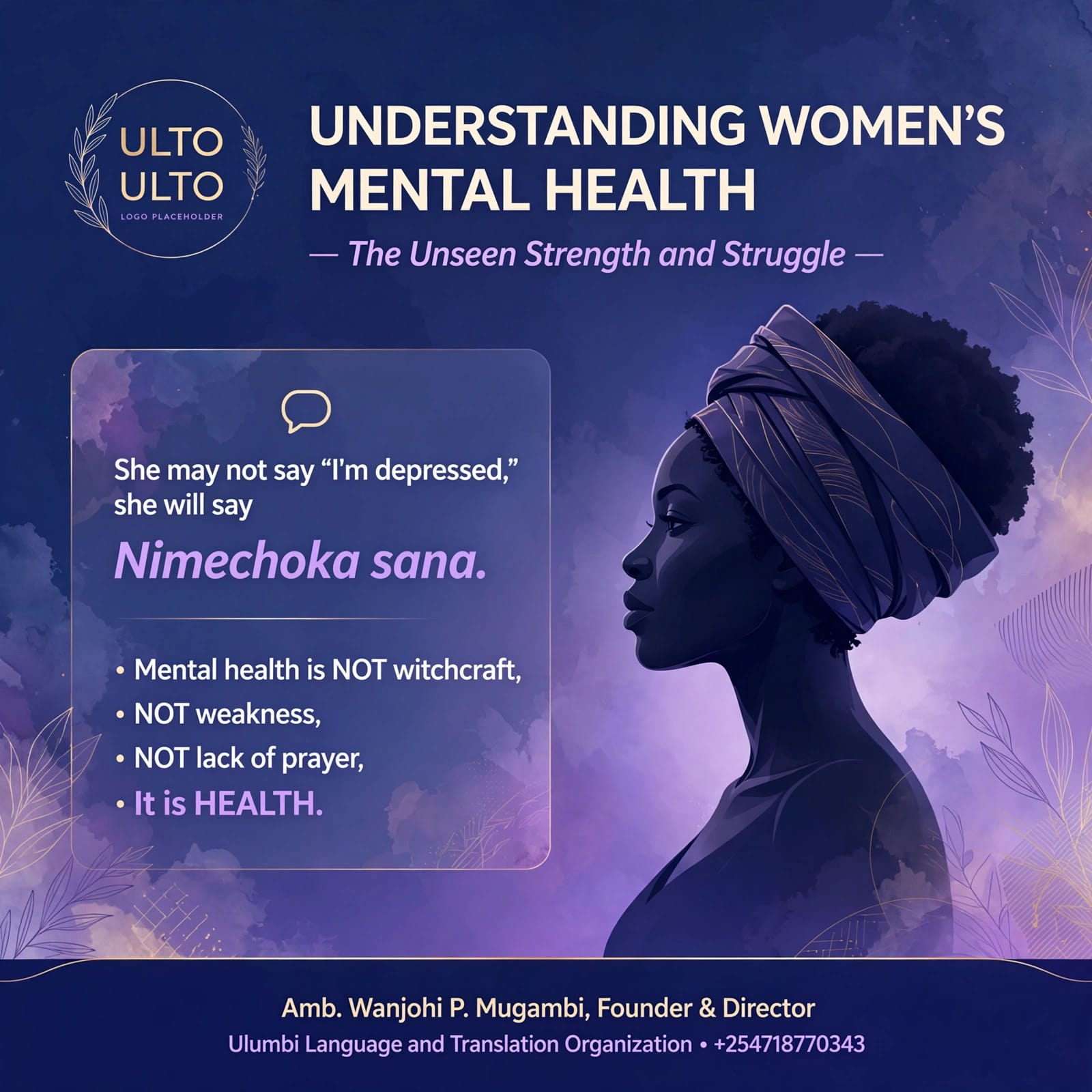
Why women’s mental health is a family issue, a community issue, and a conversation we can no longer afford to avoid
By Wanjohi P. Mugambi
Women carry worlds within them. They are mothers, daughters, leaders, caregivers, professionals, and peacemakers. Yet behind so much of that strength lies a silent struggle that society rarely pauses to acknowledge — and almost never discusses honestly.
Women’s mental health is not simply a medical concern. It is a human rights issue, a family issue, and a development issue. And it is long overdue for a frank conversation.
The forces that shape a woman’s mental wellbeing are layered and complex. Biology plays a significant role. Hormonal changes across a woman’s life — menstruation, pregnancy, the postpartum period, and menopause — can profoundly affect mood and emotional regulation in ways that are frequently misunderstood, dismissed, or suffered through in silence. Postpartum depression, for instance, affects roughly one in five mothers in Kenya, yet many women endure it without seeking help, unsure whether what they are experiencing is even real, or quietly convinced that struggling after childbirth is simply part of the job.
Then there is the psychological load — the invisible weight that rarely appears on any list of responsibilities but is felt every single day. Many women are conditioned from childhood to be the emotional caretaker of everyone around them: their children, their spouse, their parents, and their wider community. Their own emotional needs get quietly pushed to the back of the queue, if they make the queue at all. The unrelenting pressure to appear strong, to hold everything together, to never visibly crack, leads over time to burnout, chronic anxiety, and a kind of exhaustion that sleep alone cannot fix.
In many African contexts, these pressures are compounded further by structural realities: gender-based violence, economic dependence, unequal distribution of domestic labour, early marriage, and systemic discrimination. Research shows that a woman who has experienced abuse, rejection, or sustained financial hardship is three times more likely to develop depression or anxiety. These are not personal failings. They are predictable responses to very difficult circumstances.
It helps to understand what these conditions actually look like in practice, because mental illness rarely announces itself cleanly. Depression is not simply sadness. It can look like persistent fatigue, a loss of interest in things that once brought joy, a pervasive sense of worthlessness, disrupted sleep and appetite, or tears that arrive without an obvious reason. Anxiety presents as constant worry, relentless overthinking, a fear of failing as a mother or wife, heart palpitations, and an inability to rest even when the body is genuinely exhausted. Postpartum depression is not the “baby blues” — the low mood that commonly follows childbirth and passes within a couple of weeks. It is intense sadness, emotional detachment from the baby, overwhelming guilt, and a hopelessness that persists for weeks and requires proper medical support, not judgment. Burnout, meanwhile, often looks like a woman who is simply doing too much — juggling work, business, church, children, and the demands of home with little meaningful support — until her body eventually forces the rest her mind refused to take.
One of the most important things to understand is that a woman in distress may not use the words we expect. She may not say, “I am depressed.” Listen instead for what she does say: “Nimechoka sana” — I am very tired. “Siwezi tena” — I cannot do this anymore. Watch for withdrawal from friends, church, or social groups. Watch for increased irritability, a creeping neglect of self-care, or persistent physical symptoms — headaches, back pain, a body carrying what the mind cannot express.
To every woman reading this: mental health is not witchcraft, weakness, or a failure of faith. It is health — as real and as legitimate as any physical illness. You are allowed to struggle. You are allowed to ask for help.
And to the communities, families, and institutions that surround women, the responsibility is shared. Creating safe spaces — in homes, in churches, in workplaces, in community organisations — where women can speak without being labelled or advised to simply pray harder, is not a luxury. It is a necessity. Sometimes a woman does not need solutions. She needs someone to listen, to stay, and to say: “I hear you. You are not alone.” Husbands, brothers, and sons have a practical role here too. A woman who receives genuine help with children, with domestic responsibilities, and with emotional support is a mentally healthier woman. That is not sentiment — that is evidence.
Seeking professional help is also not a sign of weakness. Just as we see a doctor for malaria, visiting a counsellor, psychologist, or trained pastoral counsellor for mental distress is a sign of wisdom. For those experiencing severe symptoms, support is available at the nearest Level 4 hospital, or through the Kenya Red Cross toll-free line: 1199.
Beyond crisis support, the everyday habits matter. Rest. Seven to eight hours of sleep. Nutritious food. A walk. Prayer or meditation. Maintained friendships. A woman cannot pour from an empty cup — and nobody benefits when she runs dry.
When a woman is mentally healthy, her family thrives, her business grows, and her community is stronger. Understanding women’s mental health is understanding the foundation of our society. It is time we stopped telling women to persevere through pain in silence, and started telling them instead: you deserve support.
This article is produced for community education purposes. ULTO is available to partner with local counsellors and community health organisations in Nairobi for support programmes.
Similar Posts by The Mt Kenya Times:
- Laikipia University: A natural haven for learning
- Why you should not milk a Kenyan buffalo
- Beyond the scars: The grief, fear and hope of living after breast cancer
- Obaga Momanyi hosts free medical camp for Persons with Disabilities in Bonchari
- How Kenya’s economic titans feast while competition law serves as courteous footnote
About the Author