The Darkness Within: A Critical Review of Joseph Conrad’s Heart of Darkness
A Project on the Modern Novel
Suggested by: Muhammad Adnan Gujjar
Written and Reviewed by: Jasia Jabeen
M.A. English, 1st Semester
University of Chenab, Gujrat
Student ID: BSEN-2Y012515006
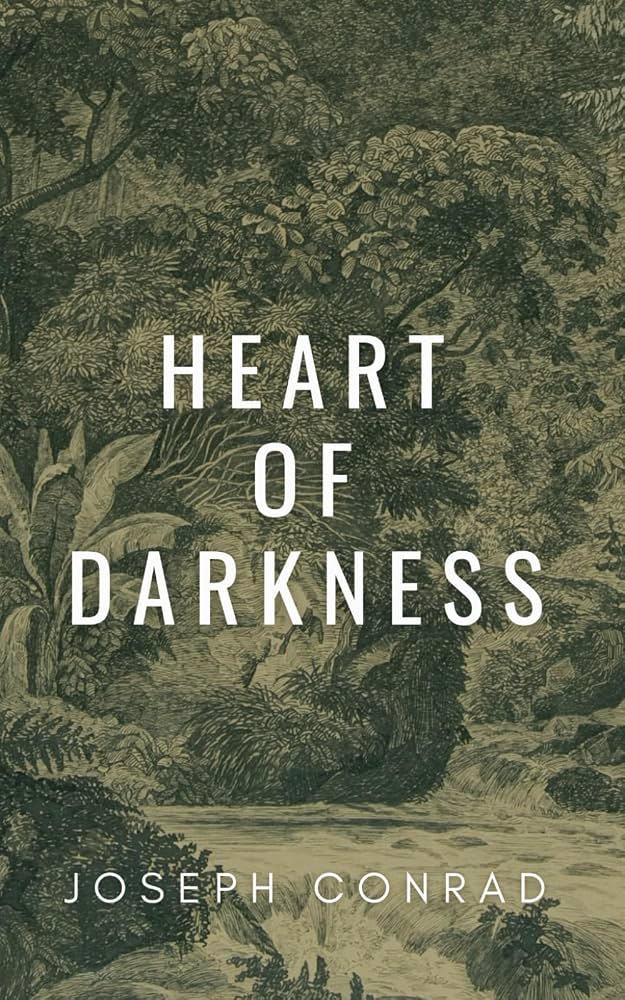
Joseph Conrad’s Heart of Darkness was written in 1899 and published in the same year. The novella is regarded as one of Conrad’s most widely known works. As a seaman, Conrad travelled extensively throughout the world. His journey to the Congo in 1890, during a period of severe atrocities under the rule of King Leopold II, became a significant turning point in his life and later influenced his writing. In Heart of Darkness, the idea of “darkness” is not limited to the colonial territories of Africa; rather, it extends from the European centres of colonial power to the African continent. The work draws substantially on Conrad’s personal experiences, and both Conrad and the central character, Marlow, are sailors. Many events and scenes in the novella have connections with Conrad’s experiences.
Joseph Teodor Konrad Korzeniowski, better known by his pen name Joseph Conrad, was born in Poland in 1857. English was his second language. He joined the French merchant marine as a young man and later served in the British merchant service. He spent many years at sea, an experience that is reflected throughout his literary works. His journey to the Congo had a profound impact on his understanding of European colonialism and its consequences. He later drew upon these observations in Heart of Darkness.
The title Heart of Darkness is symbolic and meaningful. It does not refer to a single idea but contains several layers of meaning. On one level, it represents the greed and lust that can exist within human nature. It also reflects inner and spiritual weakness. Psychologically, “darkness” represents evil, sin, greed, lust, and moral corruption. As Marlow travels deeper into the African jungle, he encounters the darker side of human nature. He gradually realizes that darkness is not simply an external condition; it can exist within every human being. Kurtz is the strongest example of this idea. At the beginning, he is described as an idealistic, kind, and civilized man, but his pursuit of power ultimately destroys his morality and humanity.
The novella is presented through a frame narrative and is largely narrated through Marlow. Five men aboard the Nellie are anchored in the Thames Estuary at dusk. One of them introduces Marlow’s account of his journey to Africa and up the Congo River. Marlow describes his experience as a steamboat captain working for a trading company. His main purpose is to find Kurtz, an ivory trader whose reputation has become legendary. During his journey, however, Marlow increasingly focuses on the treatment of African people and the exploitation of the continent’s natural resources, particularly ivory. Through his encounter with Kurtz, Marlow discovers different forms of moral and psychological darkness.
Colonialism is one of the major themes of Heart of Darkness. When Marlow reaches Africa, he witnesses moral corruption, cruelty, exploitation, and the brutal treatment of Africans. He sees people subjected to forced labour and suffering from hunger, poverty, and disease. The supposed European “civilizing mission” appears deeply hypocritical because Europeans claim to bring education and civilization while exploiting African people and natural resources for material gain. Conrad’s famous observation about conquest emphasizes the brutality underlying imperial expansion: “The conquest of the earth … is not a pretty thing when you look into it too much.” The statement criticizes the colonial system and exposes the destructive consequences of greed and the pursuit of power.
Darkness is one of the most powerful symbols in the novella. It refers not only to the physical jungle but also to the inner and spiritual darkness of human beings. The portrayal of Africa has also generated considerable critical debate. Chinua Achebe, most notably, criticized Conrad for representing Africa through stereotypical and dehumanizing images and for failing to portray Africans as fully independent individuals. Achebe’s criticism is important because it draws attention to the racial assumptions embedded in parts of Western literary representations of Africa. At the same time, Conrad’s central concern with moral corruption is evident throughout the novella. The “darkness” of the heart is particularly associated with supposedly civilized Europeans, especially Kurtz.
Marlow discovers human skulls around Kurtz’s station, providing shocking evidence of brutality. He also observes the extent of Kurtz’s influence over the local people, who regard him with extraordinary reverence. These experiences completely challenge Marlow’s earlier belief that Kurtz is a civilized and admirable man. Kurtz becomes a disturbing contrast to the European claim of civilization. Marlow’s statement, “I have seen the devil of violence, and the devil of greed,” expresses his recognition of the darker aspects of human nature and the consequences of moral corruption.
The novella also explores the contrast between civilization and savagery. European imperial powers consider themselves educated, civilized, and superior, while Africans are frequently described by Europeans as uncivilized or savage. Conrad exposes the hypocrisy behind this supposed civilizing mission. The European pursuit of ivory and other resources reveals that economic interests often lie beneath the language of civilization. The statement, “Your strength is just an accident arising from the weakness of others,” suggests that imperial power is dependent upon the exploitation and weakness of others rather than upon genuine moral superiority.
Marlow is the central character and narrator. He not only tells the story but also shares his thoughts, observations, and experiences. In the Congo, he witnesses the suffering of Africans and feels sympathy for them. At the same time, his character remains conflicted because, although he is critical of colonial practices, he continues to work for a colonial trading company. His journey is therefore both physical and psychological. As he travels deeper into the jungle, he also explores the darker dimensions of his own consciousness and gradually realizes that true darkness can exist within human beings.
Kurtz is the second major character in the novella and the central figure of Marlow’s quest. Before meeting him, Marlow hears many accounts describing Kurtz as an exceptionally civilized and talented man. However, when Marlow finally encounters him, his opinion changes dramatically. Kurtz has become cruel and tyrannical as a result of his unchecked pursuit of power. His final words, “The horror! The horror!”, suggest a moment of profound recognition and judgment. They reveal his awareness of the horror surrounding his actions and the consequences of his moral collapse.
The Manager of the Central Station represents another form of colonial corruption. He is portrayed as ambitious, self-interested, and concerned with material gain. He secretly hopes that Kurtz will die so that he can continue to benefit from the ivory trade. Marlow describes him as a “hollow man,” suggesting that outward authority can conceal inner emptiness.
The Chief Accountant is another official who represents the bureaucratic side of colonialism. Although Marlow admires his neat appearance and disciplined work habits, this admiration does not extend to his personality. His character illustrates the contrast between outward order and the moral disorder of the colonial enterprise.
Marlow’s aunt helps him obtain his position in the Company and supports the idealistic language of European colonialism. Her views resemble the ideology associated with the so-called “White Man’s Burden,” which presented imperialism as a civilizing responsibility while often concealing economic and political interests.
Heart of Darkness is a rich and complex work that allows for several interpretations. On the one hand, it exposes the violence and hypocrisy of colonialism; on the other, Marlow himself remains connected to the colonial enterprise through his employment by the Company. This creates an important moral tension in the narrative. Conrad’s use of symbolism, especially darkness and the river, adds further depth to the text. His indirect and complex style can make the novella challenging to read, but it also encourages readers to examine its meanings carefully.
In conclusion, Heart of Darkness remains a powerful modern work because it explores both the brutality of colonialism and the psychological darkness within human nature. Through Marlow’s journey and Kurtz’s tragic transformation, Conrad demonstrates how unchecked power can corrupt an individual. Although the novella can be difficult to interpret, its complex themes, symbolism, and thought-provoking treatment of imperialism continue to make it an important work for literary study.
Written by:
Jasia Jabeen
Similar Posts by The Mt Kenya Times:
- Mt Kenya Times ePAPER October 24-25, 2026
- Muturi calls on IEBC to keep election technology tender clean and on schedule
- Ruto meets UAE minister in push to deepen trade ties
- Gideon Moi breaks silence on Ruto fallout, cites broken promises
- The doctor who refused to abandon a sick Uganda
About the Author