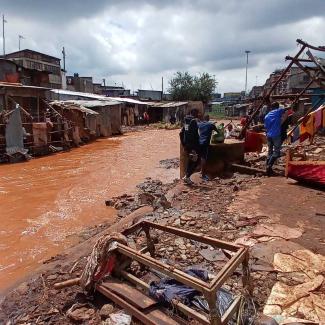
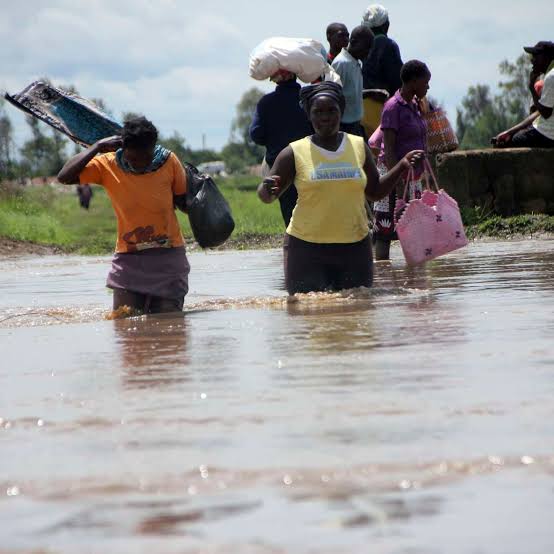
Street children commonly referred to as chokoraa

By Elishah Mwangi
Due to migration caused by climate change events such as floods, droughts, and other calamities, the number of homeless people has significantly increased. Beyond the existing street children, who ended up there for various reasons, this number has been further augmented by those fleeing disasters. The only viable shelter often remains overcrowded streets. But why hasn’t this issue been highlighted as one of the significant impacts of climate change? These groups are just as vulnerable as women and children.
Street children, commonly referred to as “chokoraa,” bear the brunt of the challenges brought about by these changes. They are directly affected by nearly all disasters. Be it the skyrocketing prices of goods due to drought or the frequent floods and heavy rains that leave them exposed without shelter. Recently, I had conversations with some of them, and they shared some of the challenges they face, which I’ll outline below based on what they disclosed and my own observations.
Disasters such as floods and rising temperatures have forced many people to leave their homes. Where they end up seeking refuge are streets already overwhelmed with street children. Life on the streets becomes even more precarious as cyclones and floods place these children in increasingly difficult conditions. This influx of people creates conflicts over the scarce food available since drought has already reduced food production. This intensifies the risk of starvation as many people scramble for the little that remains.
Street children have no reliable source of income. They survive by scavenging through trash bins and begging for food from passersby. The food they get is often unhygienic, having been picked from piles of mixed garbage. These children are at high risk of diseases such as cholera and typhoid. This not only weakens their health but also stunts their growth.
Outbreaks of diseases such as cholera, malaria, and other illnesses place street children at severe health risks. When affected, accessing quality treatment becomes nearly impossible. Their lack of income prevents them from seeking care in private hospitals, and stigma and discrimination discourage them from going to public hospitals. These diseases end up further weakening them, and in some cases, claiming their lives.
Due to resource scarcity and the high demand for necessities, intense competition arises, often leading to conflict. Street life witnesses frequent fights and struggles for survival. Insecurity becomes rampant as criminals target street children, while others are easily lured into theft and other crimes as a means of survival.
With the increasing levels of air pollution, food shortages, and disease outbreaks caused by climate change, street children continue to be ignored. The challenges they face are numerous and life-threatening. One of the children I spoke with on the streets expressed, “The government should build us a very big house and buy us a lot of food so we can cook for ourselves.” His statement was met with laughter from his peers, but in reality, this is a very valid concern. If the government can build stadiums and large halls, I believe, with the help of national government county governments can construct shelters for these children.
Building shelters would spare them the hardships of street life. It is my plea to the government, civil society organizations, and private donors: as we tackle climate change, let us also prioritize street children, who are at the forefront of suffering. By doing so, we will not only save the environment but also secure a brighter future for the next generation.
Similar Posts by The Mt Kenya Times:
- Diaspora Times Global Oct 17 – Oct 23, 2026
- Is social media a blessing or a curse for university students?
- Light at last: How electricity is reshaping Nandi and Uasin Gishu
- The triple squeeze: how EPRA’s fuel price hike is reshaping the survival equation for the common mwananchi
- Zelenskyy accuses Trump of rewarding Putin as Pope pleads for peace from a hospital bed
About the Author