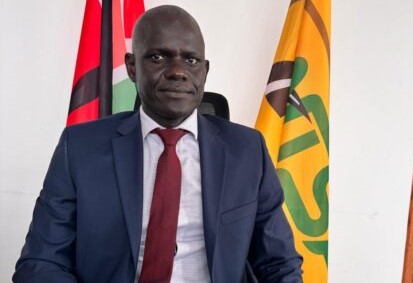
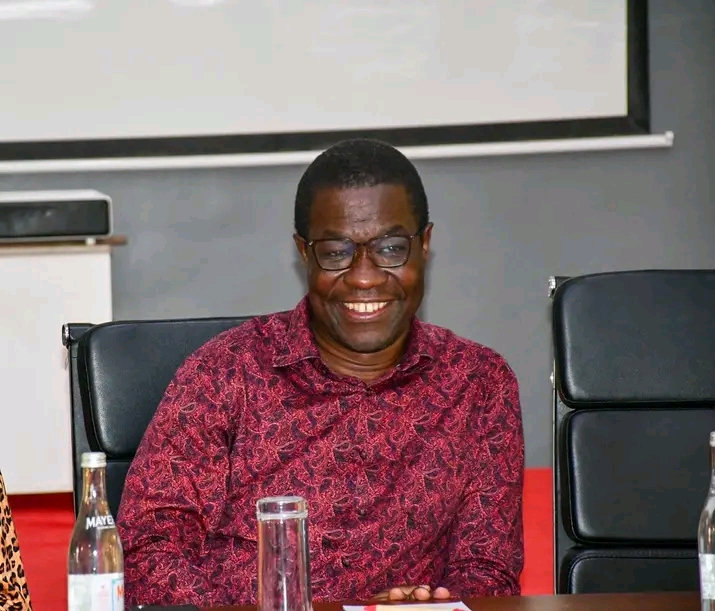
Ahead of the 48th IFAD Governing Council session in Rome next week, CS Mutahi Kagwe held discussions with Ms Mariatu Kamara, International Fund for Agricultural Development (IFAD) Representative/Country Director for Kenya, and Mr. Ronald Ajengo, Kenya Country Program Officer. Also present were Agricultural Finance Corporation MD George Kubai and Agriculture Secretary Collins Marangu.
This year’s theme is “Catalysing Investment at the First Mile.” Kenya, having met its IFAD obligations, has doubled its commitments for the 13th replenishment as agricultural transformation is central to the government’s BETA agenda. IFAD, with a regional office in Nairobi, has invested over KSh130 billion in the country over the last 48 years. Programs such as KCEP-CRAL, KELCOP, and RK-FINFA, in partnership with AFC, have demonstrated the impact of innovative finance on poverty and food insecurity.
 The Subsidized Fertilizer Program has been a transformative force in enhancing agricultural production in Kenya. However, corruption in its distribution would undermine its success.
Secretary for Administration Rashid Khator, in collaboration with the Ethics and Anti-Corruption Commission (EACC), represented by Vice Chairperson Dr. Monica Wanjiru Muiru launched the Compliance Monitoring Initiative for the subsidy program at Kilimo House.
During the launch with the Subsidized Fertilizer Distribution Committee, Khator emphasized the need to close corruption loopholes and reinforce ethical practices to ensure the program’s integrity.

Governor Dr. Wilber Ottichilo has urged young people to be cautious as they embrace technological advancements. While technology offers benefits like fast communication and efficiency, Dr. Ottichilo cautioned that its misuse can have serious consequences. He pointed out that many young people are engaging with inappropriate content online or sharing controversial posts on social media. He emphasized that the content individuals engage with and share online reflects their character. In today’s digital age, he noted, potential employers often review job seekers’ social media profiles to know more about their personalities and values.
 Kenya’s delegation, led by Principal Secretary for Medical Services Mr. Harry Kimtai, joined regional leaders in supporting key commitments to enhance health security and self-sufficiency across the continent. This came as African Union (AU) Member States endorsed a communiqué at the 2nd Vaccine and Other Health Products Manufacturing Forum in Cairo, Egypt, aimed at strengthening local manufacturing of vaccines, diagnostics, medicines, and other essential health products. The communiqué highlights the upgrade of the Partnerships for African Vaccine Manufacturing (PAVM) to the Platform for Harmonized African Health Manufacturing (PHAHM) to drive self-reliance, the establishment of the African Pooled Procurement Mechanism (APPM) to improve affordability and access, and the strengthening of regulatory frameworks through the African Medicines Regulatory Harmonization (AMRH) and the African Medicines Agency (AMA). It also supports the Gavi African Vaccine Manufacturing Accelerator (AVMA), a $1.2 billion initiative to boost vaccine production, while promoting regional collaboration and financing mechanisms to sustain investments in Africa’s health manufacturing sector. The forum urged AU Member States, regional economic communities, and global partners to prioritize procurement of African-made vaccines and health products to ensure demand certainty for local manufacturers. It also called for stronger commitments to talent development, financing, and coordinated procurement strategies to reduce import dependency.
Similar Posts by The Mt Kenya Times:
- Mt Kenya Times ePAPER October 26, 2026
- Sakaja challenges Kamukunji police over Eastleigh suspect bail
- Muturi demands binding livestreaming rules for 2027 polls to prevent repeat of 2022 chaos
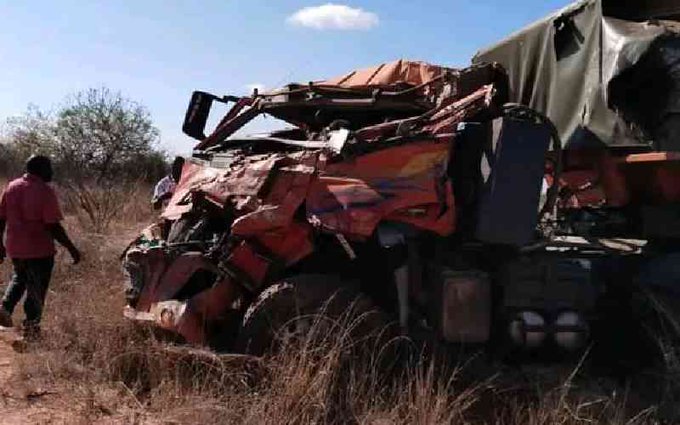
- NTSA calls for road safety to be declared a national disaster after 24 die in Mtito Andei crash
- Ruku turns on Waiguru over deputy president ambitions: ‘That seat is not being contested for’
About the Author