The Mt Kenya Times
By: Wanjohi. P. Mugambi
Worth Noting:
- Proper performance behaviour: It means that the child will behave in the manner approved by the society. Every society or the social group has a norm of behaviour. The standard is prefixed as per the need of the social group. The child has to go along the line for his own benefit and for the benefit of other members of the society.
- Playing approved social roles: In a society the standard of behaviour may vary from age group to age group. For example, the prescribed behaviour for the father may not be same for the son and may also be different for the grandfather. Even though this norm appears sometimes unpleasant to some individual it is desirable for peaceful co-existence.
When the child is born he finds before him a complete new world with a changed atmosphere. As per James, this world appears to him as a “big, blooming buzzing confusion”. He finds every thing new and at first fails to understand the phenomena taking place before his eyes. This becomes uncomfortabel to him as a result he starts crying. But as time passes he becomes able to understand gradually but slowly. This process goes on along with the development of the child’s brain, nervous system and sense organs. The rate of understanding is parellel with that of mental growth and exposures of the child to different phenomena. Maturation makes the child ready for understanding.
For survival every living being has to adjust to environment and this adjustment is possible when they understand the situation. This is also ture in case of a human child. He has to understand his environment, the people around him and himself too. Before reacting to any situation he is also required to know about his limitations, both physical and mental.
This can gradually be learnt by the children through association with elders and exposures to nature. Better understanding will help to have better development. Even when children play together in a group they have to understand many things otherwise they cannot acquire sufficient skill to even play successfully. Understanding paves the way for thinking and reasoning.
Even though this is a complex process, many psychologists believe that reasoning being looked upon as the understanding of cause and effect relationship, young infants can acquire it. This has also been experimentally found out by many psychologists, like Gesell, Reasoning also includes ability to generalise and make deduction. Of course, this may not be experienced with very young children but this is quite expected with pre-school children. While playing, they can very well be tested on this aspect.
In a nursery school, therefore, there should be ample opportunity to develop this aspect through problem solving plays andgames. Problem solving or reasoning capacity of young children can be nurtured by experiencing success. Children are to be provided with puzzles for experiencing the joy of success. They should be allowed to work independently and take their own time to find out the solution so as to enable them to reason out something of their own.
There should not be any spoon feeding at it debars the child to acquire reasoning capacity. It is not that parents and teachers would not come to his assistance. They can help the child develop reasoning by directing his attention to the crucial source of his difficulty. This would help the child to save time and choose the proper approach. Exposure to nature and study of environment would help the children to have wider understanding and better reasoning capacity.
This would also help him to grow his knowledge. Hence there should be ample opportunity in pre-school centres to take children round, show different places and enable them to come across different birds and animals and plants to enhance their knowledge. This would also help them to acquire skill in having little arithmetical knowledge like counting, adding, substracting simple numbers and quantities.
During infancy the child is self-centred. As he grows he has to face the realities of the society in which he is brought up. In every society there is a norm of behaviour for its members and they have to obey it in order to be called social beings. Their dealings and way of life are to be accepted by the society, otherwise there may not be peaceful co-existence among members. According to Hurlock there are three processes involving socialisation.
Those are:
(1) proper performance behaviour,
(2) the playing approved social roles, and
(3) development of social attitudes.
- Proper performance behaviour: It means that the child will behave in the manner approved by the society. Every society or the social group has a norm of behaviour. The standard is prefixed as per the need of the social group. The child has to go along the line for his own benefit and for the benefit of other members of the society.
- Playing approved social roles: In a society the standard of behaviour may vary from age group to age group. For example, the prescribed behaviour for the father may not be same for the son and may also be different for the grand father. Even though this norm appears sometimes unpleasant to some individual it is desirable for peaceful co-existence.
- Development of social attitudes: Freeman has defined social attitudes as that of becoming “imbued with a sense of oneness, inter communication and co-operation”. Once a person develops social attitudes he will appreciate social customs and will be involved in social activities of his own, as a result he will be a wanted person in the society.
The child is neither social nor anti-social when he is born but he will definitely follow the behaviour of his elders. Hence the elders have to set before him a standard to get him along the proper line. There should be learning experiences for him as expected by the society and he is to be motivated and guided to behave in that line. Moreover, the experience as per the guidelines need be ample and favourable to him so that he develops such attitudes for socialisation.
This process of socialisation takes longer period. The improvement with the child in this regard may not be uniform. Sometimes very little progress is also marked and sometimes there may be retardation too. But parents and teachers have to have patience and guide and motivate the child from time to time. A child is not born ‘introvert’ or ‘extrovert’ but he is rather made like that in course of socialisation.
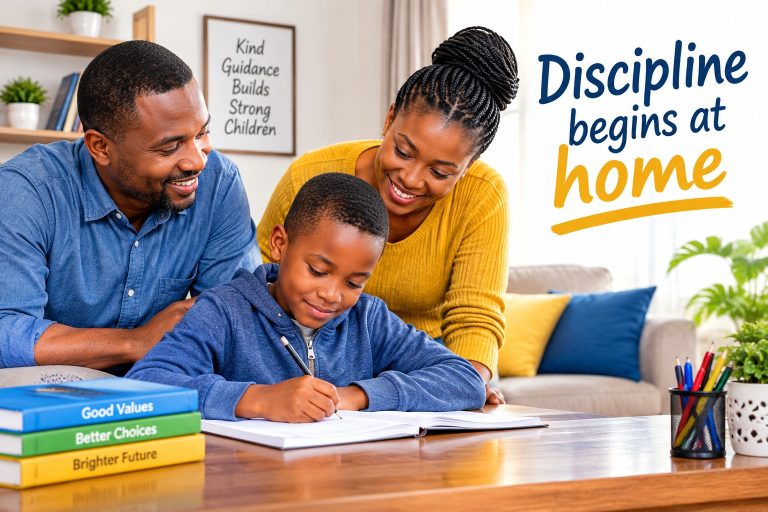
Family is the first place for the child to develop socially. All members of the family contribute towards this. If global character of the home is favourable, there are changes for developing favourable social attitudes with the child. On the other hand, if the home atmosphere is with constant tension and friction, this will act as an unfavourable atmosphere to the child and the attitudes developed with child will be greatly influenced by this. This will also have a greater after effect in the life of the child. Hence, the members of the family are to be very careful about this and try to set a better example before the child for better social growth. There are a number of factors which influence the social growth of the child while in the family.
Similar Posts by The Mt Kenya Times:
- Diaspora Times Global Oct 24 – Oct 30, 2026
- America’s baby bust: U.S. birth rate hits record low as women choose later motherhood
- Literary Outreach Incubation Program Instills The Culture From Book Adaption To Spoken Words
- Why starting school too early is failing our children
- Who defines Africa’s destiny? The western lens, African compliance and the struggle for intellectual sovereignty
About the Author