How East African Crude Oil Pipeline (EACOP) oil project has negatively impacted the lives of women and girls
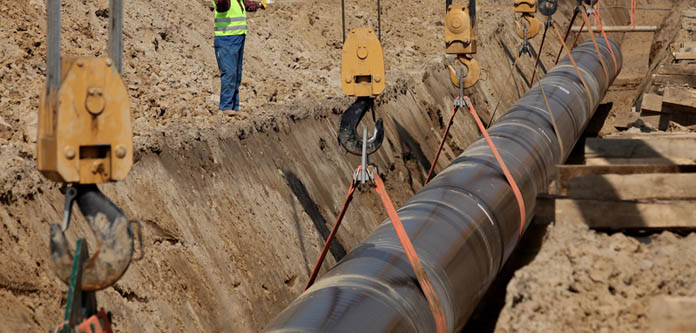
East Africa Crude Oil Pipeline

By: Ireen Twongirwe
Worth Noting:
- According to research, in six months in 2021 alone, elephants and other animals destroyed over 3,000 acres of food crops in Nwoya district. This has also led to increased level of hunger in families. EACOP oil project has also contributed to the delay of achievement of sustainable development goals 1, 2, 5,7,13 which was targeted by 2030.
- However much National Environmental Management Authority and other relevant stakeholders managed to produce the EACOP ESIA report and EACOP Bill which aimed at supporting the project proponents to avoid or minimize the project impacts, it has not been helpful because it has a lot of gaps and weaknesses towards protecting and defending the environment from destruction and human rights violation.
East Africa Crude Oil Pipeline is a planned 1,443km pipeline that is expected to be constructed from Total Energies’ Tilenga and CNOOC’s Kingfisher oil fields in Western Uganda to the port of Tanga in Tanzania. It’s important to note that if constructed, the EACOP will be the longest electrically heated crude oil pipeline in the world.
More so, the EACOP is a climate change, environmental, biodiversity and human rights violation bomb. It’s very absurd that Ugandan and Tanzanian governments have perpetrated human rights abuses against the project- affected persons.
Currently, under the leadership of Total Energies, the project developers are acquiring approximately 5,172 hectares of land including 1,109 and 4,063 hectares in Uganda and Tanzania respectively. This land is being compulsorily acquired from over 13,292 project-affected households (PAHs) in Uganda and Tanzania. The compulsory land acquisition processes have caused gross human rights violations which greatly affect women and girls with key among which is the refusal of PAHs from using their land to grow perennial food and cash crops since 2018 and 2019.
Further, since women are the bread givers in families, these challenges hit them harder than any other gender. Women being denied to access their land for agriculture has led to food insecurity, household income loss, family breakups because men leave their wives to look for survival somewhere, increased rate of prostitution due to many investors in the area, school drop-outs especially amongst girls and this has led to early pregnancies . more so, EACOP has led to displacement of hospitals has increased death of pregnant women since they cannot access attention medical care, displacement of schools ad students especially girls finds it hard to access school for their education, displacement of churches and this has limited to their freedom of worship in the communities. All these challenges have led to gender inequality in both families and communities.
In addition, while Uganda is seeing oil project as a blessing to boost her economy, its notably increasing on the violation of women , human and environmental rights hence affecting the livelihood of the vulnerable women and girls. This violation has not only caused psychological distress and household poverty but will also fail the Persons Affected Holds from replacing all the land that they lose, contrary to the International Finance Cooperation Performance Standards (IFC).
In addition, due to oil pressures in the ecosensitive and biodiversity Albertine Graben in Uganda, habitats for chimpanzees such as Bugoma forest are under destruction. The habitat loss has led to increased human-wildlife conflicts with chimpanzees attacking and killing children, where after communities has also carried out retaliatory attacks. This has put biodiversity conservation at risk hence reducing on revenue from tourism sector.
According to research, in six months in 2021 alone, elephants and other animals destroyed over 3,000 acres of food crops in Nwoya district. This has also led to increased level of hunger in families. EACOP oil project has also contributed to the delay of achievement of sustainable development goals 1, 2, 5,7,13 which was targeted by 2030.
However much National Environmental Management Authority and other relevant stakeholders managed to produce the EACOP ESIA report and EACOP Bill which aimed at supporting the project proponents to avoid or minimize the project impacts, it has not been helpful because it has a lot of gaps and weaknesses towards protecting and defending the environment from destruction and human rights violation. It’s clear that Communities’ livelihoods continue to be destroyed while animals are also killed, despite the ESIA’s existence. It is noted that EACOP ESIA report was inadequate and not fit for purpose.
More to that, EACOP has also affected economic activities that has created opportunities to vulnerable women amidst hostile and fragile environment such as fishing, agriculture, weaving among others. Its important to note that nearly a third of the EACOP will be constructed through the Lake Victoria basin. Lake Victoria is the second largest freshwater lake in the world and the largest inland freshwater lake in Africa. Up to 40 million people in East Africa rely on the lake to meet their water needs and these include fetching water for domestic use.
In addition, the lake provides 39.9% of the fish catch in Uganda. The above make Lake Victoria an important resource for water, food and economic security. It is notable that the fisheries sector, which contributes 3% of Uganda’s GDP, is one of the country’s top foreign exchange earners. Because of the EACOP project, the lake’s important water, food and economic security roles are at risk due to potential oil spills.
Furthermore, African countries have been disproportionately affected by the climate change crisis, according to Intergovernmental Panel on Climate Change (IPCC) report on February 2022 The climate crisis has been largely caused by the burning of fossil fuels and this include oil and gas. When burnt, the oil transported by the EACOP will result in the production of over 34.3 million metric tonnes of carbon per year for 20 to 25 years. To avoid the climate change impacts that have caused deaths, property destruction, loss of livelihoods, droughts and others in Africa, there is need to involve women in climate change mitigation and adaptation and stoping the extraction of oil in Uganda.
It’s also important to note that Uganda has been highly indebted due to borrowing to invest in the EACOP as well as the oil and gas sector in general. As of October 2021, Uganda’s public debt stood at UGX 73.8 trillion (over USD 20 billion). The Bank of Uganda estimates that the nominal debt to GDP ratio will reach 52.8 percent in this financial year (2021/22). Its clear that Uganda will experience the oil curse due to borrowing for the oil sector. Worse, the climate change impacts arising from the burning of fossil fuels are already hurting the Ugandan economy. These costs are expected to rise with Uganda’s Ministry of Water and Environment noting that the climate change costs in Uganda could rise to 10% of Uganda’s GDP by 2100.
In a nutshell, I call upon the government of Uganda , oil companies to respect and defend the rights of women and girls according to article 26 of the 1995 constitution. More to that , financial institutions should stop financing oil activities rather clean energy which will improve on the social economic transportation of women.
Further, oil companies should provide immediate financial or in-kind assistance to communities currently affected by EACOP developments and delays, including those who have been prevented from growing long-term crops, until affected people livelihoods have been fully restored.
More so, Total energies should increase training and oversight of all subcontractors, with a focus on human rights training. More to that, Total should take immediate steps to clarify the land valuation and compensation rates and offer affected individuals and household’s free and independent legal representation of their own for any dispute resolution of the EACOP project.
Last but not least, all guding laws and policies governing the protection of the environment should be rectified to address the challenges and weaknesses of EACOP and other extractive activities on women such EACOP ESIA, EACOP bill , and mining bill so that human ,environmental and land rights are being defended to protect women’s livelihood.
For and my country,
Ms Ireen Twongirwe Executive director ,
Women for Green Economy Movement Uganda.( WoGEM).
Similar Posts by The Mt Kenya Times:
- Mt Kenya Times ePAPER September 17, 2026
- Ruto and Uhuru: The rupture at the heart of Kenya’s 2027 election
- Gakoromone traders and rights group demand closure of sewage discharge
- Retirement is not disenfranchisement: Reclaiming the constitutional rights of Kenya’s former presidents
- Kenya’s 2027 election: Can technology strengthen democracy or manipulate voters?
About the Author