The Global Chessboard: Fear, Defiance, And The Unfolding Geopolitical Order
 The Mt Kenya Times
FILE PHOTO: Russian President Vladimir Putin attends a meeting with Saudi Crown Prince Mohammed bin Salman in Riyadh, Saudi Arabia December 6, 2023. Sputnik/Sergei Savostyanov/Pool via REUTERS ATTENTION EDITORS - THIS IMAGE WAS PROVIDED BY A THIRD PARTY./File Photo
By: Silas Mwaudasheni Nande
Introduction
The geopolitical landscape of the 21st century is undergoing a profound transformation, shaped by Russia’s assertive foreign policy, Western strategic responses, and the emergence of new global alliances. The ongoing conflict in Ukraine has intensified these dynamics, leading to a complex web of diplomatic maneuvering, economic realignments, and military posturing. While NATO and Western nations seek to isolate Russia, other global players, including China, India, South Africa, Namibia, and the UAE, are forging deeper ties with Moscow. This article explores the evolving geopolitical relations and assesses whether the West fears Russia and whether Russia should be concerned about its global standing.
The Veneer of a Unipolar World

The war in Ukraine has peeled back the veneer of a unipolar world, revealing a complex, multipolar geopolitical landscape where traditional alliances are tested, new partnerships are forged, and the very concept of global power is being redefined. At the heart of this tumultuous shift lies Vladimir Putin’s Russia, seemingly undeterred by Western sanctions and military pressure, and a Western alliance grappling with the delicate balance between supporting Ukraine and avoiding a direct, catastrophic confrontation. The question lingers: Is the West truly scared of Russia, and in this intricate dance of power, should Russia itself be afraid?
Washington Calculation
Washington’s stated policy of not directly confronting Russia militarily is a strategic calculation rooted in the sobering reality of nuclear deterrence. Both the United States and Russia possess vast nuclear arsenals capable of global devastation. Any direct military engagement between NATO and Russia, even a limited one, carries an inherent risk of escalation to nuclear conflict, a scenario that policymakers on all sides are desperately trying to avoid. This fear, while rational, is not born of weakness but of a profound understanding of the stakes. It’s a fear of Armageddon, not of Russia’s conventional military might alone. Consequently, the provision of weapons to Ukraine is a finely calibrated exercise in risk management. The West aims to provide Ukraine with enough capability to defend itself and inflict costs on Russia, without crossing what Moscow perceives as a “red line” that could trigger a wider conflict. This caution, however, is often interpreted by Putin as a sign of Western hesitancy, emboldening his actions and reinforcing his narrative of a declining West.
Putin’s apparent fearlessness is a cornerstone of his projected image, both domestically and internationally. For the Kremlin, the “special military operation” in Ukraine is framed as a defensive response to NATO expansion and a necessary step to secure Russia’s geopolitical interests. Putin’s defiance serves to rally internal support, projecting an image of a strong leader standing up to Western pressure. This narrative resonates with a significant portion of the global population, particularly in what is often termed the “Global South,” where historical grievances against Western hegemony foster a degree of sympathy for Russia’s challenge to the established order.
Indeed, while NATO countries have tirelessly worked to isolate Russia through sanctions and diplomatic pressure, many nations have actively resisted this isolation, and some have even strengthened ties with Moscow.
China, a rising global power, has maintained a robust strategic partnership with Russia, driven by a shared desire to counter perceived Western dominance and a pragmatic energy relationship. While Beijing has been careful to avoid direct military aid to Russia, its economic lifeline has been crucial in mitigating the impact of Western sanctions.
India, a long-standing non-aligned nation, continues to maintain significant economic and defense ties with Russia, seeing it as a reliable partner and a crucial source of affordable energy and military equipment. India’s geopolitical calculus is driven by its own national interests, including maintaining strategic autonomy and diversifying its foreign policy engagements.
Iran has skillfully capitalized on Russia’s isolation and strategic vulnerabilities, particularly those exacerbated by the war in Ukraine, to elevate its own regional and international standing. Facing decades of crippling Western sanctions and a persistent desire to challenge the U.S.-led global order, Tehran found a willing partner in Moscow, itself under unprecedented sanctions. This convergence of shared adversaries and mutual needs has led to a significant deepening of ties, extending beyond their existing cooperation in Syria. Iran has become a crucial supplier of military hardware to Russia, most notably providing large quantities of Shahed kamikaze drones and potentially ballistic missiles, which have proven vital for Moscow’s sustained attacks on Ukraine’s infrastructure. In return, Iran gains access to advanced Russian military technology, including sophisticated air defense systems and possibly assistance with its nuclear program, along with economic benefits such as oil-for-goods swaps, bypassing Western financial systems, and enhanced energy cooperation. This strategic alignment allows Iran to bolster its defense capabilities, circumvent sanctions, and project greater influence in the Middle East, while simultaneously solidifying a powerful anti-Western axis that challenges the current global power balance.
Similarly, South Africa, a prominent member of BRICS (Brazil, Russia, India, China, South Africa), has adopted a stance of “pro-Russian neutrality,” often refraining from condemning Russia’s actions and engaging in joint military exercises. This position is influenced by historical ties, a shared critique of Western-centric international institutions, and a desire to promote a multipolar world order.
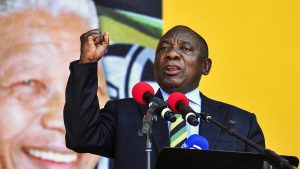
Namibia, an African nation with a history of anti-colonial struggle, also aligns with this perspective, often expressing views that challenge Western narratives and highlight historical injustices.
The United Arab Emirates (UAE), a key player in the Middle East, has also maintained a pragmatic relationship with Russia, prioritizing economic interests and regional stability over full alignment with Western efforts to isolate Moscow.
North Korea has masterfully capitalized on Russia’s isolation and urgent need for military supplies in its war against Ukraine to forge a significantly deepened strategic partnership, turning its pariah status into leverage. Faced with severe international sanctions and a dwindling supply of compatible artillery shells and other conventional munitions, Russia found a willing and eager supplier in Pyongyang, which possesses vast stockpiles of Soviet-era weaponry. In exchange for critical military hardware and artillery rounds, North Korea has reportedly received advanced Russian military technology, including missile and space technologies, and economic assistance, offering a crucial lifeline to its heavily sanctioned economy. This “arms-for-tech” exchange has allowed North Korea to accelerate its own military modernization programs, potentially improving its intercontinental ballistic missile (ICBM) capabilities and surveillance satellite technology, while simultaneously providing Russia with the materiel needed to sustain its costly war of attrition, thereby strengthening the bond between two nations united by their shared antagonism towards the West.
These nations, and others, view the conflict through their own geopolitical lenses, often seeing it as a symptom of a shifting global power balance and a moment to assert their own strategic independence.
Putin’s apparent lack of concern stems from several factors. Firstly, he perceives the West’s hesitance to engage directly as confirmation of its fundamental weakness and division, especially given Europe’s historical reliance on Russian energy. Secondly, the robust support from non-Western powers, particularly China and India, provides Moscow with crucial economic and diplomatic lifelines, undermining the effectiveness of Western sanctions. Thirdly, Russia’s own significant military capabilities, including its nuclear arsenal and its willingness to absorb heavy losses, contribute to Putin’s confidence. The conflict has also allowed Russia to shift its economy onto a wartime footing, prioritizing military production.
Is the West truly scared of Russia?
In a direct military confrontation involving conventional forces, perhaps not in terms of sheer capability, but certainly of the catastrophic escalation it could entail. The fear is of nuclear war, of a direct clash between two nuclear-armed adversaries that could spiral out of control. This prudent caution, however, risks being perceived as timidity, allowing Russia to push boundaries.
Should Russia be scared?
While Putin projects an image of unwavering resolve, the reality on the ground is more complex. The war in Ukraine has exacted a tremendous toll on Russia’s military, economy, and human capital. Sanctions, while not crippling, have had a long-term impact on technological access and economic growth. The strategic miscalculation in Ukraine has also strengthened NATO, leading to the accession of Finland and Sweden, effectively expanding the alliance closer to Russia’s borders. Furthermore, while certain nations praise Putin, Russia’s international standing, particularly in the West, has been severely diminished, and its long-term economic prospects are increasingly tied to a handful of non-Western partners. Putin’s defiance may mask underlying vulnerabilities and the long-term consequences of his actions for Russia’s future.
Is Putin’s Geopolitical Equation Well-calculated to Balance?
Vladimir Putin’s ability to “balance the equation” in this complex geopolitical match hinges on a deeply held strategic calculus that views the conflict in Ukraine not merely as a territorial dispute, but as a direct confrontation with the US-led unipolar world order and an assertion of Russia’s “rightful” place as a great power in a multipolar system. His apparent defiance stems from a conviction that the West’s unity and resolve are ultimately fragile, and that time is on Russia’s side due to its vast resources, nuclear deterrent, and the growing alignment with non-Western powers. He aims to wear down Ukrainian resistance and Western support through a war of attrition, banking on “fatigue” in Western capitals and the perception that their sanctions are not fundamentally crippling Russia’s economy in the long term, particularly with alternative trade routes and partners. The strategic partnerships with countries like China, India, and Iran, and the transactional relationship with North Korea, are crucial pillars of this balancing act, providing economic lifelines, military supplies, and diplomatic cover that undermine Western isolation efforts. However, this strategy is not without its significant risks: the long-term impact of sanctions on Russia’s technological development, the heavy human and economic cost of the war, the strengthening and expansion of NATO on its borders, and the potential for shifts in the alignment of even its current partners if the war drags on or escalates unpredictably. Putin’s balancing act is thus a high-stakes gamble, relying on the steadfastness of his authoritarian control at home, the resilience of his strategic alliances abroad, and the ultimate fracturing of Western unity.
Ultimately, the global geopolitical landscape is in flux. The Russia-Ukraine war is not just a regional conflict; it is a crucible in which a new world order is being forged. The West’s strategy of calibrated support, sanctions, and isolation seeks to contain Russia and uphold international norms. However, Russia’s defiance, bolstered by strategic partnerships and a willingness to leverage its hard power, challenges this vision. The interplay of fear, perceived weakness, and strategic calculus on all sides will continue to shape this complex and volatile global geopolitical relations, with far-reaching implications for stability and power dynamics for decades to come. The question of who is “scared” is less about individual bravado and more about the existential risks inherent in a world where great powers clash, and the shadow of nuclear conflict looms large.
Similar Posts by The Mt Kenya Times:
- Mt Kenya Times ePAPER September 19-20, 2026
- Kenya joins US and UK to put citizens on the terrorism frontline
- Kenya’s parliament races to tame the AI frontier
- Kalonzo calls Ruto to order over Uhuru attacks
- Gachagua takes his 2027 campaign to America
About the Author