The Fall of Yugoslavia: A Deep Dive into Its Fragmentation and the Interests Behind It
 The Mt Kenya Times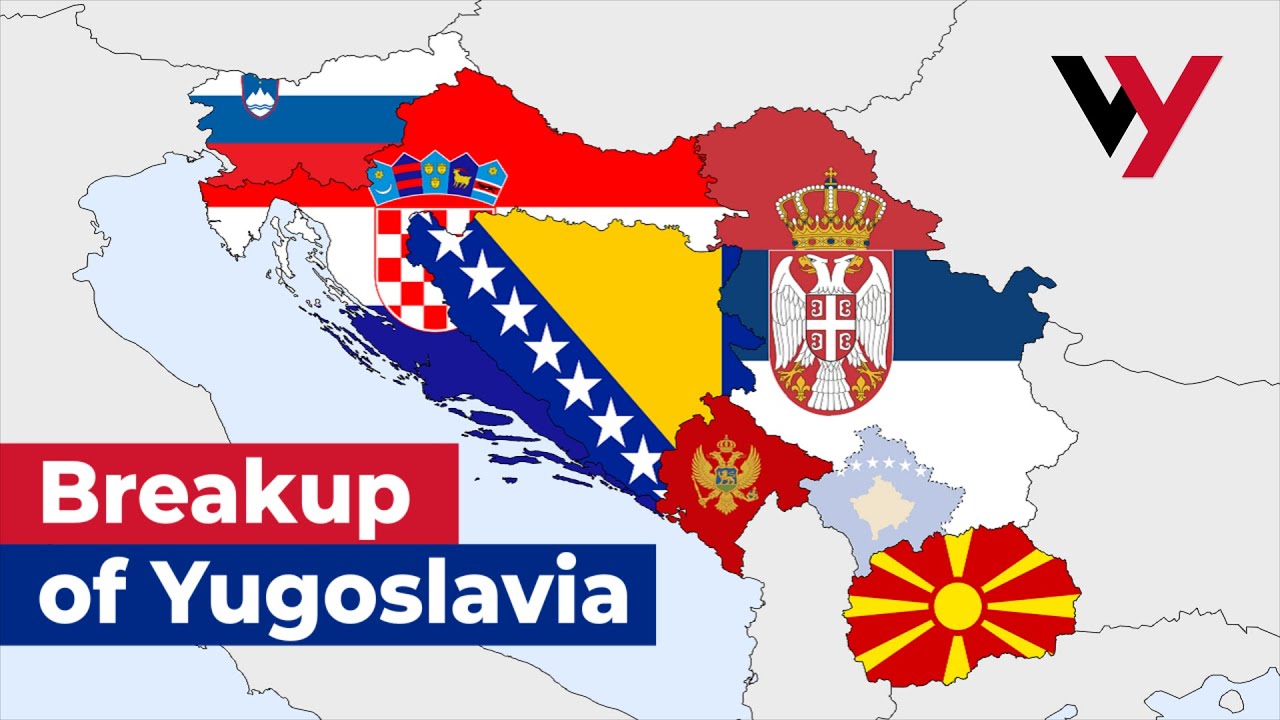
By: Silas Mwaudasheni Nande
Abstract
The fall of Yugoslavia in the 1990s was one of the most complex geopolitical disintegrations of the 20th century. Far from being a spontaneous unraveling of ethnic hostilities, it was the culmination of political manipulation, economic interests, foreign interventions, and nationalist agendas. This article explores the internal and external actors behind the dissolution and assesses their motivations – military, economic, and geopolitical.
1. Introduction: The Balkan Powder KegThe disintegration of the Socialist Federal Republic of Yugoslavia (SFRY) between 1991 and 1999 was a watershed moment in European history. Unlike other Eastern Bloc collapses, Yugoslavia’s descent was marked by brutal wars, ethnic cleansing, and international tribunals. The root causes were layered: from ethnic and religious divisions to foreign interventions and international financial manipulation.
While the internal ethnic tensions were certainly real, the role of global powers – primarily Germany, the United States, and NATO – was equally decisive. To understand the fall, we must examine both internal instability and the strategic economic and military motives of global actors.
2. A Historical Background: The Yugoslav Mosaic
Yugoslavia was created after World War I and restructured after World War II into a federation of six republics – Bosnia and Herzegovina, Croatia, Macedonia, Montenegro, Serbia, and Slovenia – and two autonomous provinces, Kosovo and Vojvodina. Under Marshal Josip Broz Tito, the country operated under a non-aligned socialist framework, balancing between the East and West during the Cold War.
Tito’s death in 1980, the rise of nationalism, the economic crisis of the 1980s, and the loss of centralized authority created a power vacuum that set the stage for its collapse. However, these internal fractures alone don’t explain the timing and nature of the violent disintegration.
3. Economic Decline and IMF Interference
3.1 The 1980s Economic Crisis
By the late 1970s and early 1980s, Yugoslavia’s economy began to falter under foreign debt, inflation, and stagnation. The global oil crisis and rising interest rates deepened economic woes. In 1982, Yugoslavia turned to the International Monetary Fund (IMF) and World Bank for help. Their assistance came with strings attached: austerity, market liberalization, and structural adjustments.
3.2 The IMF’s Role in Destabilization
IMF reforms hit the working class and federal system hardest, eroding Tito’s socialist legacy. Regional disparities worsened: Slovenia and Croatia, the wealthier republics, resented subsidizing the poorer republics like Kosovo and Macedonia. These economic tensions fueled political nationalism and calls for secession.
Moreover, the decentralization of economic power weakened the federal government. The IMF’s economic “shock therapy” effectively dismantled the federal economic control, a step that inadvertently promoted regional autonomy and competition, destabilizing unity.
4. The Rise of Nationalism and Fragmentation
4.1 Milosevic and Serbian Nationalism
Slobodan Milošević rose to power in Serbia on a wave of Serb nationalism, promising to protect Serbs in Kosovo and elsewhere. His moves to centralize power in Belgrade antagonized Slovenia and Croatia, which began seeking independence.
4.2 Slovenia and Croatia: Economic Motives for Secession
Slovenia and Croatia were economically more advanced and felt burdened by poorer republics. Their push for independence in 1991 was not just nationalist but economically motivated – they sought integration into Western Europe and the EU, which they viewed as more promising than remaining in a crumbling socialist federation.
5. Germany’s Strategic Role in Yugoslavia’s Fall
5.1 Germany’s Recognition of Croatia and Slovenia
Germany, newly unified in 1990, was the first major power to recognize the independence of Slovenia and Croatia in 1991 – despite international calls for negotiation. This move encouraged secession and made conflict inevitable.
Germany’s motivation was twofold: economic interests in the Adriatic and Balkans, and historical ties with Croatia and Slovenia. It also sought to assert itself in the post-Cold War European order, challenging the French-British dominance in EU foreign policy.
5.2 Economic Interests and Historical Links
German companies had historical commercial ties with Slovenia and Croatia. The breakup allowed for new investment avenues and control over ports and energy routes in the Adriatic. Germany’s rapid recognition served its long-term economic and geopolitical objectives.
6. The United States and NATO: Strategic Military Interests
6.1 U.S. Hesitation and Later Involvement
Initially, the U.S. was reluctant to intervene. However, by mid-1990s, it shifted strategy – realizing that NATO’s credibility was at stake in Bosnia, and later in Kosovo.
6.2 NATO’s Role and Military Strategy
The 1995 NATO bombing campaign against Bosnian Serbs and the 1999 campaign in Kosovo (Operation Allied Force) highlighted NATO’s growing post-Cold War role. The interventions served multiple purposes:
-
Demonstrate NATO’s utility post-USSR.
-
Secure influence in the Balkans, a geopolitically vital corridor.
-
Undermine Russian influence in Serbia.
6.3 Kosovo: A Strategic U.S. Military Foothold
After the 1999 bombing of Yugoslavia and the de facto independence of Kosovo, the U.S. established Camp Bondsteel – one of the largest U.S. military bases in Europe. Kosovo became a strategic outpost for U.S. influence near the Russian sphere.
7. The Role of Western Media and Propaganda
Western media consistently portrayed the conflict through a simplistic ethnic lens, often demonizing Serbs while portraying other groups as victims. While atrocities occurred on all sides, this narrative helped justify foreign intervention and frame the breakup as a moral necessity rather than a geopolitical maneuver.
The media’s selective coverage paved the way for NATO’s interventions and shaped public perception in favor of the wars, sanctions, and post-war restructuring.
8. Russia’s Limited Influence and Serbia’s Isolation
Russia, weakened after the Soviet Union’s collapse, could not protect Serbia from NATO. Although traditionally allied with Serbia, Moscow’s economic and political crises in the 1990s left it unable to meaningfully influence the course of the war. This opened the door for unchallenged NATO dominance in the region.
9. The Aftermath: Winners and Losers
9.1 Who Benefited?
9.1.1. Germany’s Economic Partners and Strategic Access
Germany was one of the earliest and most decisive external actors to recognize the independence of Slovenia and Croatia in 1991. This was not a neutral act but a calculated geopolitical move rooted in long-standing historical, cultural, and economic ties. Prior to the breakup, Slovenia and Croatia were the most economically developed republics of Yugoslavia, with well-established industries and infrastructure. Germany saw in them natural allies and future economic partners within a growing European Union framework. By supporting their independence, Germany positioned itself to dominate post-Yugoslav economic recovery and trade, especially in the Adriatic region. German banks and corporations moved swiftly into Slovenia and Croatia, investing in their emerging markets and capitalizing on privatization schemes. Beyond economics, Germany’s role in the breakup allowed it to assert itself as a post-reunification power in European foreign policy, challenging the traditional leadership of France and the UK within the EU.
9.1.2. US and NATO’s Military Expansion and InfluenceWhile the United States initially hesitated to get involved in the Yugoslav wars, its strategic calculus shifted as the conflict deepened. The instability in the Balkans provided an opportunity for the U.S. to repurpose NATO in the post-Cold War era, demonstrating its continued relevance after the Soviet Union’s collapse. Military interventions in Bosnia (1995) and later in Kosovo (1999) under NATO command allowed the U.S. and its allies to establish a permanent military presence in the region. The most prominent example of this is Camp Bondsteel in Kosovo, which became one of the largest American military bases in Europe. This not only solidified U.S. influence in the Balkans but also helped counterbalance growing Russian interests in Serbia and the surrounding area. NATO’s role in the Yugoslav wars thus helped to expand its geographical reach and political mandate, transitioning from a Cold War defense alliance into an instrument for global intervention and Western strategic dominance.
9.1.3. Western Corporations and the Seizure of Privatized AssetsThe fall of Yugoslavia and the subsequent collapse of its socialist economic system opened the floodgates for Western corporate interests. As the newly independent republics rushed to adopt market economies under IMF and World Bank guidance, massive privatization programs were launched – often under conditions of corruption, weak regulation, and post-war desperation. Western multinationals, banks, and investment firms exploited this vacuum to acquire state-owned assets in industries such as energy, telecommunications, manufacturing, and mining at cut-rate prices. Countries like Croatia and Serbia saw a sharp influx of foreign capital that was more extractive than developmental, with profits often repatriated abroad. Moreover, these corporations wielded significant influence over policy-making in these fragile economies, shaping labor laws and trade regulations to favor international investors over domestic needs. Thus, the disintegration of Yugoslavia not only marked a geopolitical shift but also a major economic transformation in favor of Western capital.
 9.2 Who Lost?
9.2.1. Yugoslavia’s citizens, especially in Bosnia and Kosovo, suffered mass atrocities, displacement, and economic ruinThe citizens of Yugoslavia, particularly those in Bosnia and Kosovo, bore the brunt of the violent disintegration. In Bosnia, the multiethnic population was engulfed in one of the bloodiest conflicts in Europe since World War II, marked by systematic ethnic cleansing, mass rapes, and the infamous Srebrenica genocide, where over 8,000 Bosniak men and boys were killed by Bosnian Serb forces. The war displaced more than 2 million people, turning vibrant towns into graveyards and refugee camps. In Kosovo, ethnic Albanians faced brutal repression under Slobodan Milošević’s regime, which led to an insurgency by the Kosovo Liberation Army (KLA) and a subsequent NATO bombing campaign that left thousands dead and hundreds of thousands displaced. Beyond the physical violence, the social fabric of communities was torn apart by fear, distrust, and trauma. Infrastructure was decimated, schools and hospitals were destroyed, and local economies collapsed, leaving generations to rebuild from ruins while grappling with unresolved wounds and psychological scars.
9.2.2. Serbia, internationally isolated and demonized, faced sanctions and bombingSerbia, seen by many in the West as the aggressor due to Milošević’s nationalist policies and military actions, became the target of heavy international sanctions and military intervention. From 1992 onward, Serbia was subjected to comprehensive UN sanctions that crippled its economy, caused hyperinflation, and plunged the population into poverty. These sanctions severely limited access to international trade, foreign investment, and even basic humanitarian aid. During the Kosovo conflict in 1999, Serbia endured a 78-day NATO bombing campaign that destroyed bridges, factories, power stations, media centers, and even the Chinese embassy in Belgrade. Thousands of civilians were killed or wounded, and essential infrastructure was ruined, setting Serbia’s development back by decades. The country was diplomatically isolated, culturally stigmatized, and economically strangled, while its leadership faced international criminal indictments. Even after Milošević’s fall, Serbia struggled to shake off the image of a pariah state and continues to grapple with the political and economic consequences of its role in the wars.
9.2.3. The region, still unstable, fractured into weak economies reliant on Western aid and investmentThe fall of Yugoslavia transformed a relatively self-sufficient socialist federation into a patchwork of fragile states with small, weak economies. The wars left infrastructure in tatters, industries shuttered, and trade routes severed. Many of the newly independent states lacked the institutional capacity or economic resilience to function effectively, resulting in high unemployment, pervasive corruption, and political instability. The once-integrated markets were fragmented, and cross-border cooperation became difficult due to lingering animosities. As a result, the region became heavily dependent on international financial institutions, NGOs, and Western governments for reconstruction, development, and governance. EU accession processes became the primary geopolitical goal, often used as leverage by the West to impose neoliberal reforms and political concessions. Instead of developing strong, independent economies, many Balkan states became donor-dependent, with limited sovereignty in economic policymaking. This dependency has led to brain drain, social unrest, and political stagnation, hindering the region’s ability to fully recover and thrive decades after the wars ended.
10. Arguments and Counterarguments
Argument 1: The Fall Was Inevitable Due to Ethnic Tensions
Counterargument: While ethnic tensions existed, they were inflamed by political elites and external actors. Had there been genuine international mediation and support for a peaceful transition, the wars could have been avoided.
Argument 2: NATO Intervened for Humanitarian Reasons
Counterargument: While human rights violations occurred, NATO’s actions aligned with strategic military goals – such as weakening Russian influence and establishing military bases – not merely moral imperatives.
Argument 3: Germany Acted in Good Faith
Counterargument: Germany’s early recognition of secessionist states was a calculated geopolitical move to secure influence in the post-Cold War Balkans, regardless of the consequences.
Post-Yugoslav States: Economic Independence and Lingering Conflicts from the Yugoslav Breakup
Here is an analysis for each of the former Yugoslav republics, assessing their current economic independence and whether they continue to face conflicts – either active or inherited – from the breakup of Yugoslavia:
1. Slovenia
Slovenia is the most economically successful and politically stable of the former Yugoslav republics. It joined the European Union and NATO in 2004 and adopted the euro in 2007. Its well-developed infrastructure, strong export sector, and skilled workforce have helped it achieve high living standards, with a GDP per capita comparable to some Western European nations. Slovenia has largely transitioned into a modern, service-oriented economy with significant integration into EU markets. It has managed to preserve a functioning welfare system and maintains sound fiscal management. Economically, Slovenia is widely seen as fully independent and self-sustaining.
In terms of conflict, Slovenia has experienced minimal internal or external disputes since its brief 10-day war of independence in 1991. The absence of a large ethnic Serb population and its geographic distance from the Balkan conflict zones shielded it from the more violent aftermath of Yugoslavia’s collapse. While it has had minor disputes with Croatia over border demarcations (notably the Piran Bay), these have not escalated into major political crises or violence. Slovenia, in effect, escaped much of the historical burden that continues to weigh on its Balkan neighbors.
2. Croatia
Croatia has made significant progress since the end of its war of independence (1991–1995), which saw widespread destruction and displacement. It joined the European Union in 2013 and has built a tourism-driven economy supplemented by industry, agriculture, and services. Croatia is more economically stable than several of its neighbors, with moderate foreign investment, improved infrastructure, and access to EU structural funds. Nonetheless, it still faces challenges such as youth unemployment, emigration, and regional economic disparities. While it is broadly economically independent, Croatia remains vulnerable to global market shifts and still depends on EU support in some sectors.
In terms of conflict inheritance, Croatia still deals with unresolved war crimes, lingering interethnic tensions, and issues regarding Serb minority rights and returnees. Politically, Croatia has made strides in reconciliation, but nationalist rhetoric occasionally resurfaces, especially during elections. Relations with Serbia remain tense at times, often triggered by wartime memory politics and historical grievances. Although the country is not embroiled in active conflict, the social and psychological wounds of the Yugoslav wars continue to shape aspects of domestic and regional politics.
3. Bosnia and Herzegovina
Bosnia and Herzegovina remains one of the most fragile and divided states that emerged from Yugoslavia. Its economy is weak and highly dependent on remittances, foreign aid, and EU development funds. Unemployment remains high – particularly among youth – and corruption is pervasive. The complex power-sharing system established by the Dayton Agreement in 1995 has led to administrative inefficiencies, political deadlock, and limited economic sovereignty. The country is far from economically independent, with many sectors underdeveloped and reforms stalled by political fragmentation between the Federation (Bosniak-Croat) and Republika Srpska (Serb).
Conflict-wise, Bosnia has not returned to war, but it remains deeply divided along ethnic lines. Republika Srpska frequently threatens secession, and nationalist leaders routinely question the legitimacy of the Bosnian state. The legacy of the war continues to affect interethnic trust, political cooperation, and state-building efforts. While overt violence has ceased, the political and social climate is tense, and international oversight – particularly by the Office of the High Representative – is still considered essential to maintain stability. Bosnia is arguably still dealing with the most unresolved issues from the Yugoslav breakup.
4. Serbia
Serbia has struggled with both economic development and political rehabilitation since the wars of the 1990s. Although it has seen periods of economic growth and is developing stronger ties with the EU, China, and Russia, its economy remains relatively underdeveloped compared to EU standards. Serbia’s public sector is bloated, private investment is inconsistent, and rural areas lag behind urban centers. While the country has a degree of economic independence, it remains reliant on foreign direct investment, remittances, and political partnerships, particularly with China and Russia, to compensate for its EU accession delays and geopolitical balancing.
Serbia continues to deal with unresolved conflicts inherited from Yugoslavia, particularly the status of Kosovo. Although Kosovo declared independence in 2008, Serbia does not recognize it and tensions regularly flare along the Kosovo-Serbia border. Diplomatic normalization efforts mediated by the EU have stalled, and the potential for renewed clashes – particularly in Serb-majority areas of northern Kosovo – remains a serious concern. Serbia also continues to grapple with its wartime legacy, facing international scrutiny over unresolved war crimes and nationalist rhetoric. The shadow of Yugoslavia’s collapse still looms large over its politics and foreign policy.
5. North Macedonia
North Macedonia, formerly the Republic of Macedonia, has made significant strides since gaining independence peacefully in 1991, but it has faced serious internal and external challenges. Economically, it remains one of the poorer Balkan countries, with modest growth and a high reliance on foreign aid, remittances, and limited industry. However, political reforms and foreign investment have helped improve stability. The name dispute with Greece, which delayed its NATO and EU integration for years, was finally resolved in 2019, and North Macedonia joined NATO in 2020. It still relies heavily on EU financial and diplomatic support and is not yet economically independent.
Conflict-wise, North Macedonia endured a brief internal conflict in 2001 between ethnic Albanian insurgents and Macedonian forces, which ended with the Ohrid Framework Agreement. Although the agreement helped stabilize the country, ethnic divisions remain sensitive, and political parties are often organized along ethnic lines. Tensions between the Slavic majority and Albanian minority occasionally resurface, and the state continues to balance national identity issues inherited from both the Yugoslav breakup and its disputes with neighboring countries. While no active conflict exists today, the country remains vulnerable to political instability rooted in its complex post-Yugoslav legacy.
6. Montenegro
Montenegro, the smallest of the former Yugoslav republics, became independent in 2006 following a peaceful referendum. Since then, it has pursued Western integration, joining NATO in 2017 and becoming a candidate for EU membership. Its economy is primarily service-based, with a heavy reliance on tourism, foreign investment, and aid. While it has achieved some level of economic autonomy, the small size of its economy and dependence on seasonal tourism make it vulnerable to global economic shocks. It continues to struggle with corruption, public debt, and unemployment, suggesting only partial economic independence.
Although Montenegro avoided the wars of the 1990s, it inherited several post-Yugoslav tensions. Internally, divisions remain over national identity – whether Montenegrins are distinct from Serbs – and over relations with Serbia. The 2020 political shift brought pro-Serbian parties into power, fueling tensions between pro-Western and pro-Serbian factions. Occasional protests and political instability reveal that, while Montenegro is not in conflict, it is still navigating unresolved identity and sovereignty issues rooted in its Yugoslav past. The legacy of its close alliance with Serbia during the 1990s continues to influence its internal and external political dynamics.
11. The Legacy of Yugoslavia’s Breakup
The region remains politically fragile. Bosnia is effectively a failed state held together by international oversight. Kosovo’s status remains contested. Serbia still feels wronged, while EU integration has been uneven and slow.
Meanwhile, the story of Yugoslavia has become a template – sometimes positively, sometimes not – for foreign intervention, regime change, and redrawing borders in the post-Cold War world.
12. Conclusion: A Manufactured Collapse?
The fall of Yugoslavia was not merely the result of ancient hatreds or ethnic strife. It was a modern geopolitical collapse, catalyzed by international economic restructuring, strategic military interests, and the ambitions of foreign powers – especially Germany, the United States, and NATO.
Understanding Yugoslavia’s fall requires a multi-layered analysis – acknowledging both internal failures and the undeniable influence of external actors who exploited a weakening state for their own gain.
The tragedy of Yugoslavia is that its people paid the highest price for a conflict that served the strategic and economic interests of powers far beyond its borders.
Similar Posts by The Mt Kenya Times:
- Mt Kenya Times ePAPER October 23, 2026
- Ruto’s parting COMESA call: Remove the barriers, honour the commitments
- Direct hospital access to KEMSA cuts drug delays, says PS
- Africa can’t wait: Continent seeks $1 trillion for climate adaptation
- Ruto passes the baton as Africa’s trade bloc faces a fragmenting world
About the Author