The Mt Kenya Times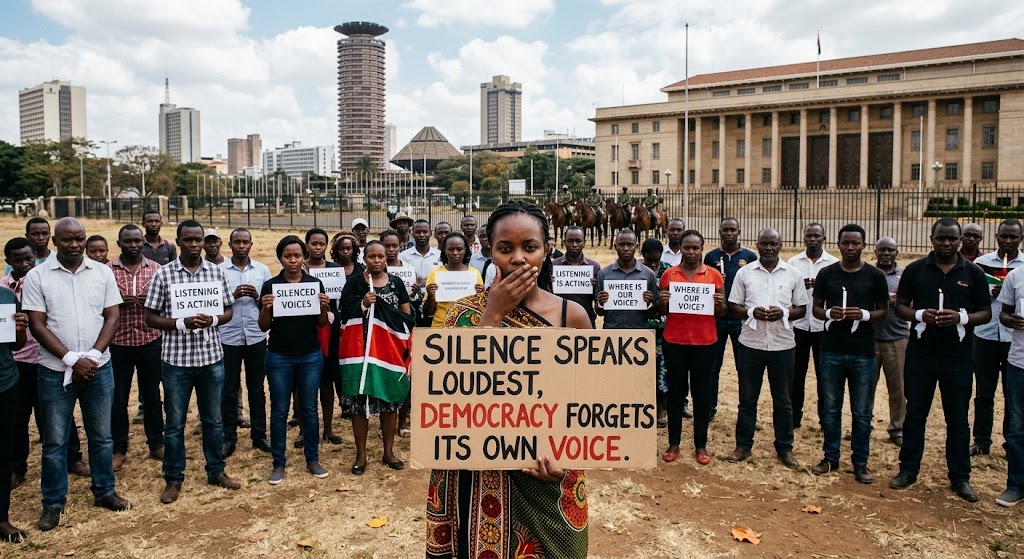
By Jerameel Kevins Owuor Odhiambo
More than 1,700 journalists have been killed worldwide since 2006. In many of those cases, no one has been held accountable. Closer home, election seasons across Africa have repeatedly been accompanied by attacks on reporters, confiscation of equipment, arbitrary arrests, digital harassment and physical intimidation. These incidents rarely dominate headlines for long. Yet each assault on a journalist quietly redraws the boundaries of what citizens are allowed to know. Long before the first ballot is counted, the story of an election is already being written—not only in polling stations, but also in newsrooms, streets and courtrooms where truth itself is put on trial.
An election is often described as the heartbeat of democracy. That description, though familiar, barely captures its true weight. Elections are not simply exercises in choosing leaders. They are moments when citizens temporarily reclaim the authority they delegated to those who govern. They are occasions when public power returns to its rightful owners. That return can only be meaningful when voters make choices illuminated by facts rather than rumours, evidence rather than propaganda, and accountability rather than fear.
This is where the media becomes indispensable. The Fourth Estate is not merely another institution standing alongside the Executive, Legislature and Judiciary. It is the bridge connecting power with the people from whom that power originates. It watches, questions, investigates, explains and remembers. It follows campaign promises beyond podiums, traces public resources beyond budgets, and records events beyond official statements. Where governments narrate, journalism interrogates. Where politicians persuade, journalism verifies. Where institutions become comfortable in silence, journalism asks the question everyone else has stopped asking.
An election without a free press resembles a courtroom where only one side is permitted to speak. The procedure may appear orderly. The outcome may even be accepted by some. Yet justice remains absent because scrutiny has been denied its rightful place.
Violence against journalists therefore extends far beyond bruises on individual reporters or shattered camera lenses. Every confiscated notebook erases testimony. Every broken microphone silences questions the public deserved to hear. Every frightened reporter leaves behind stories that may never be told. Citizens rarely notice these absences because silence leaves no visible wreckage. But democracies slowly weaken not only through dramatic constitutional crises; they also erode through countless truths that never reach the public square.
Fear has an extraordinary ability to travel faster than facts. One assaulted journalist unsettles hundreds more. Editors begin weighing headlines against possible retaliation. Reporters reconsider difficult assignments. Sources retreat into anonymity or disappear altogether. Whistleblowers decide that remaining silent is safer than speaking. Eventually, self-censorship succeeds where censorship itself would have failed. The result is not necessarily the absence of news. It is the presence of carefully filtered information just enough to create the appearance of openness while concealing what most needs public attention.
That is perhaps the most dangerous form of suppression because it wears the disguise of normalcy. Democracy does not collapse only when newspapers are shut down or broadcasting stations switched off. Sometimes it fades while newspapers continue printing and television stations remain on air. The difference lies in whether journalists are genuinely free to pursue uncomfortable truths without calculating the personal cost of doing so.
The health of an election should therefore never be measured solely by peaceful queues outside polling stations or impressive voter turnout. Those are important indicators, but they tell only part of the story. Equally important is whether journalists could move freely across constituencies, question every candidate without intimidation, investigate allegations without obstruction, and publish findings without fear of reprisals. Elections derive legitimacy not simply from counting votes accurately, but from ensuring citizens voted with access to credible information.
Information itself is a public good. Like clean water flowing through a city, truthful information sustains democratic life. Once polluted by fear, manipulation or deliberate falsehoods, everyone eventually drinks from the same contaminated source. Citizens become suspicious of institutions. Institutions become defensive before citizens. Rumours begin competing with evidence. Conspiracy overtakes conversation. Public trust, painstakingly built over decades, quietly dissolves.
Trust is difficult to quantify but remarkably easy to lose. This explains why attacks on journalists should concern even those who disagree with particular media houses or individual reporters. Journalism is not protected because journalists are infallible. They are protected because societies cannot afford governance that escapes independent observation. Mistakes by the press can be corrected through ethical standards, public accountability and the law. Violence, however, corrects nothing. It merely replaces disagreement with intimidation and substitutes evidence with fear.
There is another uncomfortable reality worth confronting. Sometimes the greatest threat to press freedom does not arrive wearing uniforms or carrying weapons. It arrives wrapped in economic pressure, strategic advertising withdrawals, online harassment campaigns, coordinated disinformation, surveillance technologies and subtle political patronage. These methods rarely leave visible scars. Yet they steadily reshape editorial choices until newsrooms begin asking not whether a story is true, but whether publishing it is worth the consequences.
A democracy should never force that calculation. Public officials, political actors, security agencies and citizens alike share responsibility for protecting the environment within which journalism flourishes. The constitutional promise of freedom of expression cannot remain an elegant phrase confined to legal texts while reporters navigate intimidation in practice. Rights become meaningful only when exercised without fear. Otherwise, constitutions risk becoming beautifully written documents describing freedoms that exist only on paper.
Equally, journalists themselves shoulder a profound obligation. Credibility remains their greatest currency. Accuracy must outrank speed. Verification must defeat sensationalism. Fairness must prevail over personal preference. The defence of media freedom gains moral force when journalism consistently honours the ethical responsibilities accompanying that freedom. Public confidence grows where independence is matched by integrity.
As another electoral cycle approaches, conversations will naturally focus on manifestos, coalitions, campaign rallies and polling statistics. These discussions matter. Yet beneath them lies a quieter question whose answer may ultimately determine the quality of the democratic journey: can those entrusted with telling the nation’s story do so freely?
History seldom remembers societies for the speeches politicians delivered during elections. It remembers whether truth survived those elections. It remembers whether institutions protected the vulnerable when pressure mounted. It remembers whether citizens insisted that public power remain answerable to public scrutiny.
A nation confident in its democracy does not fear questions. It welcomes them. It does not regard cameras as enemies or notebooks as weapons. It understands that scrutiny is not sabotage but stewardship; not hostility but hygiene. Elections are strongest where journalists walk freely, ask boldly and publish honestly. When their safety becomes negotiable, democracy itself enters the bargaining room. And when truth must first seek permission before it can speak, the loudest victory declared after any election may conceal the deepest defeat suffered before it.
The writer is a social commentator
Similar Posts by The Mt Kenya Times:
- Ruto rallies Kalenjin elders in Rift Valley unity push
- Sonko bid to nullify impeachment judgments fast-tracked in court
- Arrest the sponsors, not just the foot soldiers, Kalonzo tells police
- Police and politics shut down Kitale’s busiest market
- Bikeke students benefit from charity support
About the Author