
The Resonant Rhythm Of Provision: A Woodpecker’s Echo In The Man Heart
 The Mt Kenya Times
Warrent Officer Andrew Nghiyolwa
By Silas Mwaudasheni Nande
Introduction
The forest often holds secrets, but some of its most profound lessons are offered in plain sight, or rather, in clear sound. Listen closely, and you’ll hear it: the insistent, rhythmic drumming of a woodpecker, a sound that vibrates with unwavering purpose. This isn’t just a bird foraging for a meal; it’s an architect, a provider, a tireless worker driven by an ancient, primal need. When we observe this diligent creature, a curious echo resonates within us, drawing an unexpected parallel to the enduring spirit of a man – or indeed, any human – committed to building a life, providing for loved ones, and forging a home.
The air at Eenhana State Hospital in Namibia’s Ohangwena Region buzzed with reflection and insight during the recent Men’s Mental Health Conference held on June 25, 2025. Amidst vital discussions on well-being and responsibility, Warrant Officer Andrew Nghiyolwa of the Namibian Police offered a particularly striking and memorable metaphor. He deliberately turned our gaze to the seemingly simple, yet profoundly diligent, woodpecker. With each resonant tap against a tree trunk, this unassuming bird, Nghiyolwa posited, embodies the very essence of what it means for a man to provide, build a home, and stand as a responsible father, not just with physical strength, but with a healthy body and mind. It was a call to consider the primal yet powerful connection between the woodpecker’s tireless drive and the multifaceted responsibilities embraced by men in their families and communities.
Apart from Warrent Officer Andrew Andrew Nghiyolwa’s remarkable metaphor of a man as a head of the house and a wood pecker, many presenters shared exciting and soul-touching aspects revolving around a man.
The Conference provided a platform for insightful and diverse perspectives, leaving attendees greatly impressed by the caliber of the presenters.

Dr. Andrew Basiime, the Senior Medical Officer in Eenhana State Hospital, captivated the audience with his expertise on “Men and Health,” offering crucial medical insights and practical advice aimed at promoting holistic well-being, including the prostate cancer. His presentation underscored the importance of proactive health management and seeking timely medical attention, resonating deeply with the men eager to prioritize their physical and mental vitality.
Reverend Laban Mwashekele, a renounced spiritual leader and law scholar, provided a spiritual anchor to the conference with his talk on “Men and Hope.” He offered uplifting perspectives and guidance on finding resilience and purpose through faith, reminding the attendees that hope is a powerful tool in navigating life’s challenges and maintaining a positive outlook amidst adversity. He also advised men to be “men of substance” and be leaders of their households and families. He also advised men to have broader knowledge of the law governing the country, spritual knowledge as well as cultural knowledge, for them to be able to make a balance in their leadership.
Mr. Helmut Neema, a Business Analyst from FNB, addressed the critical topic of “Men and Finance,” providing valuable financial literacy and planning strategies. His presentation highlighted the significance of sound financial management in reducing stress and building a stable future, empowering men with the knowledge to make informed economic decisions for themselves and their families.
Finally, Mr. Junias Ernastu, a renowned young Motivational Speaker, energized the conference with his inspiring session on “Be You.” His powerful message encouraged men to embrace their authentic selves, cultivate self-acceptance, and unlock their full potential, fostering a sense of confidence and self-worth essential for positive mental health and personal growth.
The Metaphorical Parallels Between a Woodpecker and a Man
The Architect of the Canopy: Home and Hearth
Consider the sheer effort involved in a woodpecker’s pursuit of a home. With specialized tools – a chisel-like beak and a shock-absorbing skull – it embarks on a monumental task. Inch by painstaking inch, it hollows out a cavity in the sturdy trunk of a tree, often deadwood, ensuring the space is just right: deep enough for security, wide enough for comfort, and protected from the elements. This isn’t a quick undertaking; it demands days, sometimes weeks, of relentless drilling, each tap a testament to its singular focus on creating a safe haven for its future brood. The completed nest isn’t just a hole; it’s a meticulously crafted nursery, a fortress against predators, and the very foundation of its family’s survival.
This instinctual drive to build finds a profound echo in the human heart, according to Nghiyolwa. For a man, the concept of creating a home transcends the mere erection of walls and a roof. It embodies the deep-seated desire to establish a sanctuary, a place of warmth, safety, and belonging for his family. This endeavor involves more than just physical labor; it demands foresight, planning, and often significant sacrifice. He might work extra hours, save diligently, or spend weekends on different projects, all driven by the vision of a secure space where children can grow, memories can be forged, and loved ones can find solace. Like the woodpecker’s carefully carved cavity, Nghiyolwa indicated that the human home is a testament to dedication, a physical manifestation of love and the commitment to nurture and protect just like a home for a wood pecker. It’s the grounding point from which a family ventures out into the world and to which they always return.
The Relentless Drill: The Ethic of Hard Work
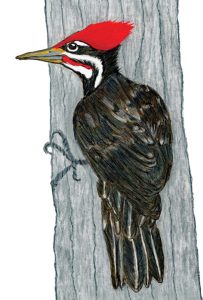
Beyond creating a dwelling, Nghiyolwa told the audience that the woodpecker’s life is defined by an unending pursuit of provision. That persistent drumming isn’t just about building; it’s often the sound of a daily grind, as the bird tirelessly probes bark and wood for insects, larvae, and sap – the sustenance that keeps it and its family alive. Its long, barbed tongue acts as a specialized tool, expertly extracting hidden morsels. There’s no pause for discouragement when prey is scarce, no giving up when the wood proves tough. The tapping continues, relentless and resolute, a pure embodiment of hard work for the sake of survival and the nourishment of its young and he whole family.
According to Nghiyolwa, this unwavering diligence mirrors a fundamental aspect of the human condition. Throughout history and across cultures, men have been archetypal figures of hard work, provision and protection. Whether toiling in fields under the sun, operating machinery in a factory, navigating complex markets in an office, or pouring creative energy into an artistic pursuit, the driving force is often the same: to provide for the family. This labor is not always glamorous, nor is it always easy. It demands discipline, perseverance, and resilience in the face of setbacks. Just as the woodpecker’s life depends on its daily taps, a family’s well-being often hinges on the consistent effort and dedication of its providers. This ethic of hard work isn’t just about accumulating resources; it’s about dignity, self-reliance, and the profound satisfaction that comes from knowing one’s efforts directly contribute to the security and happiness of those one holds dear.
Adapting and Enduring: Resilience in Life’s Forest
The woodpecker’s ability to survive and thrive is also a lesson in adaptation and resilience. Nghiyolwa observed that wood pecker’s physical makeup, from its robust neck muscles to the unique structure of its skull that prevents brain damage from constant impact, speaks volumes about its evolutionary preparedness for a demanding life. It finds food where others might not, carves shelter in places others overlook, and endures the rigors of its environment through specialized tools and an unyielding spirit – and that how a real man should navigate through his life in terms of protection, provision and providing home and shelter for the family and the loved ones.. It’s a creature perfectly honed for its specific, challenging purpose.
Similarly, the journey of building a home and providing for a family is rarely without its challenges. Like the vast, unpredictable forest, life presents obstacles: economic downturns, health issues, personal setbacks. Yet, the human spirit, much like the woodpecker, demonstrates remarkable resilience. We adapt, learn new skills, innovate, and find new pathways when old ones are blocked. This adaptability, coupled with an inherent drive to protect and uplift loved ones, empowers individuals to navigate complex landscapes and overcome adversity, much like the woodpecker persistently finds sustenance even in the leanest times.
Beyond Instinct: The Human Dimension
While these parallels are compelling, it’s crucial to acknowledge the profound distinction. The woodpecker’s actions are largely driven by instinct, a biological imperative honed over millennia. For humans, while primal needs exist, our efforts are imbued with layers of consciousness, complex emotions, cultural narratives, and abstract thought. When a man builds a home or works tirelessly, it’s not merely for survival; it’s often an act of love, a pursuit of meaning, a realization of aspirations, and a conscious decision to create a legacy and create a lasting name for himself. The human experience extends beyond the immediate, encompassing dreams, values, and the profound connections that bind us.
Conclusion
So, the next time you hear the rhythmic drumming of a woodpecker, pause and reflect. In its tireless dedication to carving a home and diligently searching for provision, we find a simple yet profound metaphor. It reminds us of the universal, enduring drives that resonate deeply within the human spirit: the primal urge to build, to provide, to work hard, and to endure for the sake of those we cherish. The woodpecker, in its small, persistent way, offers a timeless echo of the fundamental strengths that continue to shape and define the human journey. These echoes are reflections of calls, calling a man to be a man enough. Calls calling a man to speak out during difficult times and to prioritize their social, physical and mental health to be able to be heads of their families and provide for them. These rhythmic drumming echoes of a wood pecker creating home for loved ones are echoes calling men to make calculations that make an equation to balance. These are the echoes that call a man to bring in chemistry of love, not only in their own homes but also in the communities in which they live.
Similar Posts by The Mt Kenya Times:
- Mt Kenya Times ePAPER October 7, 2026
- Ruto signs KSh389B electric vehicle deal at State House
- Kenya mobilises KSh70B to fight Ebola as US and World Bank step in
- High Court freezes law school admissions over disputed entry rules
- Grade 11 textbooks head to schools as CBC transition gathers pace
About the Author




Am inspired