Kenya Education Fund Brings Principals Together To Strengthen Partnerships In Education
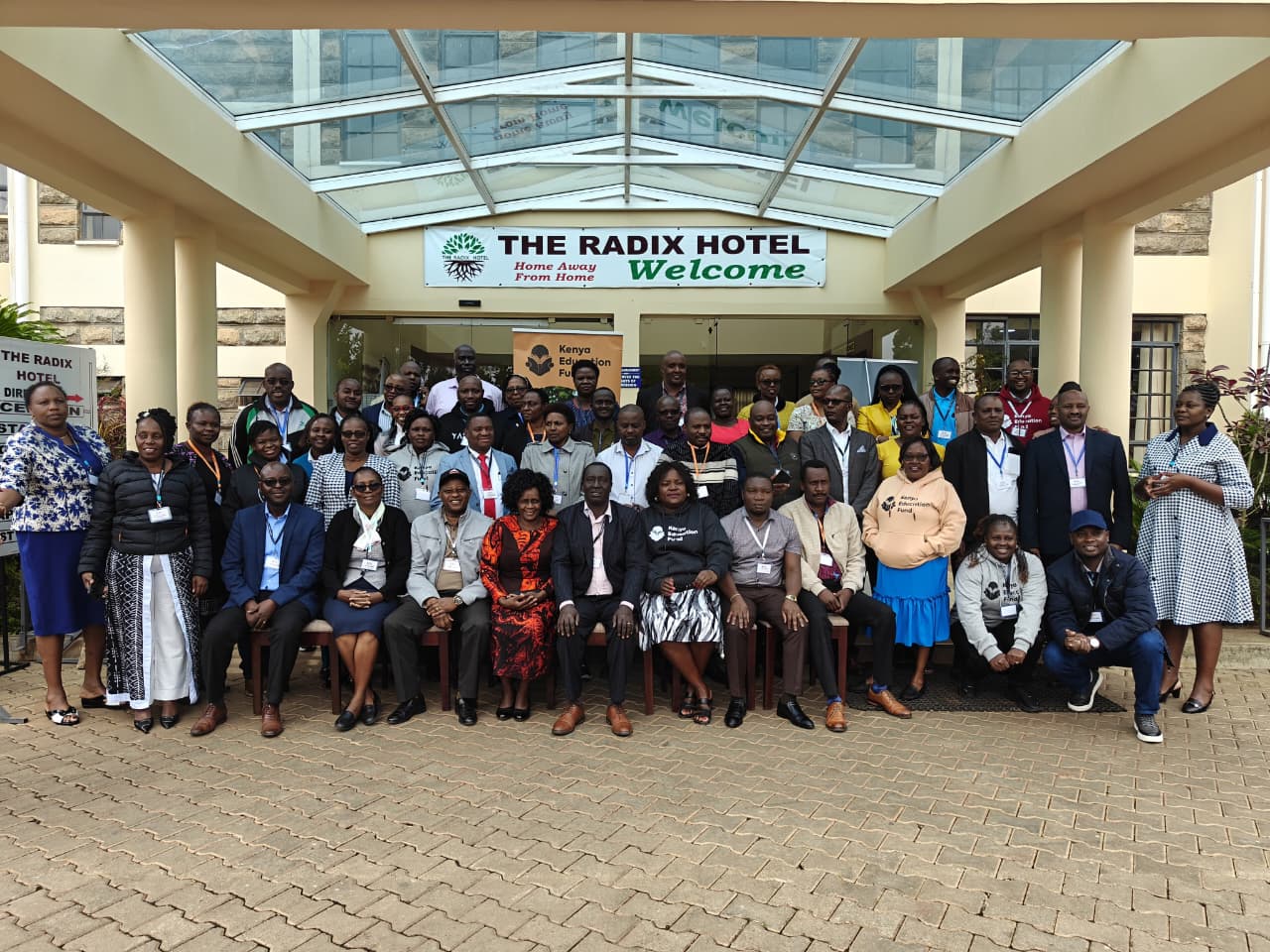
The Kenya Education Fund (KEF) annual Principal's Meeting that brought together more than 50 school heads and representatives in Nairobi.
By Aoma Keziah
The Kenya Education Fund (KEF) held its annual Principals’ Meeting in Nairobi, bringing together more than 50 school heads and representatives from leading partners, among them the KCB Foundation, Zeraki, Contentment, and the Kenya National Examinations Council (KNEC).
The gathering, a fixture in KEF’s calendar, gave principals and partners a chance to take stock of the foundation’s work, examine challenges facing schools, and share ideas on how to better support learners across the country.
KEF Executive Director and Co-Founder Dominic Muasya opened the meeting with a reminder of why the organization was created two decades ago.
“We had children around us who could not afford school fees. Education is a right, and poverty should not block access to it.When students are given a chance, they not only change their lives but uplift their communities,” he stated.
Muasya announced an adjustment to KEF’s scholarship program to align with Kenya’s new education system. Instead of covering five years, the scholarship will now support students for three years in high school and one year in college.
“KEF’s approach is making a difference: in 2024, 80 percent of KEF students scored C+ and above in KCSE, all of them progressed to higher education, and 65 percent are now employed or running businesses,” he added.
The day’s program included sessions led by experts from different fields. A team from Chiromo Hospital Group spoke about mental health in schools, urging principals to integrate professional counseling and organize wellness seminars for both students and teachers. Dr. William Chelimo of KNEC outlined how schools can adapt to the evolving Competency-Based Education curriculum, particularly with the upcoming Grade 10 placements. He noted that teacher preparedness would be key to a smooth transition.
Other sessions focused on practical skills. Standard Chartered guided principals on financial literacy and long-term investment planning, while Dr. Norlena Albert introduced design thinking as a tool for problem-solving and innovation in schools. Susan Gathu, speaking on contentment, encouraged principals to foster resilience and values-based leadership among students and staff.
The KCB Foundation reaffirmed its commitment to supporting education access, while Zeraki showcased digital platforms that improve school administration and classroom delivery.
KEF leaders said the annual meeting was not only about learning but also about building stronger relationships between schools and partners.
“Partnership is the heart of our success. When we work together, we create lasting opportunities for young people,” Muasya continued to say.
Looking ahead, KEF said it plans to expand its support to ensure scholarships are backed by programs that help students succeed beyond the classroom.
Similar Posts by Aoma Keziah:
- Nationwide Youth Business Drive Enters Last Lap With New Nyota Trainings
- Green Light From Washington Sets G42 On Fast Track to Build Region’s Most Powerful AI Network
- Safina Eyes Kariobangi North Seat in Intensified Push Before Poll Day
- KEBS Opens Talks With Manufacturers On New Standards Levy Order 2025
- Kenya, Uganda And South Sudan Chart Way Forward On East Africa Rail Corridor
About the Author


 The Mt Kenya Times