Gachagua’s impeachment goes before the courts in a three-day constitutional test
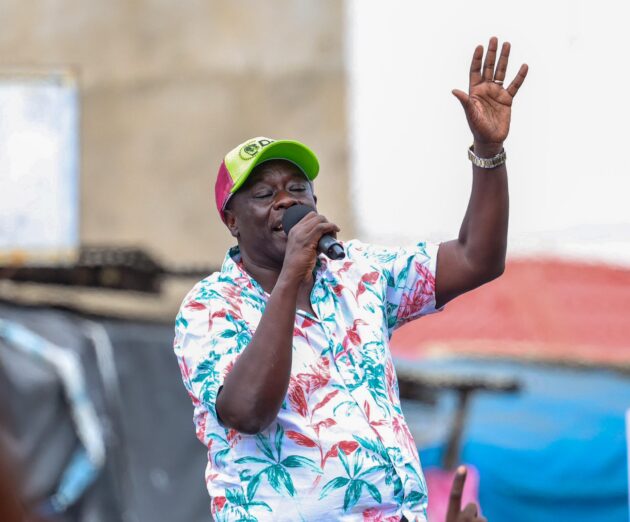
Democracy for the Citizens Party (DCP) leader Rigathi Gachagua
Kenya’s ousted deputy president puts his faith in the judiciary as opposition leaders warn the hearings will reveal whether the country’s last independent institution can withstand political pressure.
By Grace Wanja
Kenya’s High Court begins hearing former Deputy President Rigathi Gachagua’s petition challenging his impeachment today, opening three days of proceedings that opposition leaders say will determine whether the country’s constitutional order can withstand what they describe as a politically orchestrated removal from office.
The case comes before a three-judge bench at a moment of acute tension in Kenyan politics. Gachagua, who leads the Democracy for the Citizens Party (DCP) after his ouster, was removed from the deputy presidency by Parliament in October 2024 — the first time in Kenya’s history that a sitting deputy president had been impeached. The National Assembly and Senate voted to remove him on grounds that his allies now characterise as legally hollow and politically motivated, assembled not to serve the national interest but to eliminate a rival who had become inconvenient to President William Ruto’s administration.
Speaking at a church service at the Prophetic Embassy Church of All Nations in Mombasa yesterday — the eve of the hearings — Gachagua addressed supporters with the measured language of a man who has placed his political survival in the hands of the courts. “We have faith in our judicial system to deliver justice to Rigathi Gachagua, his supporters, and the people of Kenya,” he said. “We trust that the three judges will do what is right, apply the law, and uphold the Constitution of Kenya.”
The sentiment was echoed by a gathering of United Opposition leaders who have aligned themselves with Gachagua’s legal battle and who framed the hearings in terms that extend well beyond one man’s fate. For them, the petition is a referendum on the independence of Kenya’s judiciary — the one institution, they argue, that has not yet been absorbed into the political machinery of the ruling establishment.
DAP-K leader Eugene Wamalwa was the most direct in articulating what he believes is at stake. “Our judiciary is our last line of defence,” he said. “It remains the only institution that has not been captured. Beginning tomorrow, that independence will be put to the test.” The language is pointed — and deliberate. In a country where executive influence over state institutions has been a recurring grievance across successive administrations, the claim that the judiciary stands alone as an uncaptured power is both a compliment to the bench and a warning about what its ruling will signal to the nation.
Wiper party leader Kalonzo Musyoka, one of Kenya’s most experienced political operators and a veteran of multiple presidential campaigns, argued that the impeachment was conducted outside constitutional boundaries from the outset. “He was removed by fiat,” Kalonzo said, “because the Constitution itself was not followed. It was political mobilisation, less national interest.” The distinction he draws — between constitutional process and political theatre — is the central argument Gachagua’s legal team will advance before the bench.
Democratic Party leader Justin Muturi, a former Speaker of the National Assembly who brings institutional knowledge of parliamentary procedure to his assessment, went further, alleging that the integrity of both Houses was compromised during the impeachment process. “Even the Senate, compromised as it was, some of the allegations they said no to,” Muturi said. “But because you don’t have to prove all the allegations, they said let’s hold on to these few. All of it trumped up.” His account suggests a process in which the bar of proof was selectively applied — a claim that, if substantiated before the court, could fundamentally undermine the legal basis of the impeachment.
The constitutional questions before the three-judge bench are significant and will be watched closely not only in Kenya but across East Africa, where the relationship between executive power and constitutional accountability remains a defining and often contested feature of governance. Kenya’s Constitution of 2010 — widely regarded as one of the most progressive in the region, designed in the aftermath of post-election violence to distribute power and protect minority rights — sets out specific procedural requirements for the removal of a deputy president. The opposition’s case rests on the argument that those requirements were not met, that the grounds advanced were constitutionally insufficient, and that the speed and manner of the removal reflected political calculation rather than lawful process.
Gachagua’s removal was swift by any standard. From the filing of the impeachment motion to his replacement by Kithure Kindiki as Deputy President, the process moved at a pace that critics argued left little room for genuine deliberation. Parliament’s defenders maintained that due process was followed and that the grounds for removal — which included allegations of insubordination, undermining government policy, and conduct inconsistent with the office — were substantiated. Gachagua and his allies have consistently rejected those characterisations as pretexts.
What the court must now determine is whether the constitutional threshold for impeachment was genuinely met, or whether Kenya’s founding law was bent to serve a political outcome. That is not a narrow legal question. It speaks to the integrity of the checks and balances that the 2010 Constitution was designed to entrench — and to whether those safeguards hold when tested by a government with the numbers to override them in Parliament.
For Gachagua personally, the stakes could not be higher. A ruling in his favour would restore his political legitimacy, potentially reopen his path to elected office, and deliver a significant rebuke to the administration that removed him. A ruling against him would close that chapter definitively and send a signal about the limits of judicial intervention in parliamentary decisions.
For Kenya, the stakes are arguably higher still. A judiciary that upholds the Constitution under political pressure affirms its own independence and the rule of law. One that does not will confirm what the opposition already believes — that the last line of defence has fallen.
Three days in court. A nation watching.
Similar Posts by The Mt Kenya Times:
- Mt Kenya Times ePAPER October 1, 2026
- Museveni backs Lamu but keeps Uganda’s money at home
- Sifuna’s party wins its name — and Kenya’s opposition race begins in earnest
- Lamu’s $16B gamble: Africa’s biggest refinery divides the region
- Ruto launches KSh2.2 trillion Lamu refinery in East Africa’s biggest energy bet
About the Author