


By MKT Reporter
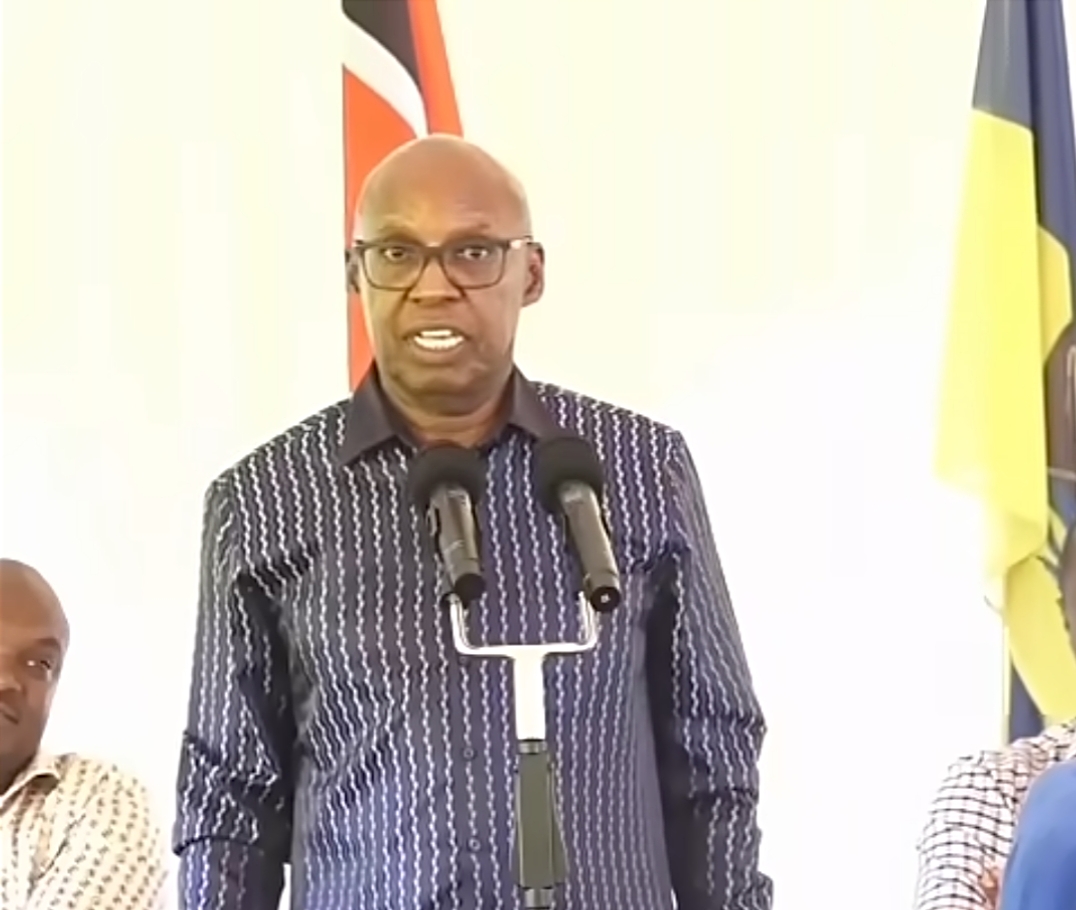
Presidential aspirant Jimi Wanjigi has launched a sweeping critique of Kenya’s political and economic systems, calling for a new era of economic transformation during a delegates meeting in Murang’a County.
Speaking at Kwacha House on Tuesday where he hosted a delegation from Murang’a county, the Safina Party leader said the country is facing what he described as an “economic plague” affecting households and businesses across all regions.
He blamed the current political structure for declining living standards, arguing that it has failed to address citizens’ needs and must be replaced.
“This is a political conversation about our country, our economy and our lives,” Wanjigi said, adding that meaningful change must be driven by the people rather than elite political arrangements.
He dismissed traditional coalition politics based on power-sharing among a few leaders, saying such approaches have contributed to the country’s current challenges. Instead, he called for a broad, people-centered movement focused on shared economic interests, noting that Kenya’s political landscape and demographics have significantly shifted.
Invoking the legacy of Kenneth Matiba, Wanjigi urged Kenyans to take charge of their future, emphasizing that the time had come for citizens to determine their own destiny.
Central to his address was a proposed “Five Fist Agenda” aimed at restructuring the economy.
The plan focuses on building a healthy, educated and skilled population; creating a debt-free, business-friendly economy; investing in infrastructure; eliminating tax and regulatory burdens; and strengthening governance and the rule of law.

Wanjigi proposed a “debt brake” policy that would involve suspending and potentially cancelling payments on what he termed unconstitutional or illegal public debt pending an independent forensic audit.
He said this could unlock more than KSh2 trillion to stimulate the economy and fund essential services.
He also pledged to stop government borrowing from domestic financial markets to free up capital for private sector growth and expand access to affordable credit for entrepreneurs.
On taxation, he proposed replacing Value Added Tax with a five percent sales tax to boost consumption and economic recovery.
He further outlined plans to reform corporate and property taxes to attract investment and encourage innovation.
The Safina Party leader pledged free basic education and technical training, subsidized university education, and increased investment in modernizing public schools.
He also proposed a tax-funded universal healthcare system, emphasizing that health services should be accessible to all as a public good.
Food security and agricultural productivity featured prominently in his agenda, with a focus on supporting small-scale farmers through improved access to financing, technology, and organized markets to ensure sustainable production and better returns.
Wanjigi also highlighted industrialization and technology as key drivers of economic growth, proposing an innovation-led strategy to expand manufacturing, strengthen local industries, and position Kenya as a competitive player in global supply chains.
On energy, he said Kenya has the potential to become a regional leader in green energy by harnessing geothermal, solar, wind, and hydrogen resources. He pledged to develop long-term policies to support large-scale investment and ensure energy security.
Infrastructure and digital connectivity are also part of his vision, including the expansion of roads, rail networks, and fiber optic systems, alongside affordable internet access and free basic connectivity in public institutions.
He emphasized the need for strong governance, accountability, and the rule of law, proposing reforms to ensure public officials focus solely on public service and to decentralize policing oversight to locally elected authorities.
Referencing Kenya’s independence struggle, Wanjigi said while political freedom had been achieved, economic independence remains unfinished, calling for a renewed push toward economic sovereignty.
He further urged Kenyans to unite in reshaping the country’s future, describing the movement as a collective effort to secure prosperity and stability for all.
“Together, we reset Kenya. Together, we rise,” he said.
Similar Posts by Mt Kenya Times:
- Leaders call for unity and political tolerance at burial of Kanini Kega’s mother
- Xi, Trump visit Temple of Heaven
- Xi holds talks with Trump in Beijing
- TIFA: Ruto leads 2027 race as support for Broad-Based Government declines
- How Kenya’s parliament dismantled a deputy presidency in 72 hours