Constitutional Amendment Bill 3: what it is, what it does, and why it matters
 The Mt Kenya Times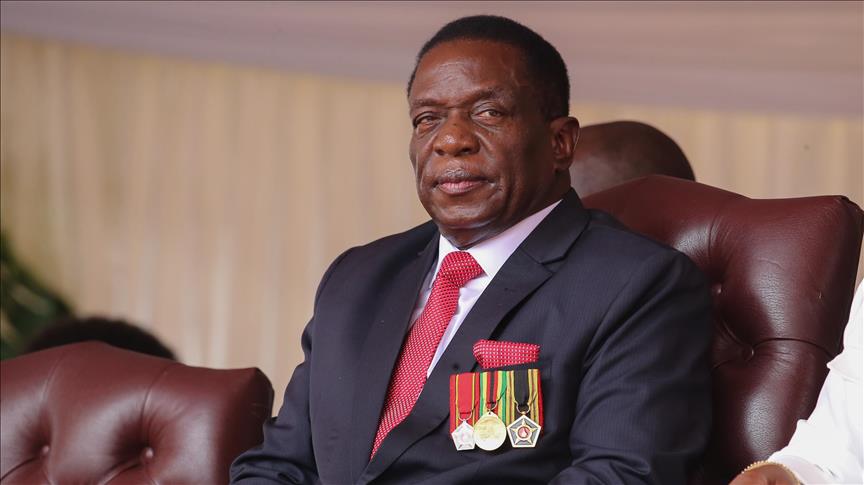
President Emmerson Mnangagwa
Zimbabwe’s most contentious proposed law in a generation would end direct presidential elections, extend terms to seven years and dismantle key oversight bodies — but the government says it is simply a stability measure
By Norman Mwale
The Constitution of Zimbabwe Amendment (No. 3) Bill, 2026 — known widely as CAB3 — is a proposed law gazetted on 16 February 2026, triggering a mandatory 90-day public consultation period. It seeks to make sweeping changes to Zimbabwe’s 2013 Constitution and has quickly become one of the most debated pieces of legislation in the country’s recent history.
What the bill actually proposes
At its heart, CAB3 would do five things. First and most controversially, it would end the direct popular election of the President. Under the proposal, the President would instead be elected by members of Parliament at a joint sitting of the Senate and National Assembly after every general election, with a candidate needing more than half of valid votes cast and a run-off triggered if no candidate achieves that majority.
Second, it would extend presidential and parliamentary terms from five to seven years, with the practical effect of prolonging President Emmerson Mnangagwa’s tenure until 2030.
Third, the bill would amend Section 120 of the Constitution to allow the President to appoint ten additional senators, increasing the total Senate membership from 80 to 90. Critics note this would make it significantly easier for the executive to secure the two-thirds supermajority needed to pass future constitutional amendments.
Fourth, the bill would establish a new Zimbabwe Electoral Delimitation Commission and transfer responsibility for the voters’ roll from the Zimbabwe Electoral Commission to the Registrar-General. Fifth, it would repeal both the Zimbabwe Gender Commission and the National Peace and Reconciliation Commission.
What the government says
The government describes CAB3 as introducing “a set of constructive reforms that, taken together, reinforce constitutional governance, strengthen democratic structures, clarify institutional mandates, and harmonise Zimbabwe’s constitutional order with tested and successful practices in other progressive jurisdictions.”
Attorney-General Virginia Mabiza has said the changes do not alter presidential term limits and are designed to strengthen institutions rather than benefit individual office bearers, urging the public to refer to the officially gazetted text rather than speculation. The bill is also linked to ZANU-PF’s “2030 agenda,” adopted in 2024, which aims to position Zimbabwe as an upper-middle-income economy by the end of the decade. Proponents argue that longer electoral cycles reduce “election-related toxicity” and give government sufficient time to implement long-term projects without what they describe as “constant electoral disruptions.”
What the critics say
The opposition to CAB3 has been broad and pointed. Constitutional analyst Justice Mavedzenge described the bill’s cumulative effect as “a fundamental reordering of the constitutional system which increases presidential authority while weakening mechanisms for popular participation and democratic accountability.” He also noted that President Mnangagwa chaired the Cabinet meeting that approved the bill.
Critics draw comparisons with similar constitutional manoeuvres elsewhere on the continent — in Burundi, Uganda, Rwanda and Côte d’Ivoire — where term-limit amendments were justified as stability measures but ultimately weakened succession mechanisms and increased political risk.
The bill is already facing legal challenges. On 13 May 2026, war veterans filed a constitutional challenge in Zimbabwe’s Constitutional Court against President Mnangagwa and the Attorney-General, arguing that CAB3 cannot lawfully proceed without a referendum and that the process violates Section 328 of the Constitution. Former opposition leader Nelson Chamisa has also spoken out, describing the bill as a direct threat to democratic governance.
The bottom line
CAB3 is the most far-reaching proposed change to Zimbabwe’s constitutional order since the 2013 Constitution was adopted. It would remove citizens’ direct vote for their president, add two years to the current government’s mandate without a fresh popular mandate, and dismantle independent oversight institutions. The government frames it as institutional modernisation in pursuit of Vision 2030; its critics say it is executive consolidation dressed in the language of reform.
Similar Posts by The Mt Kenya Times:
- Mt Kenya Times ePAPER September 19-20, 2026
- Kenya joins US and UK to put citizens on the terrorism frontline
- Kenya’s parliament races to tame the AI frontier
- Kalonzo calls Ruto to order over Uhuru attacks
- Gachagua takes his 2027 campaign to America
About the Author