Gachagua retreats to Wamunyoro to forge single opposition ticket
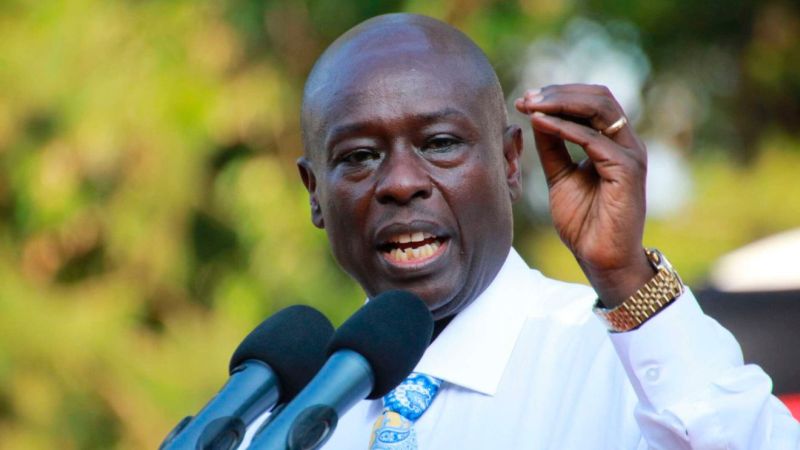
Former Deputy President Rigathi Gachagua
Former deputy president vows to stay off public platforms for 45 days as he works to unite the opposition around one candidate for 2027
By MKT Reporter
Former Deputy President Rigathi Gachagua announced yesterday that he will withdraw from public politics for 45 days and retreat to his Wamunyoro home in Mathira, Nyeri County, to lead consultations aimed at forging a single opposition presidential candidate to challenge President William Ruto in the 2027 General Election.
The announcement came a day after the High Court upheld the constitutionality of Gachagua’s impeachment — but also awarded him Sh50 million in damages after finding that his right to a fair hearing had been violated during the Senate proceedings that removed him from office in October 2024. Gachagua said he would appeal the ruling, arguing that the principles of natural justice had been “trashed and ignored in broad daylight.” But even as his lawyers prepared their next legal move, the Democracy for the Citizens Party (DCP) leader made clear that his political focus had already shifted — from the courtroom to the village.
“From Monday I will camp in Wamunyoro village for 45 days to start exhaustive and extensive consultations with my supporters, opinion leaders and stakeholders on the formula of identifying a single presidential candidate to face President William Ruto,” he said. “You will not see me anywhere in public rallies. I will be in Wamunyoro doing very serious, extensive consultations because this is critical for the country.”
The retreat, which begins next week, marks a deliberate strategic pivot. For months, Gachagua has been a fixture at rallies across the country, building the opposition coalition he calls the United Alternative Government and positioning himself as its natural leader. That phase, he said on Tuesday, is now over. A 60-member caucus comprising elders, professionals, clergy, youth leaders and political advisers, convened in the immediate aftermath of the High Court ruling, had reached a conclusion: the work of mobilisation against Kenya Kwanza was done. The task now was selection — agreeing on the one person who would carry the opposition into the ballot box.
It is a shift that reflects both the maturation of the opposition’s planning and the pressure of a tightening political calendar. The 2027 election is little more than a year away, and the experience of Kenya’s recent political history is unambiguous: a divided opposition hands the incumbent a significant structural advantage. Gachagua knows this as well as anyone. He said yesterday that having a single candidate against Ruto was “not negotiable” and “the only way to liberate this country.”
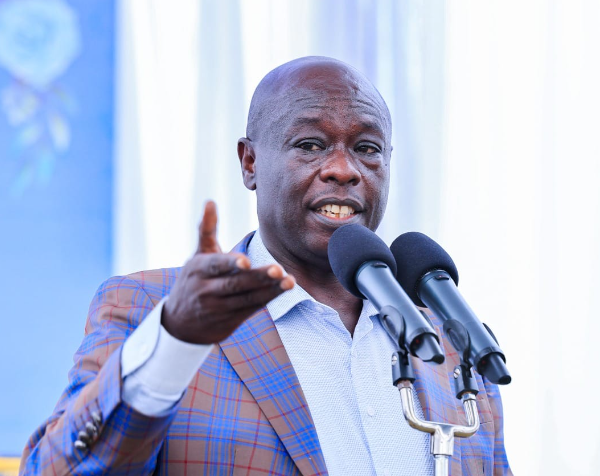
The question of who that candidate will be is, of course, the one that remains unresolved. Gachagua has made no secret of his own ambitions. He insisted again yesterday that he remains eligible to contest the presidency despite the High Court ruling, arguing that his ongoing appeals preserve his political rights. “I wish to confirm to my supporters across the country that I am eligible to vie as a presidential candidate, and I will be on the ballot on August 10, 2027 should the formula that will be agreed upon by the United Alternative Government favour me as the single presidential candidate,” he said.
But he was equally clear that the process is bigger than any individual. He laid out two scenarios — Plan A, in which the consultations produce consensus around his own candidacy, and Plan B, in which a different leader emerges as the coalition’s preferred choice. Under either outcome, he said, the result would be the same: one opposition candidate on the ballot, with every ally and supporter behind them. “I remain hopeful that I will be that candidate for the election of the presidency. However, if any of my other colleagues is agreed upon, I give a very firm commitment to the people of Kenya that I, Rigathi Gachagua, and the millions of supporters behind me, shall rally behind the agreed candidate,” he said.
It is a posture that is both statesmanlike and strategically shrewd. By framing himself as the broker of opposition unity rather than simply a contender for the ticket, Gachagua preserves his influence regardless of whether he ultimately secures the nomination. In Kenyan politics, where coalitions are fragile and personalities dominant, the person who controls the process of consensus often controls its outcome.
Before heading to Wamunyoro, Gachagua said he would travel to Western Kenya this weekend to show solidarity with DCP deputy party leader Cleophas Malala and DAP-K party leader Eugene Wamalwa — a signal that the coalition-building work extends well beyond his Mount Kenya base and that he is actively investing in its cross-regional breadth.
The 45-day consultation period is expected to culminate in structured engagement with fellow opposition co-principals on a formal framework for selecting a joint presidential candidate. Who those principals are, and how much they trust the process Gachagua is now proposing to run, will determine whether the Wamunyoro retreat produces a genuine breakthrough or simply another round of opposition negotiations that ends without resolution.
The High Court ruling that prompted all of this was itself a complex verdict. The judges held that while concerns had been raised about aspects of the impeachment process, the Constitution does not permit courts to overturn an impeachment after it has been concluded and a new deputy president has been lawfully appointed. The Sh50 million damages award was a consolation that acknowledged process was flawed even as it declined to reverse the outcome. Gachagua rejected it. “It is an insult,” he said flatly, signalling that his legal battle would continue even as his political one moved into its next phase.
What is clear is that Gachagua, for all the setbacks of the past twenty months, remains a significant force in Kenya’s political landscape. He was impeached, removed from office, and has now had that removal confirmed by the High Court. Yet on Tuesday, he stood before cameras and spoke with the calm assurance of a man who believes the story is far from over.
Whether Wamunyoro produces the unified opposition Kenya’s democracy arguably needs — or simply provides forty-five days of quiet before the familiar noise resumes — will become apparent soon enough.
Similar Posts by The Mt Kenya Times:
- Mt Kenya Times ePAPER September 19-20, 2026
- Kenya joins US and UK to put citizens on the terrorism frontline
- Kenya’s parliament races to tame the AI frontier
- Kalonzo calls Ruto to order over Uhuru attacks
- Gachagua takes his 2027 campaign to America
About the Author