The Mt Kenya Times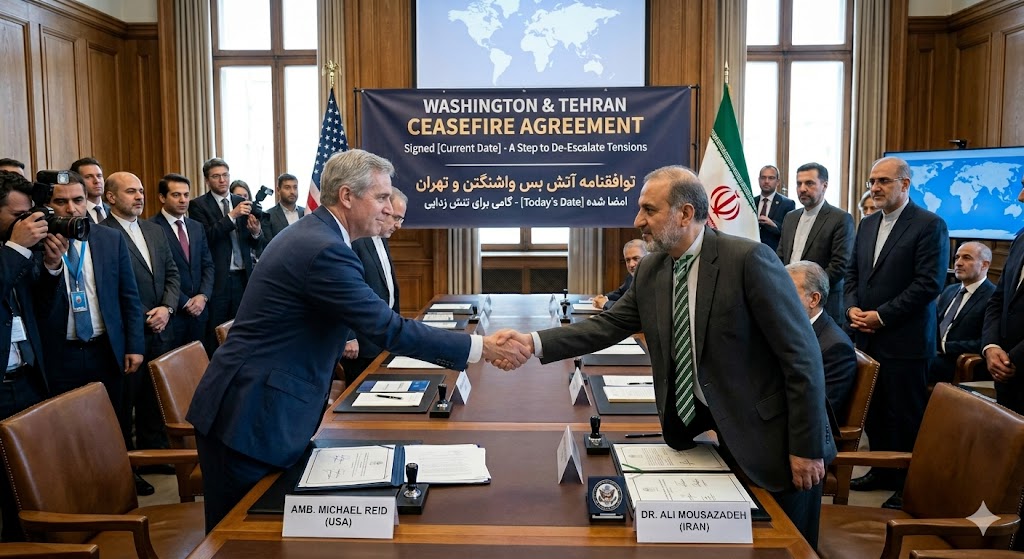
By Norman Mwale
“This is a step towards stability, but the hard work of peace begins now.” — António Guterres, UN Secretary-General.
The United States and Iran have agreed a framework to halt their war and reopen the Strait of Hormuz, marking the most significant breakthrough since joint US-Israeli strikes on Iran began in February. US and Iranian officials confirmed on Sunday they had reached the preliminary pact, which provides for an immediate and permanent cessation of military operations on all fronts, including Lebanon. The deal was announced shortly after Pakistani Prime Minister Shehbaz Sharif, who mediated the talks, said a deal had been struck early on Monday local time.
President Donald Trump wrote on Truth Social at around 5:30 p.m. ET Sunday: “The Deal with the Islamic Republic of Iran is now complete”. He later said the Strait of Hormuz would open to all shipping on Friday, and that he had ordered the end of the US naval blockade of Iranian ports, adding “Ships of the World, start your engines. Let the oil flow!”. Trump also told reporters the agreement limits enrichment to “nonmilitary purposes forever”.
The memorandum of understanding is scheduled to be officially signed on Friday 19 June in Geneva, Switzerland. Sharif said the pact called for “the immediate and permanent termination of military operations on all fronts, including in Lebanon”. Iran’s Supreme National Security Council confirmed war and military operations on all fronts, including Lebanon, would end permanently starting Monday night. Iran’s deputy foreign minister Kazem Gharibabadi said a more expansive agreement would be negotiated during a 60-day ceasefire period, including sanctions relief for Iran, while the fate of Tehran’s nuclear programme will be addressed in later talks.
Regional and global stakeholders reacted quickly. UN Secretary-General António Guterres welcomed the deal, calling the permanent ceasefire and reopening of the Strait of Hormuz a “critical step” towards ending the conflict. French President Emmanuel Macron praised the agreement and said Paris would support its swift and full implementation, stressing the urgent and unconditional reopening of the Strait of Hormuz was “essential for regional stability and the global economy”. ECB President Christine Lagarde called it “good news”, especially as it could lead to a re-opening of the Strait of Hormuz. A joint statement from Britain, France, Germany and Italy said “Iran must never acquire a nuclear weapon” and that they stand ready to work with the US, Iran and the IAEA to this end.
Oil markets responded immediately, with Brent crude falling more than 4% and US West Texas Intermediate sliding 4.6% on hopes that shipping would resume through the waterway that handles about a fifth of global oil and gas supply. The precise terms remain under discussion, and Israel said it was not party to the US-Iran talks. With the signing set for Friday and frontline commanders now under orders to stand down, attention turns to implementation and whether the ceasefire can hold long enough for nuclear negotiations to begin.
Similar Posts by The Mt Kenya Times:
- Mt Kenya Times ePAPER October 1, 2026
- Museveni backs Lamu but keeps Uganda’s money at home
- Sifuna’s party wins its name — and Kenya’s opposition race begins in earnest
- Lamu’s $16B gamble: Africa’s biggest refinery divides the region
- Ruto launches KSh2.2 trillion Lamu refinery in East Africa’s biggest energy bet
About the Author