Protest victims reject Ruto’s apology, demand compensation list be made public

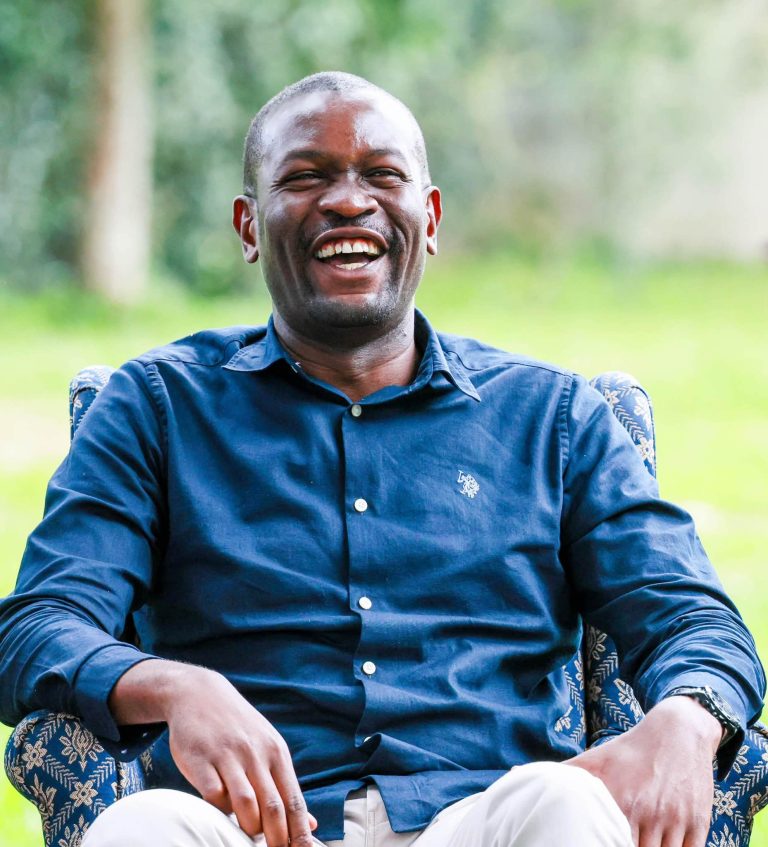
Bernard Kavuli, a survivor
Survivors of state violence say the President’s acknowledgement of security force excesses fell short of justice — and warn of fresh street protests if payouts are not made within a week.
By MKT Reporter
Survivors of state violence during last year’s anti-government protests formally rejected President William Ruto’s public apology yesterday, demanding instead that he address them personally and that the government immediately publish the full list of individuals earmarked to receive compensation from a newly announced Ksh.2 billion relief fund.
The rebuke came within hours of the President acknowledging state excesses that left thousands dead, maimed and with businesses reduced to rubble — an admission that his administration had previously resisted making. The Coalition of Victims and Survivors Against State Violence said the remarks, however historic in tone, did not constitute the reckoning that survivors and bereaved families have spent months demanding. The coalition, which represents more than 1,100 claimants spanning cases of extrajudicial killings, enforced disappearances, torture and abductions, said any reconciliation process built on ambiguity was no process at all.
“No apology can erase the bloodshed, trauma and pain inflicted on people whose only crime was exercising their constitutional right to peaceful protest,” said Joshua Okayo, himself a survivor of abduction. “Because the brutality and excesses were personal, the apologies should also be personal. We therefore expect the President to extend the same apologies directly to the victims.”
That view was echoed by Nick Karanja, an advocate who has represented survivors throughout the compensation process. He drew a sharp distinction between a statesman’s general acknowledgement of wrongdoing and the direct, face-to-face accountability that victims say is the only credible foundation for healing. “A communiqué read in State House is not the same as looking a mother in the eye and telling her why her son never came home,” Karanja told reporters.
The compensation framework, unveiled on Monday, establishes a Ksh.2 billion fund to settle more than 1,100 claims. It covers a broad spectrum of violations including loss of life, injuries, torture, unlawful detention, abductions and enforced disappearances. Human rights organisations broadly welcomed the mechanism as an overdue first step, but cautioned that its credibility would rest entirely on execution. Survivors went further, arguing that both the pool of beneficiaries and the sums attached to individual claims must be substantially increased before any payment schedule is finalised.
Beyond the numbers, the issue of transparency has become a flashpoint. Claimants say they have been given no sight of who appears on the compensation list or on what basis decisions were made, leaving open the possibility that eligible victims have been excluded — whether through bureaucratic failure or deliberate omission. Bernard Kavuli, a survivor who has become one of the process’s most vocal critics, warned that patience among victims is exhausted.
“Kenyans will not tolerate further delays, excuses, bureaucracy or political sideshows meant to frustrate victims once again. Compensation must be swift, transparent, seamless and conducted in good faith,” Kavuli said, speaking at a press briefing in Nairobi.
For families who lost relatives, the President’s remarks also reopened grief that has never had the space to settle. Mwende, who declined to give her full name for fear of reprisal, lost a child during the demonstrations and expressed bewilderment at what she described as the selective scope of the President’s contrition. Ruto’s speech had referenced historical instances of state impunity stretching back decades, a framing that struck her as a deliberate deflection from more recent events.
“My question to the President is this: if you have admitted that our children disappeared, that some were abducted and that others were killed, why are you speaking about events that happened long ago instead of addressing these recent cases?” she said.
Underlying all of the survivors’ demands is a insistence that financial compensation, however necessary, cannot be a substitute for criminal accountability. A spokesperson for the coalition was unequivocal: the same police officers and state agents implicated in shootings, kidnappings and torture must face prosecution. Paying victims, the spokesperson argued, does not extinguish criminal liability. “Compensation does not erase the criminal responsibility of those involved in these acts,” the representative said. “Investigations must proceed and those responsible must be held to account.”
Legal analysts have noted that the government’s framework is silent on accountability mechanisms, creating a structural tension at the heart of the process. International human rights law, including standards set by the United Nations Basic Principles on the Right to a Remedy, holds that reparation and accountability are parallel obligations — neither one discharges the state’s duty to pursue the other. Kenya’s own Constitution, under Article 49 and the broader Bill of Rights, enshrines the right of victims to judicial remedy, a provision that advocacy groups say cannot be waived by executive decree.
The coalition has set a one-week deadline for the first compensation payments to be made, with leaders warning that failure to meet it will trigger nationwide demonstrations. Whether that ultimatum carries political weight depends largely on the organisational capacity that survivors’ groups have built since last year’s unrest — and, equally, on whether the government believes the threat is credible. Given that last year’s protests forced the withdrawal of the Finance Bill and ultimately reshaped the Cabinet, there is little reason for Nairobi to dismiss it.
For now, the gap between a President who has offered words and a movement that wants consequences defines the central fault line of Kenya’s post-protest reckoning. A government that has taken the significant step of acknowledging wrongdoing must now decide whether it is willing to take the harder step of being held accountable for it.
The survivors have made their position unmistakably clear — they will settle for nothing less.
Similar Posts by The Mt Kenya Times:
- Mt Kenya Times ePAPER October 30, 2026
- Ruto courts Russian investment in Moscow as Kenya seeks KSh5.2 trillion infrastructure push
- Court voids Ruto’s housing promises to teachers and police, ruling presidential pronouncements have no force of law
- Ruto’s Cabinet is now unconstitutional, lawyers warn, as gender rule deadline passes
- Sifuna’s rise: How a senator from Nairobi became Kenya’s most watched politician ahead of 2027
About the Author