Duale found in contempt over Ebola quarantine facility as court orders sentencing
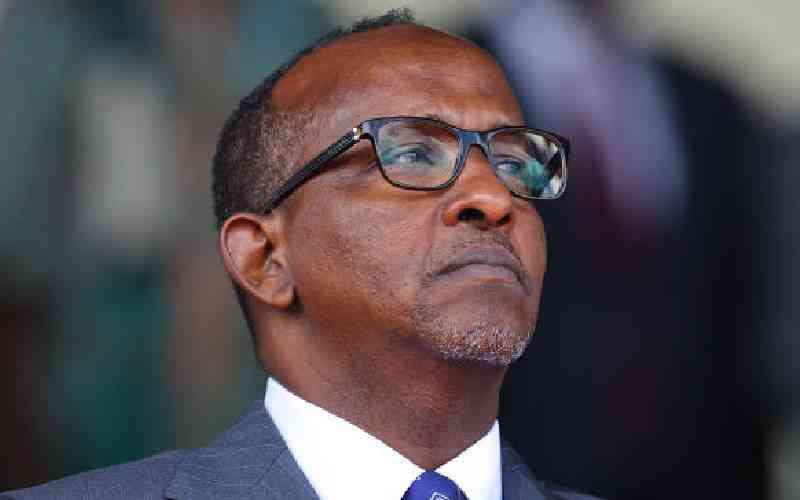
Health Cabinet Secretary Aden Duale
High Court rules Health CS defied multiple directives to halt construction at Laikipia Air Base
By Hadassah Karangu
Health Cabinet Secretary Aden Duale was yesterday found guilty of contempt of court after the High Court ruled that he had proceeded with construction of a controversial Ebola quarantine facility at Laikipia Air Base near Nanyuki, in direct defiance of multiple court orders directing that work be suspended.
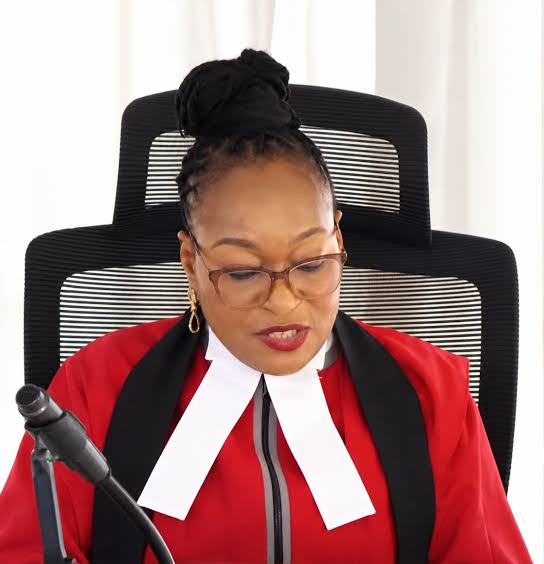
Justice Patricia Nyaundi Mande, delivering the ruling, found that Duale had commissioned construction at the site despite orders issued in late May and early June to halt all activities pending the hearing of the case. “The court cannot permit its orders to be rendered hollow,” the judge wrote. Duale has been ordered to appear in court today for mitigation and sentencing. Contempt of court carries a maximum fine of 200,000 shillings — approximately $1,500 — and, or up to six months in imprisonment.
The case was brought by the Law Society of Kenya and the Katiba Institute, a constitutional watchdog, who argued that the government had no right to press ahead with the project while legal proceedings were active. Their petition raised fundamental concerns about the rule of law, the accountability of public officials, and the rights of citizens — particularly those in Laikipia County — to be consulted on matters affecting their land and livelihoods.
At the heart of the dispute is the nature of the facility itself. The quarantine centre was designed to house United States nationals exposed to the Ebola virus outbreak currently affecting the Democratic Republic of Congo and Uganda. Kenya, which has recorded no infections, agreed to host the facility as part of a health and security partnership with the United States, which has pledged approximately $13.5 million toward the arrangement. President William Ruto publicly defended the project, saying he “gave the okay” because it was “an agreement and a partnership with friends who have walked with Kenya.”
Duale held a similarly firm line. Despite the court orders, he told parliament earlier this month that the government “will not stop it” — a statement that now sits uncomfortably alongside Monday’s contempt finding.
Public opposition to the facility has been fierce. Protests erupted across the country last month, with some demonstrations turning violent — at least three people were reportedly killed by gunfire during the unrest. Demonstrators carried placards reading “Tumekataa Ebola” — We refuse Ebola — expressing anger at what many saw as the importation of a deadly virus and a lack of transparency in the deal struck with Washington. Civilian groups and healthcare workers have been vocal in their criticism, arguing that Kenya’s health infrastructure is already under strain and cannot safely absorb such a risk.
The US embassy maintained that the facility posed no danger to local communities and said it was “actively working with the Kenyan government to resolve any objections.” The Ebola outbreak in the DRC, confirmed in May, had resulted in 896 confirmed cases and at least 232 deaths as of 17 June, according to the World Health Organisation. Uganda, which shares a border with Kenya, had reported 19 confirmed cases and two deaths.
The contempt finding now puts the case at the centre of a broader and more pressing question: how should public officials respond when courts intervene in major state projects? Monday’s ruling is a sharp judicial reminder that the answer cannot be to simply carry on regardless. The relationship between the executive and the judiciary depends on mutual respect, and when one institution appears to override the other, the entire architecture of democratic governance is tested.
Whatever sentence is handed down on Tuesday, this case has already delivered a verdict of its own kind — one that will resonate well beyond the courtroom.
Similar Posts by The Mt Kenya Times:
- Mt Kenya Times ePAPER October 24-25, 2026
- Muturi calls on IEBC to keep election technology tender clean and on schedule
- Ruto meets UAE minister in push to deepen trade ties
- Gideon Moi breaks silence on Ruto fallout, cites broken promises
- The doctor who refused to abandon a sick Uganda
About the Author