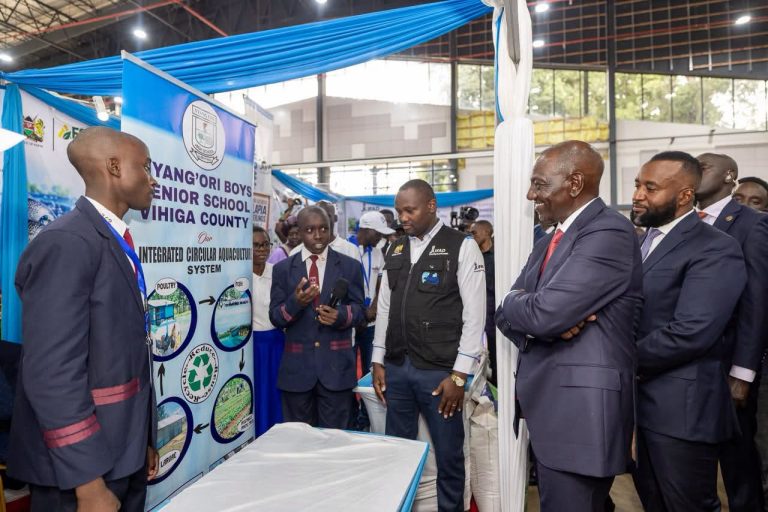
CS Kagwe: Kenya risks losing global meat markets over misuse of veterinary drugs
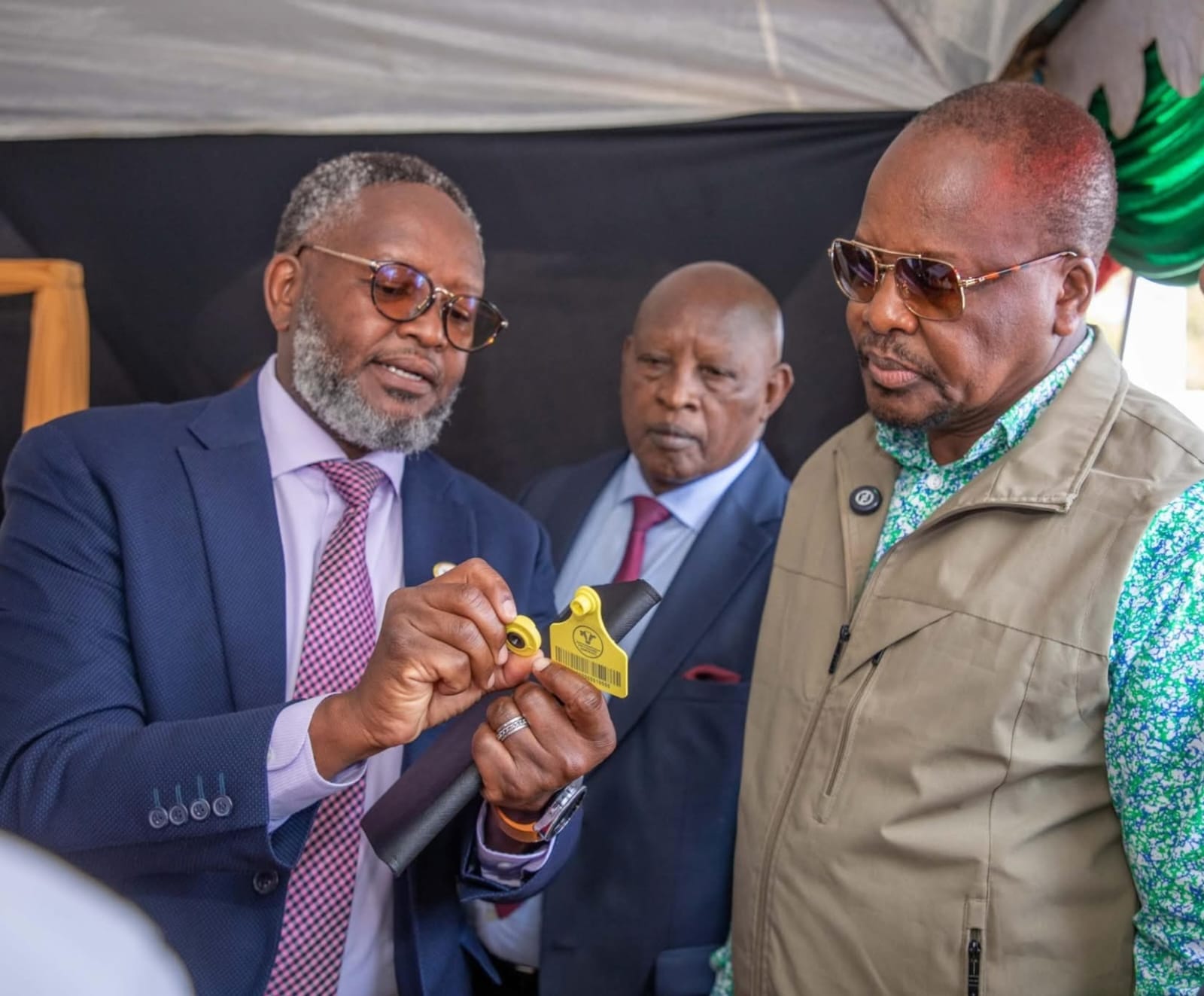
A livestock expert explaining a point to CS Mutahi Kagwe (right) and Nyeri Governor Mutahi Kahiga (centre). Photos/Courtesy.
By DMS
Kenya could lose access to lucrative international meat markets if it fails to address the growing threat of antimicrobial resistance caused by the misuse of veterinary medicines, Agriculture and Livestock Development Cabinet Secretary Mutahi Kagwe has warned.
Speaking yesterday during the opening of the Kenya Meat Conference 2026 at Chaka Ranch, Nyeri, Kagwe said antimicrobial resistance (AMR) had evolved from being a livestock health concern into a major national challenge affecting public health, food security, trade and economic growth.
The CS said countries across the world were increasingly demanding proof of food safety, traceability and responsible use of medicines before allowing access to their markets, warning that failure to comply with international standards could reverse gains made in expanding Kenya’s meat exports.
“Responsible use of veterinary medicines is becoming a passport to international markets,” Kagwe said, adding that antimicrobial residue concerns could undermine years of negotiations aimed at opening new markets for Kenyan livestock products.
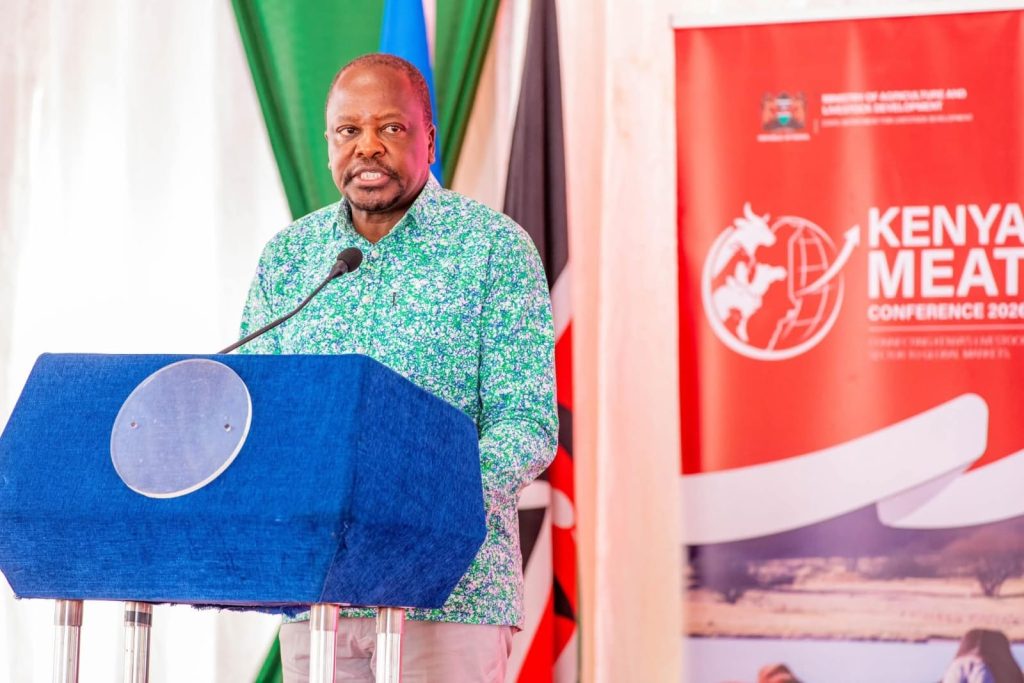
Antimicrobial resistance occurs when microorganisms become resistant to medicines designed to eliminate them, making infections harder to treat. Kagwe noted that global estimates associate AMR with millions of deaths annually, with Kenya among countries facing significant impacts.
To strengthen controls, the government is enhancing the role of regulatory institutions, including the Kenya Veterinary Board and the Veterinary Medicines Directorate, to ensure veterinary drugs are prescribed and administered under the guidance of licensed professionals.
Kagwe said the government was also implementing reforms aimed at improving livestock health, productivity and market competitiveness.
Among the initiatives is the National Livestock Vaccination Programme, increased investment in the Kenya Veterinary Vaccines Production Institute (KEVEVAPI) and expansion of livestock traceability systems.
He said investment in KEVEVAPI would increase annual vaccine production capacity from about 45 million doses to more than 70 million doses, helping strengthen disease prevention among livestock farmers.
The Cabinet Secretary said the rollout of the Livestock Identification and Traceability System (LITS) and the Animal Identification and Traceability System (ANITRAC) would improve tracking of animals from farms to markets, enhancing consumer confidence and supporting export requirements.
“Modern consumers demand traceability, food safety and transparency. These are no longer optional requirements but key conditions for participation in international trade,” he said.
Kagwe also raised concern over illegal donkey slaughter, describing the practice as a threat to food safety, animal welfare and Kenya’s ambitions to expand livestock exports.
Although commercial donkey slaughter was banned in 2020, the CS said illegal operations continue, with reports indicating that hundreds of donkeys are slaughtered every month.
He directed the ministry to strengthen enforcement measures and develop additional interventions to curb illegal activities within the sector.
On meat value addition, Kagwe challenged investors and stakeholders to increase investment in modern processing facilities, branding and certification to enable Kenya to earn more from its livestock resources.
He said the government was working with county governments and private sector players to modernize abattoirs and expand export-ready meat processing capacity.
The livestock sector, he noted, remains a critical component of Kenya’s economy, with the government targeting an increase in its contribution to the Gross Domestic Product from the current levels to 20 per cent.
The country also aims to nearly double annual meat production to approximately 990,000 metric tonnes by 2028, creating an estimated KSh450 billion annual industry.
Kagwe called for stronger collaboration between national and county governments, researchers, financial institutions and private investors to transform Kenya into a leading African exporter of safe, traceable and high-quality meat products.
The two-day Kenya Meat Conference 2026 brought together stakeholders from across the livestock value chain to deliberate on strategies for improving production, strengthening food safety standards and expanding Kenya’s presence in international meat markets.
Among those attending were Principal Secretaries Jonathan Mueke and Caroline Karugu, Nyeri Governor Mutahi Kahiga and his Garissa counterpart Nathif Jama Adam, KALRO chairman Dr Thuo Mathenge alongside other government officials and livestock sector leaders.
Similar Posts by The Mt Kenya Times:
- CS Ogamba: tree planting could generate carbon credit millions to fund education
- Farouk Kibet calls for unity and development as leaders rally behind Ruto’s 2027 re-election bid
- Stress solutions: Building mental wellness in an age of pressure
- Bikeke school marks Mazingira Day with tree-planting drive
- Kenya’s cybersecurity crisis: Are millions of Kenyans safe in the digital economy?
About the Author