The Mt Kenya Times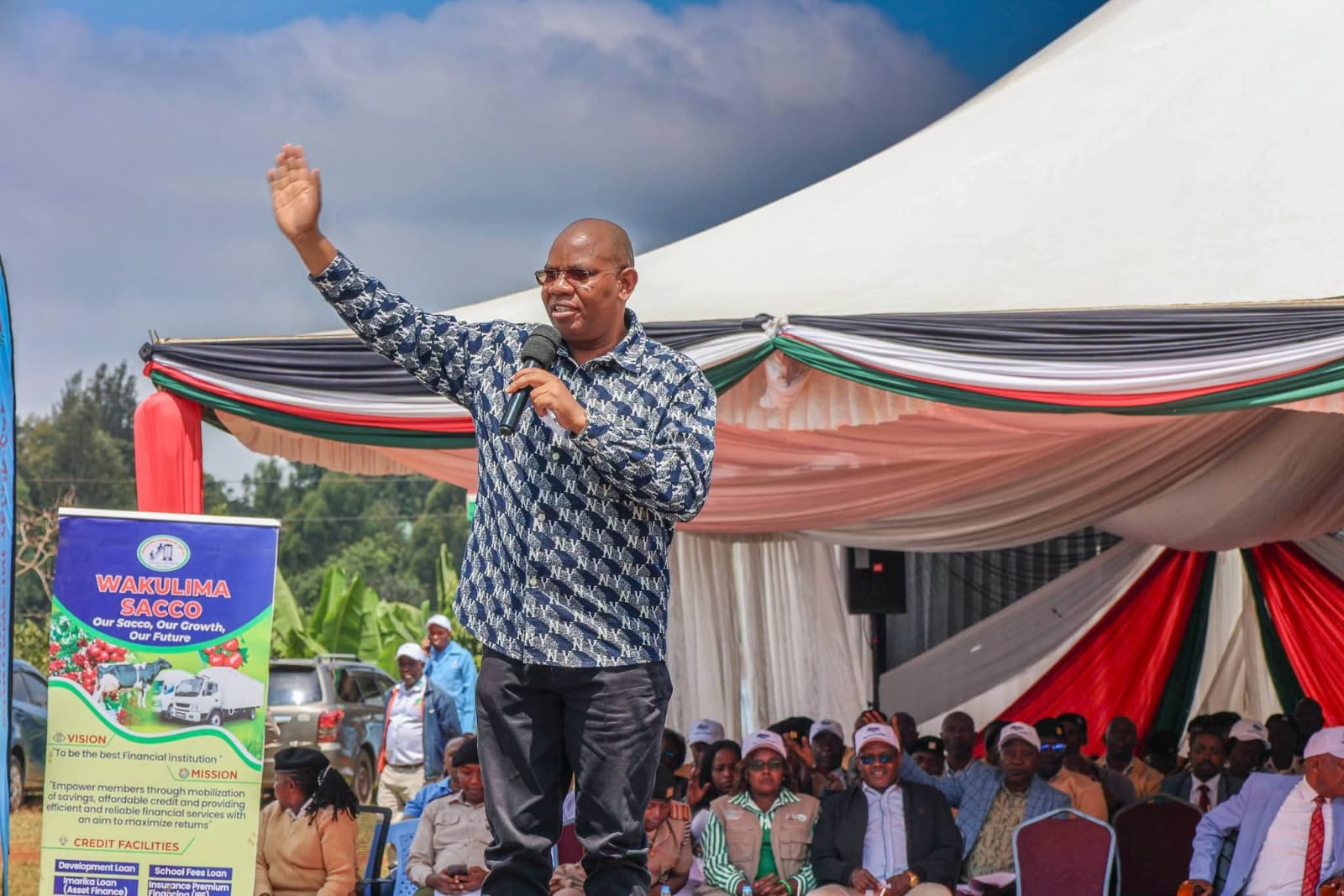
Kenya Dairy Board Chairman Genesio Mugo
Kenya Dairy Board chairman pushes for cleaner, premium milk as the country’s annual output reaches 5.4 billion litres
By John Kariuki
Kenya’s dairy sector is undergoing a significant shift in how milk quality is measured and rewarded, with Kenya Dairy Board Chairman Genesio Mugo yesterday emerging as a central figure in driving the adoption of a quality-based milk payment system aimed at raising production standards and improving farmer incomes.
Mugo, who was reappointed to the chairmanship in February this year for a fresh three-year term, has consistently argued that the sector’s future competitiveness depends not on volume alone but on the quality of milk delivered from farm to processor. Under the Quality-Based Milk Payment system, farmers are rewarded for producing milk with low bacterial counts, higher butterfat and protein content, and no traces of adulteration or antibiotic residues — attributes that command premium prices in both domestic and export markets.
Kenya produced approximately 5.4 billion litres of milk last year, overtaking Egypt to become Africa’s leading dairy producer. The country’s formal milk intake by processors crossed one billion litres for the first time in 2025, rising 11.5 per cent year-on-year, signalling a structural shift from informal hawking to regulated channels.
Central to the Kenya Dairy Board’s strategy has been the expansion of milk cooling infrastructure. The government distributed 230 milk coolers across 40 counties beginning in March last year, including to cooperatives such as Mukurweini Wakulima Dairy Farmers Limited. The coolers reduce bacterial growth in freshly collected milk, minimize spoilage, and help farmers consistently meet the standards required for premium payment.
The Board has also promoted value addition as a means of reducing dependence on raw milk sales. Kenya is positioning itself to expand production of milk powder, cheese, butter, and yoghurt — moves intended to open regional and international export markets, create employment, and buffer farmers against periods of seasonal surplus.
Mugo has been an advocate for cooperative societies as the primary vehicle through which government support, financing, extension services, and quality assurance systems reach dairy producers. Well-managed cooperatives, he has argued, improve farmers’ bargaining power and reduce production costs across the value chain.
The Board’s rollout of sexed semen technology, which enables farmers to produce female calves with up to 95 per cent accuracy, has further supported herd improvement. Following a presidential directive reducing the cost per dose from Ksh 8,000 to Ksh 1,000, uptake among smallholder farmers has accelerated, contributing to higher milk production per cow.
The dairy development agenda aligns with the government’s broader agricultural policy, which links livestock production to investments in coffee, avocado, and macadamia cultivation as part of a strategy to diversify household incomes and build more resilient farming systems in rural Kenya.
Similar Posts by The Mt Kenya Times:
- Mt Kenya Times ePAPER October 1, 2026
- Museveni backs Lamu but keeps Uganda’s money at home
- Sifuna’s party wins its name — and Kenya’s opposition race begins in earnest
- Lamu’s $16B gamble: Africa’s biggest refinery divides the region
- Ruto launches KSh2.2 trillion Lamu refinery in East Africa’s biggest energy bet
About the Author