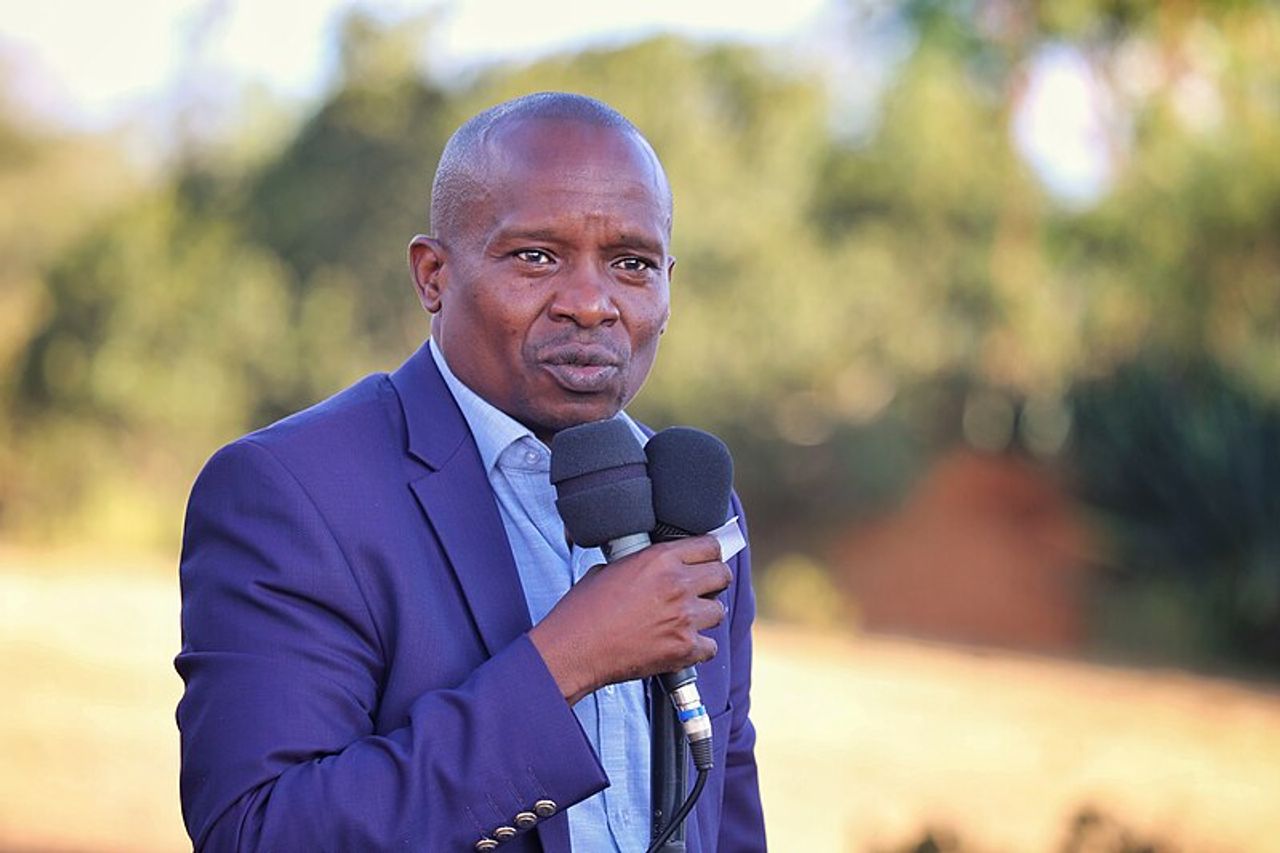
Deputy President Kithure Kindiki
Kenya’s addiction to succession politics is crowding out the harder work of governing
By Levis Wangamati
Politics is often described as the art of leadership. In Kenya, it has increasingly become the art of succession. Before one administration has settled into the demanding work of governing, another contest quietly begins. Corridors of power fill with speculation, alliances are redrawn with remarkable speed, and public debate shifts from the performance of government to the distribution of offices. Long before the next ballot is cast, the race is already underway.
At the centre of this familiar ritual stands the Office of the Deputy President. It is a constitutional position of immense significance, yet the fascination surrounding it says more about our political culture than about the office itself. The question dominating public discourse is no longer what the office can do for the country, but who will occupy it next. In that subtle shift lies one of the deepest weaknesses in Kenyan politics.
There is nothing wrong with ambition. Democracies depend on citizens willing to seek public office and persuade voters that they deserve to lead. But ambition must remain a servant of purpose, not its replacement. When the pursuit of office becomes more important than the responsibility attached to it, politics ceases to be an instrument of public service and risks becoming an endless competition for status.
That inversion explains why political negotiations are energetic while governance appears subdued. Coalition arithmetic dominates headlines. Regional bargaining captures public attention. Speculation over succession fills television panels and social media timelines. Yet the issues shaping the daily lives of millions of Kenyans rarely command the same urgency.
Young graduates continue searching for opportunities in an economy that demands experience before offering employment. Families recalculate household budgets as the cost of living stretches incomes to breaking point. Farmers contend with unpredictable weather that threatens food security and livelihoods. Public universities wrestle with financial uncertainty. Healthcare remains beyond the reach of many. These are not challenges that disappear because politicians have agreed on who sits in which office.
The debate surrounding the Deputy President’s office therefore reflects something larger than a contest over one constitutional position. It exposes a national habit of treating leadership as an event rather than a continuous responsibility. We celebrate appointments with extraordinary enthusiasm but examine performance with far less consistency. We invest enormous political capital in the journey to office — and far less in measuring what happens once the oath has been taken.
History offers a useful reminder. Nations are rarely transformed by elections alone. They are transformed by what leaders choose to do after the celebrations fade, after the cameras leave, and after campaign slogans give way to the ordinary discipline of governing. Roads are not built by political declarations. Jobs are not created through coalition agreements. Hospitals are not improved by succession debates. Progress demands the quieter virtues of competence, consistency, accountability and sustained public service.
There is a deeper irony at work. We have become remarkably efficient at preparing for the transfer of power but far less disciplined about evaluating the exercise of it. Political conversations revolve around tomorrow’s possibilities while yesterday’s promises quietly fade. We analyse potential successors before demanding accountability from current office-holders. In doing so, we risk turning democracy into a perpetual campaign — where anticipation eclipses performance and the next contest becomes more captivating than the unfinished work of the present.
Perhaps this is why every election cycle begins with extraordinary optimism but ends with familiar frustration. We have conditioned ourselves to treat winning office as the climax of politics, rather than recognising it as the beginning of responsibility. The applause reserved for victory is invariably louder than the scrutiny demanded by governance.
A mature democracy asks different questions. Not only who should lead, but why. Not merely who deserves an office, but what ideas, experience, integrity and record of service they bring to it. Above all, it understands that power is borrowed from the people and must be repaid through tangible improvements in their lives.
As fresh political alignments take shape and competition for high office intensifies, citizens should resist becoming mere spectators in a contest of personalities. Leadership must never be reduced to political calculations or ethnic arithmetic. The true contest should be over ideas, competence, integrity and the willingness to confront the country’s most persistent challenges. Offices matter because they enable service — not because they satisfy ambition.
The Office of the Deputy President will one day be occupied by someone else, as every office before it has changed hands. That is the nature of democracy. History, however, has never been generous to those who merely occupied office. It remembers those who transformed it. Years from now, Kenyans are unlikely to ask who negotiated the cleverest coalition or secured the most influential appointment. They will ask a far simpler question: when you held power, what changed for the people who trusted you with it?
That is the only verdict that endures.
The tragedy of Kenyan politics is not that too many leaders aspire to high office. It is that too few seem equally consumed by the work waiting beyond its doors. A nation is never built by the titles its leaders carry, but by the burdens they are willing to shoulder. Until Kenya learns to admire service more than status, ideas more than personalities, and results more than rhetoric, every election will begin with deafening promises and end with familiar disappointment.
The office everyone wants is never the office that changes a nation. It is the work done once the office is won.
Similar Posts by The Mt Kenya Times:
- Diaspora Times Global Sep 19 – Sep 25, 2026
- Tibet’s glacial catastrophe: Behind Beijing’s wall of silence, a climate disaster reshapes a region
- Museveni says Uganda overpaid for fuel through Kenyan middlemen as new terminal breaks ground
- Court orders throw KPL season kickoff into doubt
- Can Kenyans abroad become the untapped force that transforms Kenya?
About the Author