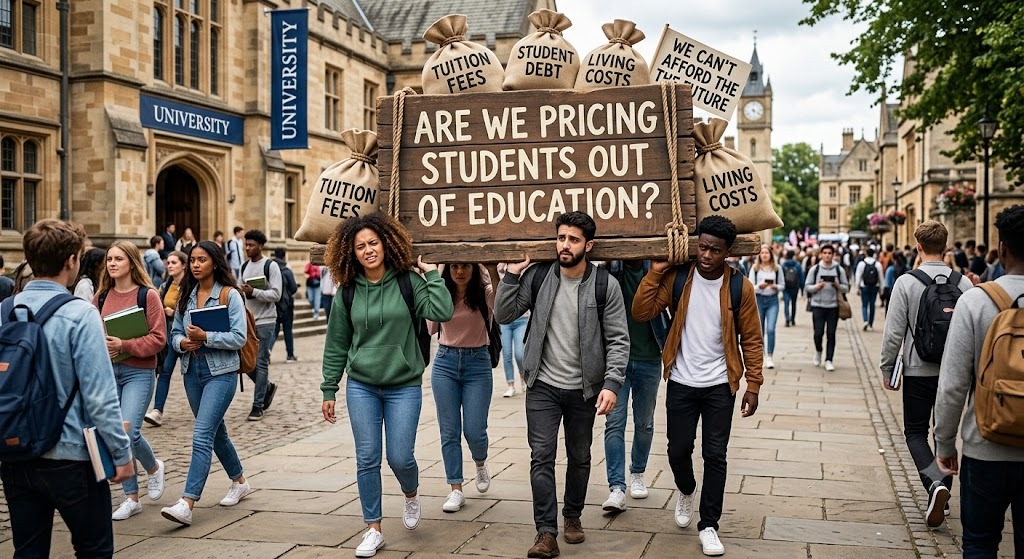
A university student argues that replacing scholarships with loans risks turning higher education into a privilege of the wealthy rather than a right of the talented.
By Keith Onyango
The government’s decision to replace university scholarships with loans signals a troubling turn in Kenya’s higher education landscape. Scholarships have long served as the bridge between talent and opportunity — ensuring that merit, not wealth, determined who got to learn. Removing that bridge risks transforming universities into exclusive enclaves for the privileged.
Loans may appear to offer an alternative, but for families already stretched thin by rising costs, they are simply another burden. Students will graduate not with optimism and ambition, but weighed down by debt that will shadow them for years. Many will abandon their studies altogether, unwilling to commit to a lifetime of repayments before they have earned a single salary.
This policy shift arrives at a particularly difficult moment. Graduates already face underemployment and fierce competition in a job market that offers few guarantees. Loading them with financial liabilities from the very first day of campus life is not merely shortsighted — it is economically reckless. Rather than fostering innovation and empowering young people, the directive threatens to trap an entire generation in financial stagnation before they have had a fair chance to begin.
Education has always been the most reliable ladder out of inequality. When we dismantle that ladder, we do not simply inconvenience individuals — we weaken the entire society that depends on their talent, energy, and ideas. If this plan proceeds unchallenged, the nation risks losing some of its brightest minds not to foreign opportunities or lack of ability, but to fear and debt.
The real question is one we should all be asking: do we still value education as a public good, or have we quietly accepted that it is merely a commodity — available, like everything else, only to those who can afford it?
Similar Posts by The Mt Kenya Times:
- Kingdom Bank charts new path for MSME growth through chamber partnership
- Mt Kenya Times ePAPER September 25, 2026
- Babu Owino’s party predates Linda Mwananchi, clarification shows
- Anglican church tells Kenyans: The country is getting worse and silence is complicity
- Sifuna set for UDP presidential unveiling as Western Kenya bids to field its own candidate
About the Author