KEMSA chief outlines supply chain reforms ahead of health summit
 The Mt Kenya Times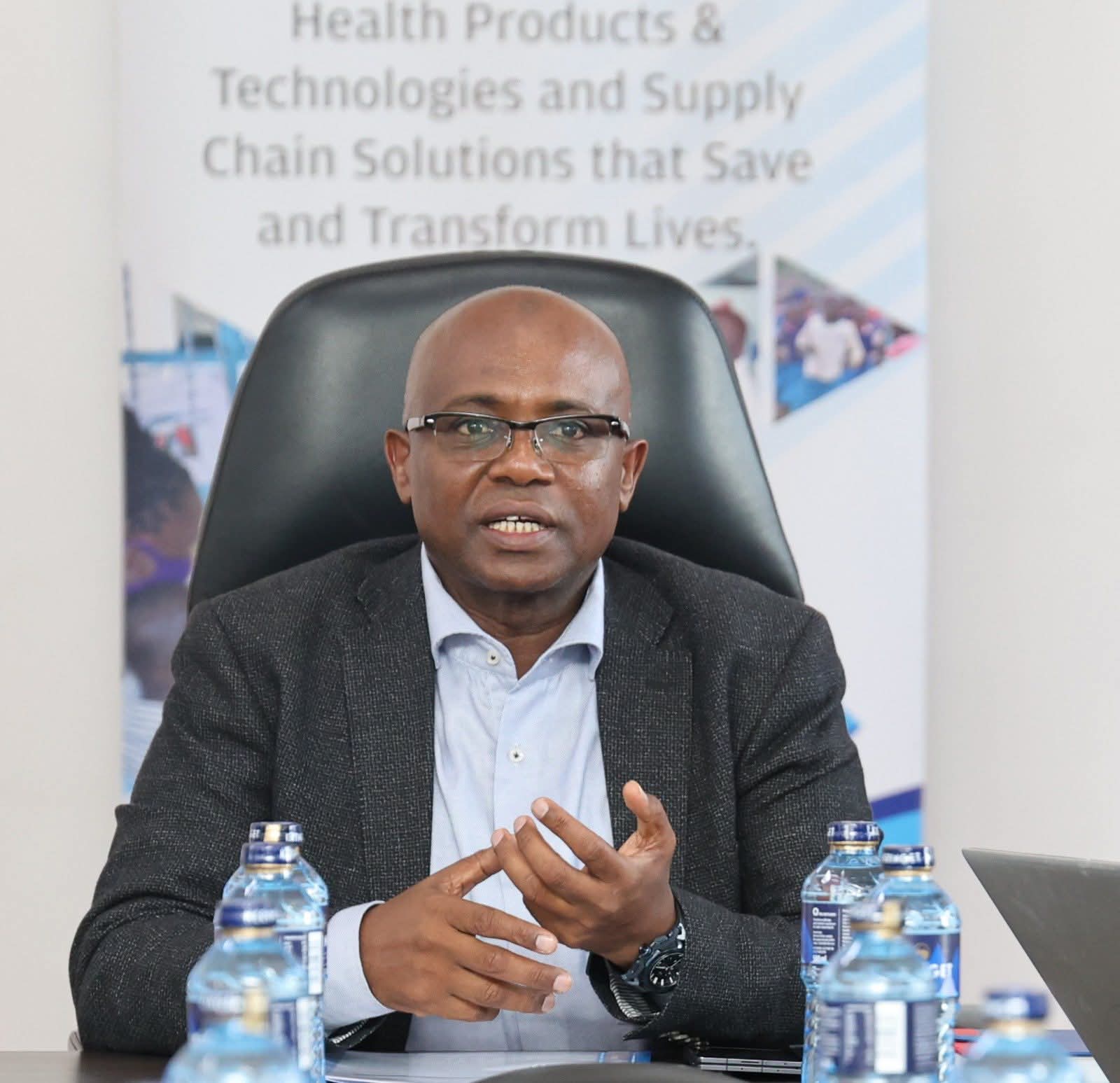
Kenya Medical Supplies Authority chief executive Waqo Dulacha Ejersa
Kenya Medical Supplies Authority chief executive Waqo Dulacha Ejersa has reaffirmed the agency’s commitment to expanding access to affordable medicines and strengthening the national health supply chain in support of the government’s Universal Health Coverage agenda.
By John Kariuki
Kenya Medical Supplies Authority chief executive Waqo Dulacha Ejersa yesterday told a media town hall ahead of the Kenya Health Summit 2026 that the agency is focused on expanding access to quality, affordable health products and technologies while reinforcing the supply chain systems that underpin the government’s Universal Health Coverage programme.
Ejersa, who has led KEMSA through a period of renewed institutional focus, used the forum to outline the agency’s priorities and respond to questions from journalists on the state of Kenya’s health supply chain — a sector that directly affects the availability of medicines and medical supplies in public facilities across the country.
His appearance at the town hall came as the health sector prepares for the Kenya Health Summit 2026, a gathering expected to bring together policymakers, health professionals, development partners and civil society to assess progress on the country’s healthcare agenda and chart priorities for the period ahead.
KEMSA plays a central role in that agenda. As the government’s primary procurement and distribution agency for health commodities, it is responsible for ensuring that medicines, medical equipment and other health products reach public facilities in sufficient quantities and on time. Failures in that chain — whether through procurement delays, distribution breakdowns or stock-outs — have real consequences for patients who depend on public health services.
Ejersa acknowledged the scale of that responsibility, stressing that every improvement in the supply chain translates directly into better health outcomes for ordinary Kenyans. He said KEMSA remains committed to delivering results that reflect the government’s broader ambition of making quality healthcare accessible and affordable to all citizens, regardless of where they live.
The Universal Health Coverage agenda, a flagship priority of President William Ruto’s administration, has placed significant demands on the health supply chain. Expanding coverage to previously underserved populations requires not only adequate funding but also a reliable and efficient system for procuring and distributing health commodities at scale. KEMSA’s ability to meet those demands will be a critical determinant of how effectively the programme delivers on its promises.
Ejersa did not shy away from the institutional challenges that have historically dogged KEMSA, including past procurement controversies that damaged public confidence in the agency. His public engagement at the town hall appeared designed in part to signal a more transparent and accountable approach to the agency’s operations — one focused on performance and professional standards rather than the opacity that has occasionally surrounded public procurement in Kenya’s health sector.
The Kenya Health Summit 2026, at which KEMSA is expected to feature prominently, will provide a broader platform for assessing whether the agency’s stated commitments are translating into measurable improvements in health commodity availability and supply chain efficiency.
For millions of Kenyans who rely on public health facilities for their medical needs, the answer to that question is anything but abstract.
Similar Posts by The Mt Kenya Times:
- Mt Kenya Times ePAPER September 30, 2026
- Ruto mocks UNGA critics: “That requires someone with sense”
- Media warns: Information gaps fuel 2027 disinformation risk
- Gachagua’s DCP holds strategic NEC meeting ahead of 2027 polls
- Sifuna’s unending party ownership hurdles
About the Author