Why Audi’s smaller models are often more desirable than their bigger brothers
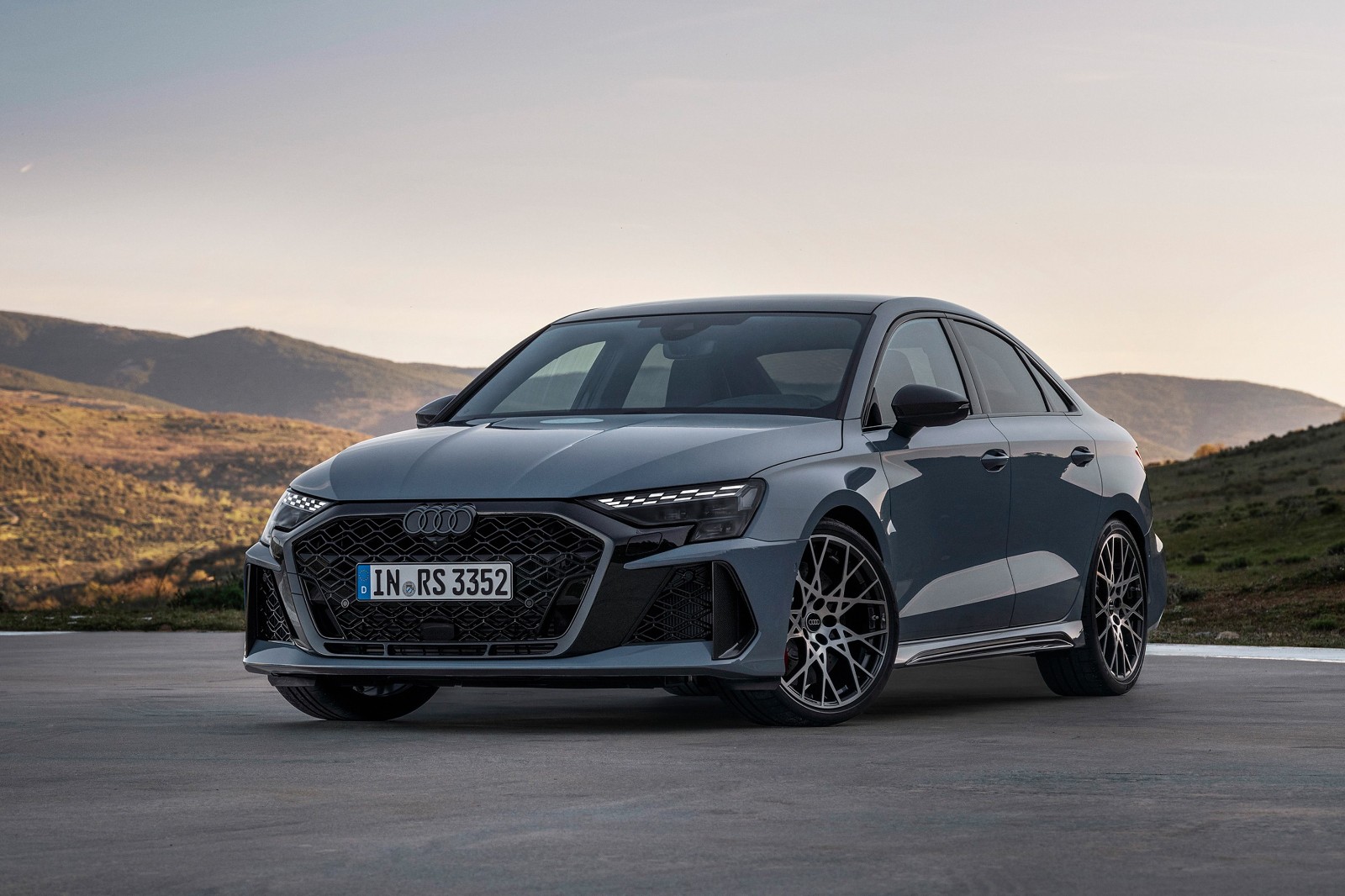
The A5 and RS3 consistently outperform their larger siblings in real-world desirability, resale value and everyday ownership — and the reasons are more instructive than Audi’s official hierarchy suggests.
By John Irungu Maina, car enthusiast
Audi has never struggled to produce expensive cars. The real achievement has been creating cars that people actually want to keep buying — and that distinction matters more than most buyers realise when they are standing in a showroom choosing between models.
Look at the A5 and A6, or the RS3 and RS5, and an interesting pattern emerges. The bigger car is not always the more desirable one. In many markets, the smaller model proves easier to sell, easier to live with and, critically, easier to resell. Understanding why tells you something important not just about Audi, but about how the used-car market actually works.
The A5 is a perfect place to start. Positioned below the A6 in Audi’s hierarchy, it offers much of the brand’s premium character without carrying the same size and ownership burden. The styling, technology and road presence are unmistakably Audi, but its relatively compact dimensions make it more appealing to drivers who want something genuinely sporty without stepping into a large executive saloon.
The A6 is the more sophisticated car in many respects — more spacious, more refined and designed to compete directly with the BMW 5 Series and Mercedes-Benz E-Class. The A7 goes further still, combining executive-car comfort with a dramatic Sportback silhouette that turns heads in a way that four-door saloons rarely manage. Both are accomplished machines. Neither is what you would call modest.
But bigger does not automatically mean better in the used-car market.
The A5 occupies a sweet spot that Audi has rarely managed to replicate higher up the range. It is premium enough to feel genuinely special, yet accessible enough to attract a wide pool of buyers. It works as an everyday car while still carrying the sporty image that draws younger buyers and enthusiasts in significant numbers. That balance matters enormously when the time comes to sell. A car with a broader pool of potential buyers will almost always be easier to move than one aimed at a narrower, wealthier audience. Someone shopping for a used A5 may be seeking an affordable entry into Audi ownership. Someone shopping for a used A7 has already accepted considerably higher purchase and running costs — and that limits the field considerably.
Then there is the RS3, which is arguably one of the most interesting performance cars Audi produces precisely because it delivers something enthusiasts cannot easily find elsewhere: a compact, usable body combined with Audi’s legendary five-cylinder engine. Its smaller dimensions make it agile and entirely practical as a daily car. Its performance is serious enough to embarrass much larger, more expensive machines.
The RS5 has its own considerable strengths. It is more powerful, more spacious and better suited to long-distance performance driving. It is, in many ways, the more mature machine. But the RS3 possesses something that the RS5 cannot manufacture: character. The five-cylinder engine has become one of Audi’s defining signatures, and that emotional connection creates durable demand. For a buyer who wants an RS badge without accepting the higher running costs and larger footprint of the RS5, the RS3 makes a quietly compelling argument.
This is where resale becomes genuinely interesting.
Resale value is not determined simply by where a model sits in a manufacturer’s hierarchy. It depends on demand, running costs, reliability, condition, mileage, specification and the number of people actively searching for that particular car at any given moment. In markets such as Kenya, buyers layer additional considerations on top of those fundamentals: maintenance costs, fuel consumption, spare parts availability and the accessibility of qualified mechanics. A smaller Audi can hold a meaningful advantage on every one of those counts.
A clean, well-maintained A5 with a sensible specification can therefore be easier to sell than a neglected A6 or A7 — regardless of where each sits on the official price list. The same logic applies in the performance range. An original, well-preserved RS3 will attract enthusiasts who care deeply about what lies beneath the bonnet. A heavily modified example, however impressive its power figures, can actually prove harder to sell, because modifications narrow the audience rather than broaden it.
The A6 sits above the A5. The A7 sits above both in price and prestige. The RS5 is larger and more expensive than the RS3. Audi’s hierarchy is clear and coherent. But the market does not always follow the manufacturer’s logic. Sometimes the smaller car wins because it gives buyers precisely what they want without asking them to pay for everything they do not need.
The most expensive Audi is not always the most desirable one.
Sometimes, the sweet spot is simply the one people can actually afford to keep.
Similar Posts by The Mt Kenya Times:
- Mt Kenya Times ePAPER September 30, 2026
- Ruto mocks UNGA critics: “That requires someone with sense”
- Media warns: Information gaps fuel 2027 disinformation risk
- Gachagua’s DCP holds strategic NEC meeting ahead of 2027 polls
- Sifuna’s unending party ownership hurdles
About the Author